


One man storms boardrooms and demands answers. The other built a global fashion giant from a tiny shop in northern Spain. Nelson Peltz and Amancio Ortega never ran a company together. Yet their stories make a fascinating pair.
Peltz made his money by fixing struggling companies from the outside. Ortega made his by building one from the inside. Both reached the billionaire club through discipline, patience, and a sharp eye for what a business really needs.
This guide walks through each career step by step. You’ll see how they built their fortunes and which campaigns and decisions defined them. You’ll also find lessons you can use whether you run a startup or manage a portfolio.
Nelson Peltz and the Rise of an Activist Investor
Early Life and Family Roots
Nelson Peltz was born in 1942 in Brooklyn, New York. His family ran a food distribution company called A. Peltz & Sons. It supplied groceries and frozen goods to restaurants and stores across the city.
Peltz attended the Wharton School but left after a short time. Instead of finishing a degree, he went straight into the family business. That choice mattered. He learned how products move from warehouse to customer and how thin margins can make or break a company.
He later expanded the family firm into a larger frozen foods operation. By the late 1960s and 1970s, he was hunting for bigger deals.
From Dealmaker to Corporate Powerhouse
Peltz’s first big leap came through Triangular Industries. In the early 1980s, he and his partner Peter May took control of a packaging company called Triangle Industries. That business owned American National Can. After a few years of restructuring and acquisitions, they sold the packaging operation in 1988 for several billion dollars. The deal made Peltz very rich.
Next came Triarc, a holding company built around consumer brands. Over the years, Triarc held names like Royal Crown Cola and Arby’s. It also owned Snapple for a time. Peltz and May bought the juice-and-tea brand and sold it to Quaker Oats in 1994 for roughly $1.7 billion. Quaker later sold it for far less. Peltz walked away looking smart.
Triarc eventually merged with Wendy’s in 2008. The combined company became Wendy’s/Arby’s Group and later The Wendy’s Company. Peltz stayed on as a key leader.
Founding Trian Fund Management
In 2005, Peltz launched Trian Fund Management with Peter May and Ed Garden. The name comes from the three founders. Trian took a different path from the typical hedge fund. It bought large stakes in big, well-known public companies. Then it worked with management, or sometimes against it, to improve results.
Think of Peltz as a home renovator. He doesn’t buy a shack. He buys a house with strong bones and a famous address. Then he fixes the plumbing and updates the kitchen. Finally he waits for the market to notice the upgrade.
Nelson Peltz Net Worth and Wealth Snapshot
Most major wealth trackers place Nelson Peltz’s net worth at roughly $1.5 billion to $2 billion. His fortune comes from decades of dealmaking, his stake in Trian, and returns from long-term campaigns. He lives in Palm Beach, Florida, and keeps a high public profile.
| Fact | Detail |
|---|---|
| Born | 1942, Brooklyn, New York |
| Known as | Activist investor, Trian co-founder |
| Main firm | Trian Fund Management (founded 2005) |
| Estimated net worth | Roughly $1.5 billion to $2 billion |
| Family note | His daughter Nicola Peltz is an actress and married Brooklyn Beckham in 2022 |
Corporate Activism as a Business Strategy
What an Activist Investor Actually Does
Activist investing sounds dramatic. In practice, the idea is simple. An investor buys a meaningful slice of a public company. Then the investor pushes for changes that could lift the stock price. Those changes might include cutting costs, selling weak divisions, or replacing board members.
Peltz calls his approach “constructive” activism. He argues that he partners with management rather than attacking it. Critics disagree. They say activists squeeze short-term profits at the expense of long-term growth.
Signature Campaigns That Shaped His Reputation
Peltz has run campaigns at some of the most recognizable brands on the planet. Here are the highlights:
- Heinz: Trian pushed for changes at the ketchup maker in 2006 and won board seats. In 2013, Berkshire Hathaway and 3G Capital bought Heinz in a deal worth about $28 billion including debt. Peltz profited handsomely.
- Cadbury Schweppes: In 2007, Trian urged the company to split its candy and beverage arms. The company did separate its American drinks business. Cadbury later sold itself to Kraft.
- DuPont: In 2015, Trian waged a loud proxy fight for board seats. Shareholders narrowly voted against Peltz. Still, the pressure shaped the conversation about breaking up the chemical giant.
- Procter & Gamble: In 2017, Peltz launched another proxy fight. He won a board seat after a razor-thin vote and a recount. P&G shares did well during his time involved.
- Wendy’s: Peltz stayed deeply involved and served as chairman for years.
- Disney: In 2023 and 2024, Trian took on one of the world’s best-known entertainment companies. Peltz argued that Disney needed better succession planning and sharper cost control. Shareholders voted to keep the existing board in April 2024. Peltz lost, but the fight forced Disney to speak openly about its plans.
Case Study: The Heinz Playbook
Heinz shows the Peltz method at its best. Trian bought a stake and studied how the company spent money. Then it argued that Heinz wasted cash on slow growth ideas. The investor pressed for tighter operations and stronger marketing in emerging markets.
Heinz’s results improved over the following years. Profit margins rose and the stock climbed. When 3G and Berkshire Hathaway offered to buy the company in 2013, shareholders cheered. The lesson is clear: activism works best when the target has strong brands and loose management.
Key takeaway: A famous brand with sloppy operations is an activist’s favorite target.
Wins, Losses, and Lessons
Not every fight ended in victory. Peltz lost at DuPont and Disney. He still gained something each time. He won attention for his ideas. He pushed boards to defend their strategies in public.
Supporters say activists keep lazy managers honest. Critics say they chase quick gains. The truth probably sits in the middle. Some campaigns create real value. Others just rearrange the furniture.
Amancio Ortega and the Creation of a Fashion Empire
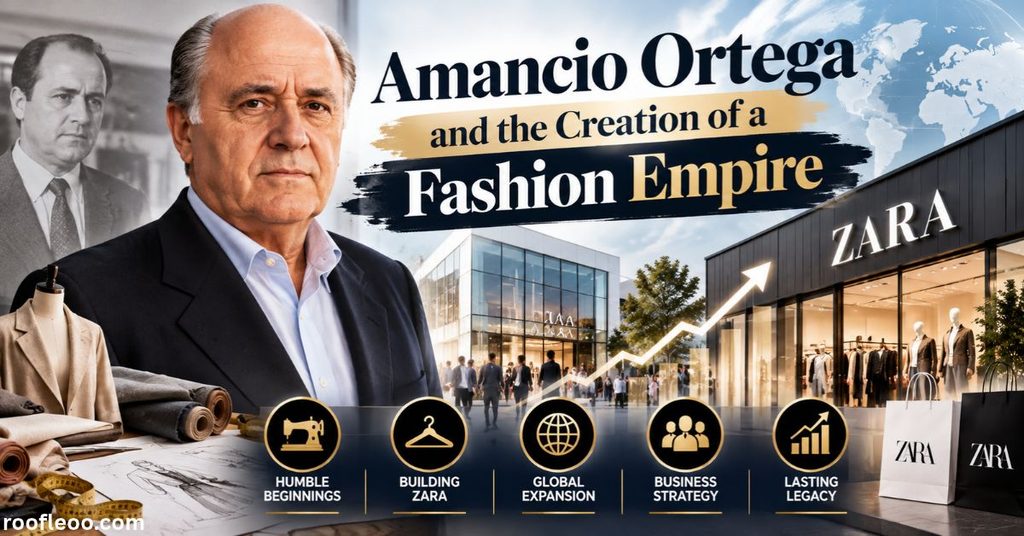
A Humble Start in Spain
Amancio Ortega was born in 1936 in a small town in northern Spain. His father worked for the railroad. The family moved to A Coruña when Ortega was a boy. Money was tight.
Ortega left school around age 13. He took a job as an errand boy at a local shirt shop. He learned what customers wanted and how clothes got made. He also learned how long it took to get stock on shelves. That last lesson would shape the rest of his life.
From Garment Maker to Zara Founder
In 1963, Ortega started making clothing with his first wife, Rosalía Mera. Their small company was called Confecciones GOA. They sold robes and lingerie at first. A big order fell through one day because a client canceled. Ortega decided he’d never again rely on other people’s retail shelves.
So he opened his own store. The first Zara shop appeared in A Coruña in 1975. Ortega originally wanted to call it Zorba but a bar with that name already stood nearby. He rearranged the letters and Zara was born.
The Birth of Inditex
By 1985, Ortega had formed Inditex (Industria de Diseño Textil). The company became the parent for Zara and later brands. Growth started slowly inside Spain. Then Ortega pushed into Portugal in 1988 and into New York a few years later. Paris came after that.
The company went public in 2001 on the Madrid stock exchange. The IPO gave Inditex cash to expand faster. It also pushed Ortega into the ranks of the world’s richest people.
Amancio Ortega Net Worth and Fortune
The Amancio Ortega net worth figure has sat above $100 billion in recent years. Most trackers place it around $120 billion or more, which puts him among the ten richest people on Earth. He owns roughly 59% of Inditex through his holding company, Pontegadea.
Pontegadea also owns large real estate holdings. Properties sit in cities like Madrid, London, New York, and Seattle. The company collects steady rent and gives the family a second income stream. Ortega also receives massive annual dividends from Inditex, which add billions to his wealth over time.
| Fact | Detail |
|---|---|
| Born | 1936, Busdongo de Arbás, Spain |
| Known as | Zara founder, Inditex founder |
| Main company | Inditex (about 59% held through Pontegadea) |
| Estimated net worth | Above $100 billion, often around $120 billion |
| Style | Extremely private, rarely gives interviews |
A Private Man in a Public Industry
Ortega rarely gives interviews. For years, almost no photographs of him circulated. He ate lunch in the company cafeteria and wore simple clothes. He stepped back from daily leadership in 2011 and handed the chair role to Pablo Isla. His daughter, Marta Ortega, became chair of Inditex in 2022. Óscar García Maceiras took over as CEO.
He also gives generously. Ortega’s foundation has donated well over €1 billion to health and education projects. Its most famous gift bought cancer treatment equipment for public hospitals across Spain.
The Zara Model and Global Expansion
Fast Fashion Done Differently
Most clothing companies work on seasons. Designers plan collections nearly a year ahead. Factories in far-off countries make huge batches. Stores then hope the guess was right.
Zara flips that script. It makes smaller batches and releases new items constantly. A garment can move from sketch to store shelf in a few weeks. If something sells, Zara makes more. If it flops, the loss stays small.
The Pillars of the Zara Strategy
Zara’s edge comes from a handful of connected ideas:
- Vertical integration: Zara controls design, cutting, and distribution. A large share of production happens near its headquarters in Arteixo, Spain, and in nearby countries like Portugal, Morocco, and Turkey.
- Data from the stores: Store managers report what customers try on and what they ignore. Designers respond within days.
- Frequent restocking: Shops place orders twice a week. Shelves always feel fresh.
- Tiny advertising spend: Zara spends a sliver of sales on ads compared with rivals. The storefront does the selling.
- Prime locations: Stores sit on the busiest shopping streets in the world.
Zara vs. the Traditional Retail Model
| Category | Traditional Seasonal Retail | Zara’s Model |
|---|---|---|
| Design cycle | Months in advance | Weeks |
| Batch size | Large | Small |
| Inventory risk | High | Low |
| Marketing | Heavy advertising | Mostly storefronts |
| Production | Mostly distant factories | Mix of nearby and flexible suppliers |
| Reaction to trends | Slow | Fast |
The Inditex Family of Brands
Zara anchors the company but doesn’t stand alone. Inditex also runs:
- Massimo Dutti for polished, upscale clothing
- Pull&Bear for casual youth fashion
- Bershka for trend-driven young shoppers
- Stradivarius for affordable women’s fashion
- Oysho for lingerie and loungewear
- Zara Home for furniture and decor
- Lefties for discounted collections
Together these brands operate more than 5,000 stores in over 90 markets. They also run a strong online business. In fiscal 2024, Inditex reported revenue of about €38.6 billion and net profit of roughly €5.4 billion. The company employs well over 150,000 people worldwide.
Case Study: Adapting During the Pandemic
COVID-19 hit retailers hard. Stores closed and shoppers stayed home. Inditex responded by merging its store and online systems. It also announced plans to shut about 1,000 to 1,200 smaller shops and open larger, better-located flagships.
The bet paid off. Online sales jumped. Profits rebounded quickly once shoppers returned. Ortega’s old principle held up: stay flexible and keep inventory close.
Key takeaway: Speed beats size when customer tastes change quickly.
Different Industries, Similar Strategic Thinking
What Connects the Two Men
On the surface, nothing links a Wall Street activist and a Spanish fashion founder. Look closer and shared habits appear. Both men obsess over operations. Both think long term. Both treat a company like a machine with parts that can improve.
Efficiency as a Shared Obsession
Peltz asks one question over and over: where does this company waste money? Then he pushes for fixes. He might cut layers of management or sell a weak division. He might urge more focus on the core brand.
Ortega asks a similar question in a different way: how can we shrink the gap between idea and customer? He shortened supply chains and cut inventory piles. He also trusted real-time feedback over long forecasts.
For example, imagine a leaky bucket. Peltz plugs the holes. Ortega builds a smaller bucket that fills faster.
Patience and Long-Term Value
Neither man chased overnight wins. Peltz held Heinz for years before the big payoff. Ortega spent decades building Zara before the IPO. Both let compounding do the heavy lifting.
Process Over Personality
Both also believe in systems. Peltz trusts disciplined plans more than charismatic CEOs. Ortega built a model that runs without him. That is why Inditex kept growing after he stepped back.
Leadership Through Different Forms of Influence
Peltz: The Persuader
Peltz leads by pressure and persuasion. He writes open letters and gives interviews. He runs proxy fights and demands board seats. His influence depends on convincing other shareholders to side with him.
That style carries risk. A public loss, like the Disney vote, stings. Yet even a defeat can move a company toward change.
Ortega: The Builder
Ortega leads by creating. He hired talented designers and logistics experts. He built a culture of speed and humility. Instead of persuading outsiders, he shaped people inside his own walls.
His quiet style also signals confidence. He never needed a spotlight to prove the model worked.
Public Image and Philanthropy
The contrast in public image is striking. Peltz appears at big events and shares his opinions freely. He also supports political causes and donates to charity. Ortega avoids attention yet gives on a massive scale. His foundation funds hospitals, scholarships, and medical technology.
So which style works better? It depends. An outsider with a bold plan needs a loud voice. A founder with a clear model can lead by example.
Lessons From Their Business Journeys
Practical Takeaways From Both Careers
Here are the big lessons from Nelson Peltz and Amancio Ortega:
- Start where you are. Peltz learned from a food distributor. Ortega learned from a shirt shop. Both turned small beginnings into huge advantages.
- Control what matters most. Ortega controlled design and distribution. Peltz controlled his own strategy by taking big stakes.
- Trust real behavior. Zara watches what customers buy. Peltz studies actual company numbers.
- Push for change but know when to compromise. Peltz often settles for board seats rather than total victory.
- Stay patient. Wealth at this scale grows over decades rather than months.
What Founders Can Borrow
If you run a startup, take Ortega’s playbook. Shorten the time between idea and customer. Keep inventory lean. Treat feedback like gold. Build a system that works even when you leave the room.
What Investors Can Borrow
If you invest, take Peltz’s playbook. Study the business before you buy. Look for strong brands with weak execution. Build a clear case for change. Then stay engaged until the results show up.
Nelson Peltz and Amancio Ortega in the Modern Business World
Peltz Today
Peltz still leads Trian, which manages several billion dollars. The firm continues to pick large targets and push for improvement. The activist world has also changed. More investors now run campaigns, and boards prepare earlier for fights. Social media has made proxy battles more public than ever.
Peltz also faces a generational shift. His family members play bigger roles at Trian and in his other ventures. That keeps the Peltz name active in business for years to come.
Ortega Today
Ortega, now in his late eighties, no longer runs Inditex day to day. The company thrives anyway. It keeps expanding online and refining its stores. It also invests in sustainability, such as recycled fabrics and cleaner supply chains.
Inditex faces real challenges. Shoppers and regulators want proof that fast fashion can be responsible. Rivals like Shein have also pressured the whole industry on price and speed.
Shared Challenges
Both men’s businesses face modern pressure:
- Shareholder pushback against aggressive campaigns
- Supply chain scrutiny over labor and environmental practices
- Shifting consumer habits as online shopping keeps growing
- Succession planning as founders step back
A Broader Comparison
Side-by-Side Snapshot
| Category | Nelson Peltz | Amancio Ortega |
|---|---|---|
| Born | 1942, United States | 1936, Spain |
| Early work | Family food distribution | Shirt shop errand boy |
| Core business | Activist investing | Retail and fashion |
| Main vehicle | Trian Fund Management | Inditex |
| Public profile | High | Very low |
| Wealth source | Dealmaking and investments | Founder’s stake in Inditex and real estate |
| Estimated net worth | $1.5 billion to $2 billion | Above $100 billion |
| Signature move | Proxy fights | Fast fashion supply chain |
What Stands Out
The gap in wealth jumps off the page. Ortega’s fortune dwarfs Peltz’s by a wide margin. The reason is simple. Ortega owns a huge piece of a company that makes billions each year. Peltz earns returns by investing in other people’s companies.
Still, both men built something lasting. One built a brand that sits in nearly every major city. The other built a reputation that makes CEOs think twice before ignoring shareholders.
Key Milestones at a Glance
| Year | Peltz Milestone | Ortega Milestone |
|---|---|---|
| 1963 | Working in family business | Starts Confecciones GOA |
| 1975 | Expanding dealmaking | Opens first Zara store |
| 1985 | Building Triangle Industries | Forms Inditex |
| 1988 | Sells packaging business | Zara enters Portugal |
| 2001 | Leads Triarc | Inditex IPO |
| 2005 | Founds Trian | Inditex grows worldwide |
| 2013 | Heinz buyout | Steps back from daily leadership years earlier, with Zara still growing |
| 2024 | Loses Disney proxy fight | Inditex posts record results |
Conclusion: Nelson Peltz and Amancio Ortega
One man reshapes companies from the outside. The other built one from the inside. That contrast makes Nelson Peltz and Amancio Ortega such a useful pair to study.
Peltz shows how a sharp investor can unlock value in a famous brand. Ortega shows how a patient founder can reinvent an entire industry. Different paths led them both to remarkable wealth.
Their shared strengths matter most. Both stayed disciplined. Both thought long term. Both treated business like a system to improve.
So whose approach do you admire more? Do you like the boardroom fighter or the quiet builder? Share your thoughts in the comments below.
FAQs: Nelson Peltz and Amancio Ortega
Who is Nelson Peltz?
Nelson Peltz is an American billionaire investor and co-founder of Trian Fund Management. He grew up in a New York food distribution family. Over time, he built a reputation as one of Wall Street’s most famous activist investors.
Who is Amancio Ortega?
Amancio Ortega is a Spanish businessman and founder of Zara. He started as a shirt shop errand boy and built Inditex into one of the world’s largest fashion retailers. He ranks among the richest people on Earth.
What is Nelson Peltz known for?
Peltz is best known for activist campaigns at big public companies. His targets include Heinz, Procter & Gamble, DuPont, and Disney. He also built Triarc, which owned brands like Snapple and Arby’s.
What is Amancio Ortega known for?
Ortega is known for creating Zara and the fast fashion model. His company designs, makes, and ships clothes within weeks. He also stays famously private and gives huge sums to charity.
Are Nelson Peltz and Amancio Ortega connected?
No well-known business partnership links them. They work in very different industries. People compare them because both reached billionaire status through very different strategies.
How are Nelson Peltz and Amancio Ortega different?
Peltz invests in existing companies and pushes for change. Ortega built a company from scratch. Peltz speaks publicly and fights in boardrooms. Ortega avoids the spotlight and leads through operations. Ortega’s fortune is also many times larger.

