

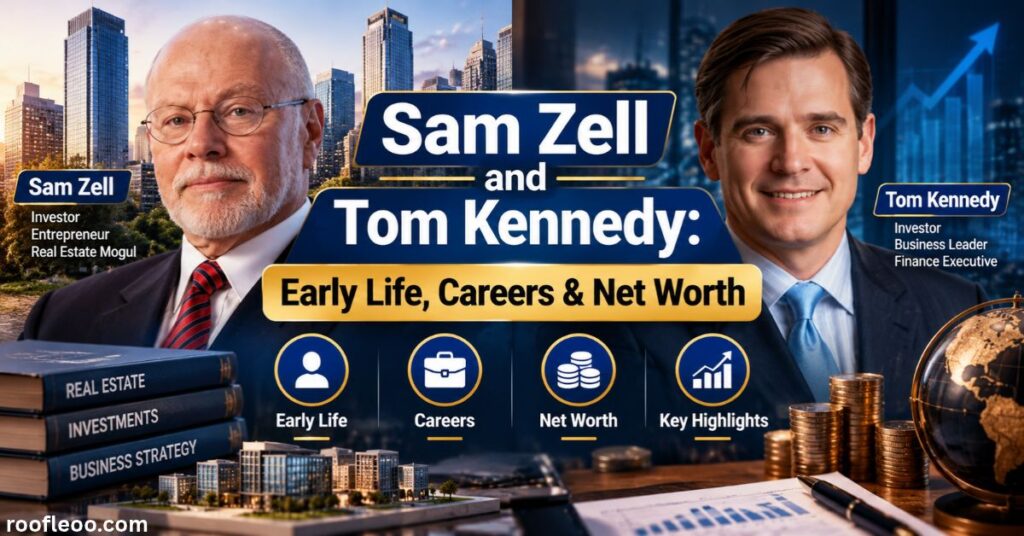
Two famous men. Two very different kinds of fame. One made billions by buying what everyone else feared to touch. The other made millions of Americans smile in the daytime.
If you typed Sam Zell and Tom Kennedy into a search bar, you probably have a question. Maybe you saw both names in a trivia thread. Maybe you’re researching one and stumbled on the other. Either way, this guide sorts it out. You’ll get each man’s early life, career, family, and wealth, plus the facts people often mix up.
Quick answer: Sam Zell (1941–2023) was a Chicago billionaire real estate investor. Tom Kennedy (1927–2020) was a longtime American game show host. They had no known family or business connection.
Who Were Sam Zell and Tom Kennedy?
Let’s start with the basics. Sam Zell built one of the largest real estate empires in U.S. history. He earned the nickname “the Grave Dancer” for buying distressed assets. He also pulled off the biggest private equity deal of its day. Then he bought a newspaper company and watched it collapse.
Tom Kennedy took a gentler road. He hosted game shows for roughly three decades. Viewers knew him from You Don’t Say!, Split Second, and Name That Tune. He had a warm style and a quick laugh.
Here’s a side-by-side snapshot:
| Detail | Sam Zell | Tom Kennedy |
|---|---|---|
| Birth name | Shmuel Zielonka | James Edward Narz |
| Born | 1941, Chicago, Illinois | February 26, 1927, Louisville, Kentucky |
| Died | May 18, 2023 (age 81) | October 7, 2020 (age 93) |
| Place of death | At home | At home in Oxnard, California |
| Profession | Real estate investor, billionaire | Game show host |
| Best known for | Equity Group Investments, Equity Office sale, Tribune buyout | You Don’t Say!, Split Second, Name That Tune |
| Net worth | $5.2 billion (Forbes) to $5.9 billion (Bloomberg) | No audited figure; low single-digit millions is a fair estimate |
| Famous sibling | Sisters Julie Baskes and Leah | Brother Jack Narz, also a game show host |
Notice something? Tom Kennedy and Sam Zell share almost nothing on paper. They worked in different industries and lived in different cities. Their paths never crossed in any record I found. We’ll dig into why people link them later.
Sam Zell: The Grave Dancer Who Bet Big and Lost
Most billionaires want to be remembered for their wins. Zell had plenty of those. Yet one deal still dominates his story. It was bold and loud. It was also a mess.
Think of Zell as a great white shark. In deep water he was nearly untouchable. Then he swam into the shallows of the newspaper business. That’s where things got ugly.
From Humble Beginnings to Real Estate Empire
Zell’s story starts with a narrow escape. His parents fled Poland in 1939. They left just before World War II swallowed the country. They settled in Chicago and built a new life. His father worked as a jewelry dealer.
Young Sam learned to hustle early. At age 13 he sold Playboy magazines to his friends. He later told Forbes he spotted a demand and a limited supply. He acted on it. As he put it, he was still doing the same thing decades later.
That instinct never left him.
Key early-life facts:
- Born in Chicago to Polish-Jewish immigrant parents
- Attended the University of Michigan for his undergraduate degree
- Earned a law degree in the mid-1960s
- Managed student apartment buildings as an undergraduate
- Founded the precursor to Equity Group Investments in 1968
The apartment gig mattered more than it sounds. Zell saw how rental property worked from the inside. He learned that tenants, cash flow, and timing drive everything. Then he teamed up with his partner Robert Lurie. Together they started buying properties across the Midwest.
Lurie and Zell made a great pair. They shared a taste for risk and a gift for spotting bargains. Lurie died in 1990. Zell kept building.
The “Grave Dancer” Playbook
So where did the famous nickname come from? Zell once described his business as dancing on the skeletons of other people’s mistakes. Reporters loved the line. It stuck.
His method was simple to explain and hard to pull off:
- Wait for a crash. Real estate downturns scare most buyers away.
- Buy distressed assets cheaply. Troubled buildings and companies sell at deep discounts.
- Fix the problems. Better management and smarter financing turn losers into earners.
- Sell or hold when the market recovers. Patience pays off.
He also lived by a few sayings, which fans called “Sam-isms.” One of the best known: “Liquidity equals value.” It means an asset is only worth what someone will pay for it today.
Zell also helped shape the modern real estate investment trust, or REIT. His company said he played a critical role in creating the structure. REITs now form an industry worth more than $4 trillion. That’s a huge legacy for a kid who sold magazines.
Biggest Wins
His crown jewel was Equity Office Properties. He spent about three decades building it into the nation’s largest office landlord. In February 2007 he sold it to the Blackstone Group for $39 billion. At the time, that was the largest private equity deal in history. Zell personally netted about $1 billion.
The timing was brilliant. He sold near the peak of the market. Within two years the financial crisis hit.
His other holdings stretched far beyond office towers. Through Equity Group Investments, he held stakes in apartments, manufactured home communities, healthcare, retail, energy, travel, and manufacturing. Public companies tied to his empire included:
- Equity Residential (apartments)
- Equity LifeStyle Properties (manufactured home communities)
- Equity Commonwealth (office properties)
- Covanta (waste-to-energy)
- Anixter (wire and cable distribution)
He didn’t win everything. In 1996 he lost the bidding for Rockefeller Center to a group led by Goldman Sachs. Even so, his overall record was remarkable.
Sam Zell Net Worth
How rich was he? It depends on who counts. Here are the most-cited figures at the time of his death:
| Source | Estimated net worth |
|---|---|
| Forbes | $5.2 billion |
| Bloomberg Billionaires Index | $5.9 billion |
The gap comes from different methods. Each outlet values private holdings in its own way. For a quick answer, say roughly $5 to $6 billion.
Back in 2012, Forbes ranked him 103rd richest American with a fortune of about $3.8 billion. So his wealth grew sharply in his final decade. Forbes also noted he owned about 1.4% of Equity Residential, worth around $300 million on the day he died.
Zell had personality to match the money. He was bearded and blunt. He rode motorcycles with a group of fellow tycoons called Zell’s Angels. He once told reporters he focused on the odds that a deal would fail, rather than how great it might turn out.
The Tribune Disaster: A Case Study in Overconfidence
Now for the part Zell fans wince at.
In April 2007, Tribune Company agreed to a buyout led by Zell. The price tag was about $8.2 billion. Tribune owned the Chicago Tribune, the Los Angeles Times, and several other papers. It also owned TV stations and the Chicago Cubs.
How the Deal Worked
The structure was clever. And risky.
- Zell put in $315 million of his own money.
- An employee stock ownership plan (ESOP) borrowed most of the purchase price.
- Zell received warrants to buy about 40% of the company.
- Tribune’s total debt ballooned to roughly $13 billion.
That last number is the killer. Reports at the time noted the company could not afford the debt that grew out of the deal. The deal closed in December 2007. Zell became CEO and chairman.
Why the Timing Was Terrible
Zell bought a newspaper empire right as the ground shifted. Print advertising was already sliding. Then the 2008 financial crisis hit like a freight train. Ad dollars vanished. Credit froze.
Tribune couldn’t service its debt. In December 2008, barely a year after the buyout closed, the company filed for Chapter 11 bankruptcy. A Bloomberg story from mid-2008 had already called it a deal from hell.
The Fallout
The damage spread fast:
- Layoffs hit newsrooms across the country.
- Staff complained about a rough newsroom culture under new management.
- Lawsuits erupted over whether the ESOP structure was fair to employees and creditors.
- The bankruptcy dragged on for about four years.
- Zell lost his $315 million personal stake, according to the Los Angeles Times.
He kept his swagger anyway. That was classic Zell.
The Cubs Connection
Here’s a common mix-up. Zell never personally owned the Chicago Cubs. Tribune Company owned them. Tribune had bought the team in 1981 for $20.5 million.
When Zell took over Tribune, he vowed to sell the team. The process dragged on. Bankruptcy forced the issue. In 2009, the Ricketts family bought the Cubs, Wrigley Field, and a stake in a regional sports network for about $845 million. Major League Baseball owners approved the deal unanimously.
Critics said Zell’s slow, tax-minded maneuvering cost Tribune more than $150 million. Defenders argued the sale still produced a record price. Both sides have a point. (Fun fact: the Cubs won the World Series in 2016 under the new owners.)
Zell’s Final Chapter
Zell died on May 18, 2023, at age 81. Equity Group Investments said he died at home from complications of a recent illness. He leaves his wife Helen, three children (Kellie, Matthew, and JoAnn), two sisters, and nine grandchildren.
The company called him a self-made, visionary entrepreneur. Few would argue. He launched hundreds of companies over a career of more than 60 years.
Tom Kennedy: The Game Show Host Who Never Stopped Smiling
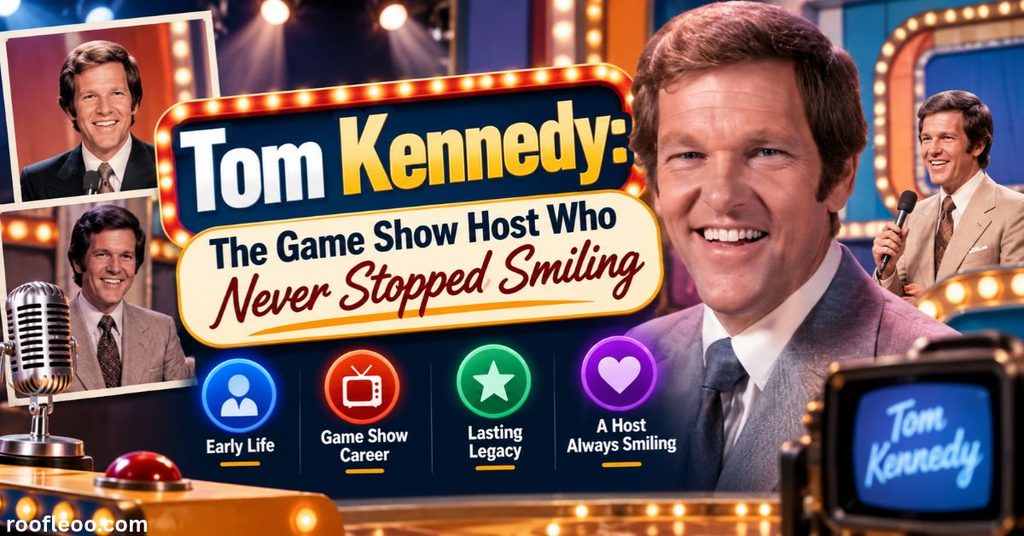
Picture a bright studio set. A buzzer rings. A contestant squeals. A man in a sharp jacket grins and keeps the show moving.
That was Tom Kennedy. He made the chaos look easy.
A Louisville Kid Who Followed His Brother
Kennedy wasn’t born Tom Kennedy at all. His birth name was James Edward Narz. He entered the world on February 26, 1927, in Louisville, Kentucky. His father was John Lawrence Narz Sr. His older brother, Jack Narz, would also become a famous TV host.
Broadcasting ran in the family. Jack was born in 1922 and found radio and television work first. Young James watched and took notes.
Early-life highlights:
- Grew up in Louisville with an older brother and sister
- Attended the University of Missouri
- Landed a radio job while still in school
- Spent roughly 10 years in radio
- Moved to Hollywood in 1947 to join his brother
Radio taught him the craft. He learned timing, warmth, and how to talk to strangers like friends. Those skills made game shows a natural fit.
Why He Became “Tom Kennedy”
Two brothers in the same business created a problem. Audiences might confuse Jim Narz with Jack Narz. So in 1957, James changed his professional name.
The story has a neat twist. Buzzer Blog reports that he worked as a commercial announcer for Plymouth. His brother did commercial work for Ford. Rival car brands needed rival announcers with different names. Tom Kennedy was born.
His first national hosting gig came in 1958 with The Big Game on NBC. The show was short-lived. But the career had begun.
Family Life
Kennedy married Betty Gevedon in 1952. They stayed together until her death in 2011. Reports list four children, including Linda Ann, James Jr., and Courtney Ellen. His brother-in-law was the legendary host Bill Cullen, often called the “Dean of Game Show Hosts.”
The Golden Era of Game Shows
The 1960s through the 1980s were prime time for game shows. Networks needed cheap, fun daytime hits. Hosts like Kennedy delivered.
Signature shows (approximate eras):
- The Big Game (1958): his first national hosting job
- You Don’t Say! (1960s, with later revivals): a word-clue guessing game
- Split Second (early-to-mid 1970s): a fast-paced trivia contest
- Name That Tune (1970s syndicated run): his most famous hosting job
- Whew! (late 1970s): a CBS game with an obstacle-course twist
- Break the Bank and Body Language: other credits across the 1970s and 1980s
- The Price Is Right (nighttime version): a stint on the evening edition
- Password Plus: listed in several obituaries as part of his resume
I’ve kept the dates loose on purpose. Game show histories vary on exact start and end years. Check the Television Academy biography for official records.
What Made His Style Work
Why did viewers love him? A few reasons:
- He seemed relaxed. Nothing about him felt forced.
- He teased contestants gently. Nobody left feeling embarrassed.
- He kept the pace brisk. Shows moved without dragging.
- He knew when to step back. The game stayed the star.
Think of him as the friendly neighbor who happens to run a quiz night. You wanted to play along.
His good humor showed offscreen too. He once played himself on the 1990s sitcom Cybill. He wasn’t afraid to laugh at his own image.
Awards and Retirement
Kennedy retired around 1989. Not long after, the industry honored his career. In July 2005, he and Jack shared the Game Show Congress’s Bill Cullen Award for Lifetime Achievement. Both brothers got the honor together. That moment must have felt special.
Tom Kennedy Net Worth
Here’s the honest picture. No major outlet has published an audited figure. Estates of working entertainers rarely become public. So any number you see online is an educated guess.
Here’s how to think about it:
- He hosted for about three decades across multiple networks.
- He worked steadily during the busiest years of daytime TV.
- He lived a comfortable, low-key life in California.
- Hosts of his generation earned good money but not star-athlete money.
Based on that, a fair working estimate lands in the low single-digit millions of dollars. Treat it as a reasonable guess rather than a verified fact. It beats the wild six-figure and eight-figure claims floating around on celebrity-wealth sites.
His Passing
Tom Kennedy died on October 7, 2020, at his home in Oxnard, California. He was 93. His daughter Courtney and his nephew Ben confirmed the news. Fox News quoted his nephew saying he passed away peacefully. No cause of death was released.
His brother Jack had died in 2008 at age 85. His wife Betty had passed in 2011. Tom outlived them both by years.
Why These Two Men Are Often Confused (And Who You’re Actually Looking For)
So why do searchers link Tom Kennedy and Sam Zell? The honest answer: nobody knows for sure. But a few theories make sense.
Likely reasons:
- Search engines pair unrelated names. When people look up both, algorithms start suggesting them together.
- Both have “famous deaths” in recent years. News cycles in 2020 and 2023 brought both names to the front page.
- Quiz and trivia content. Lists of notable people sometimes group them by birth or death dates.
- Common names. “Tom Kennedy” is shared by many people, which muddies results.
Here’s a quick guide to find the right person:
- Looking for a billionaire investor and Tribune owner? You want Sam Zell.
- Looking for a classic game show host from Name That Tune? You want Tom Kennedy.
- Looking for a different Tom Kennedy? Many people share that name. Check the profession and years before assuming a match.
Still unsure? Check the profession first. Billions and buildings point to Zell. Buzzers and bright sets point to Kennedy.
Deep Dive: Why Sam Zell’s Tribune Bet Still Matters
The Tribune deal wasn’t just a business flop. It became a textbook. Law schools and business schools still teach it as a cautionary tale about debt, timing, and structure.
Lesson One: Leverage Cuts Both Ways
Debt magnifies returns when things go well. It magnifies pain when they don’t. Tribune carried roughly $13 billion in debt after the deal. Even a modest dip in revenue could sink it. And revenue didn’t dip modestly. It cratered.
Lesson Two: Timing Beats Genius
Zell sold Equity Office near the top of the market. That was perfect timing. Then he bought Tribune near the start of a collapse. That was terrible timing. Same man. Same brain. Opposite results.
Picture a veteran surfer reading waves for 40 years. Then one monster wave comes from a direction he didn’t expect. Skill doesn’t always save you.
Lesson Three: Declining Industries Punish Optimism
Newspapers were already losing readers and advertisers. Zell believed he could fix that. Many smart people believed the same thing. They were wrong. The deal foreshadowed the struggle that local news still faces today.
A Fair Counterpoint
It would be unfair to call Zell a failure. Consider his record:
- He built Equity Office into the largest office landlord in the country.
- He helped create the modern REIT industry.
- He sold at the peak of the market for $39 billion.
- He launched hundreds of companies over six decades.
One bad bet doesn’t erase that. Even great investors strike out sometimes.
Case Study: The Cubs Sale
Here’s a small case study inside the big one.
| Item | Detail |
|---|---|
| Bought by Tribune | 1981 |
| Purchase price | $20.5 million |
| Sold to Ricketts family | 2009 |
| Sale price | About $845 million |
| Included | Wrigley Field and a roughly 25% stake in Comcast SportsNet Chicago |
| Approval | Unanimous vote by MLB owners |
That’s a gain of more than 40 times the original price. The sale itself looked like a win. The problem lived elsewhere in the empire.
Takeaways for Business Readers
- Stress-test your debt. Ask what happens if revenue drops 30%.
- Respect industry trends. Cheap isn’t the same as undervalued.
- Separate talent from luck. Past success doesn’t guarantee future wins.
- Own your mistakes. Zell did, in his own gruff way.
Deep Dive: Tom Kennedy Enduring Appeal in an Age of Cynicism
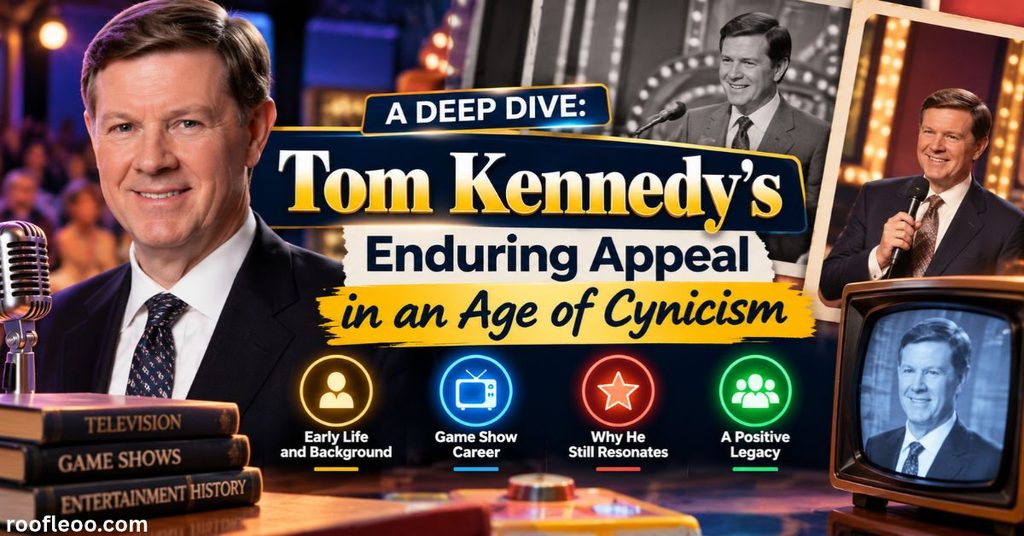
Now let’s flip to something lighter. Why do old Tom Kennedy shows still draw viewers?
The Comfort of Simple Stakes
Modern TV often feels loud and angry. Old game shows feel different. Nobody cries over a missed bonus round. Contestants cheer for each other. The prizes are a washer-dryer set or a trip to Hawaii. That’s charming.
Retro channels and streaming platforms keep these shows alive. Fans of all ages discover them. Some want nostalgia. Others just want a break from the news.
How Kennedy Compares With Modern Hosts
Today’s hosts often rely on big personalities and snappy one-liners. Kennedy relied on warmth. He let contestants shine. He treated the game as the main event.
A quick contrast:
| Style element | Tom Kennedy era | Many modern shows |
|---|---|---|
| Host energy | Friendly and steady | Often high-intensity |
| Set design | Bright, colorful, simple | Flashy and tech-heavy |
| Prize size | Modest | Often much larger |
| Contestant tone | Cheerful | Sometimes dramatic |
| Viewer feel | Cozy | Fast and competitive |
Neither style is wrong. But Kennedy’s approach has a timeless quality.
The Polyester and Applause Aesthetic
Let’s be honest. The 1970s fashion was a lot. Wide lapels. Loud patterns. Hair that defied gravity. Yet that look adds to the fun. Watching a Kennedy-era show feels like opening a time capsule. You can almost smell the studio hairspray.
Legacy in the Narz Family
Kennedy and Jack Narz built a rare family legacy. Both brothers hosted major shows. Both won the Cullen Award together. Both had ties to Bill Cullen, another giant of the genre. Game show historians often treat them as a trio of the golden era.
Jack even appeared on Tom’s show. They sometimes swapped roles for a segment. Fans loved those moments. It felt like watching family at a reunion.
Frequently Asked Questions
Who was Sam Zell?
Sam Zell was a Chicago billionaire and real estate investor. He founded Equity Group Investments in 1968. He sold Equity Office to Blackstone for $39 billion in 2007. He died on May 18, 2023, at age 81.
Who was Tom Kennedy?
Tom Kennedy was an American game show host. He was born James Edward Narz in Louisville, Kentucky. He hosted You Don’t Say!, Split Second, and Name That Tune. He died on October 7, 2020, at age 93.
Were Sam Zell and Tom Kennedy related or business partners?
No. I found no record of any family tie or business link between Sam Zell and Tom Kennedy. They worked in separate worlds and lived in separate cities. Search engines likely pair the names by accident.
Why was Sam Zell called the Grave Dancer?
He bought troubled assets that others avoided. Then he turned them around. The nickname came from his own description of dancing on the skeletons of other people’s mistakes. He wore it with pride.
How much did Sam Zell pay for the Tribune Company?
The deal was valued at about $8.2 billion. Zell personally invested $315 million. An employee stock ownership plan borrowed most of the rest. Tribune’s debt rose to about $13 billion afterward.
When did Tribune Company go bankrupt?
Tribune filed for Chapter 11 bankruptcy in December 2008. That was only about a year after the buyout closed. The case lasted roughly four years.
Did Sam Zell own the Chicago Cubs?
Not personally. Tribune Company owned the Cubs, and Zell controlled Tribune. He oversaw the sale to the Ricketts family in 2009 for about $845 million.
What was Tom Kennedy’s real name?
His birth name was James Edward Narz. He changed it in 1957 so audiences wouldn’t confuse him with his brother Jack Narz.
What game shows did Tom Kennedy host?
He hosted The Big Game, You Don’t Say!, Split Second, Name That Tune, and Whew!. He also had credits on Break the Bank, Body Language, and a nighttime version of The Price Is Right. See the Television Academy page for more.
Was Tom Kennedy related to other game show hosts?
Yes. His older brother Jack Narz hosted Concentration and Beat the Clock. His brother-in-law was Bill Cullen. Tom and Jack shared a lifetime achievement award in 2005.
Where did Tom Kennedy die?
He died at his home in Oxnard, California. He was 93. The family said he passed away peacefully.
Is the real estate executive Tom Kennedy the same person?
No. Many unrelated people share the name Tom Kennedy. The famous game show host worked in television and never ran a real estate empire. If you find a business figure with that name, check the source before assuming a match.
Conclusion
Let’s recap. Sam Zell was a fearless dealmaker who built a $5 billion-plus fortune. He mastered the art of buying low and fixing broken things. His Tribune gamble flopped. Yet his record outside media remains remarkable.
Tom Kennedy earned a different kind of wealth. He gave viewers warmth and laughter for roughly three decades. His career wasn’t about billions. It was about connection. Fans still smile when they hear the Name That Tune theme.
The next time someone mentions Sam Zell and Tom Kennedy in the same breath, you’ll know the truth. They never met in the record books. One chased big deals. The other chased the perfect punchline. Both left a mark.
One man bought an empire. The other made a living by making strangers feel at home.
Want more? Explore our guides on famous investors and classic TV hosts. Or leave a comment and tell us which story surprised you most.

