

One man shaped the Manhattan skyline. The other helped put a vaccine into billions of arms. At first glance, Larry Silverstein and Albert Bourla seem to have nothing in common. One is a real estate developer in his mid-nineties. The other is a veterinarian-turned-pharma chief in his sixties.
Yet people keep typing both names into the same search bar. Why? The answer says a lot about how we follow leaders who carry huge responsibility in front of huge audiences.
This guide walks through both careers step by step. You’ll see how each man built his reputation, what the money looks like in 2026, and where their stories truly overlap. Spoiler: it’s not a business deal.
What you’ll learn:
- How Silverstein turned a family real estate trade into a global name
- Why the World Trade Center lease became one of the most scrutinized deals in history
- How Bourla climbed from a plant in Greece to the top of Pfizer
- What the COVID-19 vaccine meant for his career and for Pfizer’s finances
- How their industries, risks, and public pressures compare
- Why their names land together in search results
Larry Silverstein and Albert Bourla at a Glance
Before the deep dive, here’s a quick side-by-side view. Think of it as a cheat sheet.
| Detail | Larry Silverstein | Albert Bourla |
|---|---|---|
| Born | May 30, 1931, Brooklyn, New York | October 21, 1961, Thessaloniki, Greece |
| Age in 2026 | 95 | 65 |
| Industry | Commercial real estate | Pharmaceuticals and biotechnology |
| Main company | Silverstein Properties | Pfizer |
| Role | Founder and chairman | Chairman and CEO |
| Best-known project | World Trade Center lease and rebuilding | Pfizer-BioNTech COVID-19 vaccine |
| Education | New York University (1952) | Aristotle University of Thessaloniki (veterinary medicine and PhD) |
| Wealth snapshot | Widely cited Forbes estimate near $1 billion | Pay near $21–25 million a year; net worth estimates in the tens of millions |
Two men. Two industries. Two very different roads to the same level of public attention.
Who Is Larry Silverstein?
Larry Silverstein is an American real estate developer and the founder of Silverstein Properties. Born on May 30, 1931, he grew up in Brooklyn. He studied at New York University and graduated in 1952. Later he took classes at Brooklyn Law School.
Most people know him for one thing. In July 2001, he signed a long-term lease on the World Trade Center complex. Only weeks later, the September 11 attacks destroyed the towers. That timing turned a major commercial deal into a lifelong public role.
Why His Name Carries Weight in New York
Silverstein isn’t a household celebrity in the usual sense. You won’t see him in movies or reality shows. Still, his name shows up in nearly every story about downtown Manhattan’s recovery.
He also stayed visible for a simple reason. Few developers have stayed involved in a single site for twenty-five years. Most deals close and fade from memory. His never did.
The Man Behind the Company
Silverstein Properties is a family-run firm headquartered in New York City. His son Roger serves as president, which shows how the business has moved toward a second generation. The company develops, owns, and manages office towers and large residential buildings.
Key facts about Silverstein:
- Founded Silverstein Properties in 1957
- Reached age 95 in May 2026 and remains the company’s chairman
- Built a portfolio centered on Manhattan office and residential towers
- Became the central private figure in rebuilding lower Manhattan after 2001
Larry Silverstein’s Early Career and Business Development
Every long career starts small. Silverstein’s began in his father’s world of brokerage and building deals. His father, Harry, worked in real estate, so young Larry learned the trade by watching and doing.
Learning the Trade the Hard Way
Real estate in mid-century New York rewarded patience. Deals moved slowly. Relationships mattered more than résumés. Silverstein spent years on the ground floor of that system, learning how to spot undervalued buildings and match them with the right financing.
Picture a chess player who studies endgames before opening moves. That was Silverstein’s early approach. He mastered the boring parts first, such as leases, financing terms, and tenant needs.
Launching Silverstein Properties in 1957
In 1957, he founded Silverstein Properties. The company started modestly. Over the following decades it grew into a developer able to handle skyscraper-scale projects.
His business model rested on a few steady habits:
- Long holding periods: He treated buildings as lasting assets rather than quick flips.
- Strong lender relationships: Banks trusted him with big loans.
- Tenant focus: He courted major corporate tenants who signed long leases.
- Risk appetite: He took on large projects other developers avoided.
Projects Before the World Trade Center
Long before 2001, Silverstein had built a reputation among Manhattan insiders. His company worked on office towers and large residential developments. One later example is Silver Towers, a pair of residential buildings on West 42nd Street that opened in the early 2010s.
Still, nothing in those years prepared him for what came next. The World Trade Center changed the scale of everything.
Takeaway: Silverstein’s rise shows how patient, repeated bets in one market can build a name big enough to land a once-in-a-generation deal.
Larry Silverstein and the World Trade Center Lease
This is the chapter that defined him. It’s also the one most people get wrong, so let’s lay out the facts.
Who Actually Owns the Site
The Port Authority of New York and New Jersey owns the World Trade Center land. Silverstein didn’t buy the property. Instead, he won a 99-year lease on the complex in July 2001. Reports at the time put the deal at about $3.2 billion. His partners included Westfield, which held rights to the retail portion.
That distinction matters. A lease gives you the right to operate and develop a property for a set time. Ownership stays with someone else. Many articles blur this point, so keep it in mind.
The Deal at a Glance
| Item | Detail |
|---|---|
| Signed | July 2001 |
| Lease length | 99 years |
| Reported value | About $3.2 billion |
| Landowner | Port Authority of New York and New Jersey |
| Retail partner | Westfield |
| Attacks | September 11, 2001, about seven weeks later |
What Happened on September 11
Silverstein often kept breakfast meetings at a restaurant near the top of the North Tower. On the morning of the attacks, he skipped his usual routine because of a doctor’s appointment. His family has long said that his wife urged him to keep it. That small choice likely saved his life.
His loss was still enormous. Silverstein had two children’s worth of employees and tenants inside the towers. His company also lost the buildings it had just leased.
The Insurance Fight
After the attacks, a hard question arose. Were the strikes one event or two? The answer mattered because policies paid per occurrence.
Silverstein argued for two occurrences and sought up to $7.1 billion in coverage. Insurers disagreed. Years of litigation followed. By 2007, settlements brought the total payout to roughly $4.55 billion.
Critics called the fight greedy. Supporters pointed out that the money was needed to rebuild. The truth sits in the middle. The dispute delayed rebuilding, yet the funds eventually helped finance it.
A Short Case Study: Paying Rent on Empty Ground
Here’s a detail few readers know. The lease obligations didn’t pause when the towers fell. Silverstein’s group still owed rent to the Port Authority while the site sat empty.
That created a brutal squeeze:
- The buildings no longer existed.
- Rent payments continued.
- Insurance money arrived slowly.
- Rebuilding plans needed public approval.
Few developers could have survived that pressure. His ability to keep the deal alive for years explains why he remained central to the site.
Rebuilding the World Trade Center
The rebuilding story is long. Plans changed. Politicians argued. Costs climbed. Still, the site slowly filled with new towers.
The 2006 Agreement
In 2006, Silverstein and the Port Authority reached a major agreement. The Port Authority took control of One World Trade Center and the retail space. Silverstein kept the right to build Towers 2, 3, and 4. Financing leaned on federal Liberty Bonds, a tax-advantaged program created to help rebuild lower Manhattan.
That split made the project more manageable. Each side now had clear responsibilities.
The Towers Silverstein Built
| Building | Opened | Key facts |
|---|---|---|
| 7 World Trade Center | 2006 | 52 stories; first tower on the site to reopen; praised for green design |
| 4 World Trade Center | 2013 | 72 stories; sleek glass tower; later drew major tech tenants |
| 3 World Trade Center | 2018 | 80 stories; one of the tallest buildings in the city |
| 2 World Trade Center | Not completed | Planned tower; still waiting on tenant demand |
Case Study: 7 World Trade Center
Seven World Trade Center deserves its own spotlight. It collapsed on September 11 and reopened in 2006, making it the first rebuilt tower on the site. Silverstein pushed to get it done early, partly to prove the area could recover.
The building also set a tone for sustainability. It earned high marks for energy efficiency and air quality. In practical terms, it signaled to tenants that lower Manhattan was open for business again.
What the Rebuilding Proved
The rebuilding offers a few lessons for any large project:
- Start with one win. A finished building builds confidence faster than a perfect master plan.
- Split the work. Dividing the site between public and private teams reduced conflict.
- Stay patient. The towers rose over twelve years, not twelve months.
By 2026, the World Trade Center area feels like a living neighborhood. Offices, shops, and public spaces fill the blocks that were once a construction zone. Silverstein’s name remains tied to much of it.
Larry Silverstein’s Net Worth in 2026
People always ask the money question. Here’s the clearest answer.
Forbes has estimated Silverstein’s net worth at about $1 billion, based on its late-2024 figures. That number remains the most widely cited and best-supported estimate heading into 2026.
You’ll see other numbers online. Some sites claim $3 billion. A few claim even more. Those figures usually lack any real backing. They tend to recycle each other without citing financial records.
Where His Wealth Comes From
Silverstein’s fortune rests on real estate rather than stocks or a single big payout. Key sources include:
- Rental income from office and residential towers
- Development profits from projects like Silver Towers and the World Trade Center buildings
- Property appreciation across decades of Manhattan holdings
- Management and leasing fees earned by his company
Why Estimates Vary
Silverstein Properties is privately held. That means it doesn’t publish earnings every quarter. Analysts must guess at property values and debt levels. Real estate also swings with interest rates and office demand.
So treat any single number as a snapshot. A billion-dollar estimate signals the scale of his success without capturing every dollar.
Who Is Albert Bourla?
Albert Bourla is the Chairman and CEO of Pfizer, one of the biggest pharmaceutical companies on earth. He was born on October 21, 1961, in Thessaloniki, Greece. Today he’s 65.
He holds a doctorate in veterinary medicine and a PhD in the biotechnology of reproduction, both from Aristotle University of Thessaloniki. That background surprises many people. Most pharma chiefs come from finance or medicine. Bourla came from animal health.
A Personal Story That Shapes His Leadership
Bourla has spoken about his family’s history. His parents were Jewish Holocaust survivors in Greece. He has said that story shaped how he thinks about responsibility and risk.
That background helps explain his tone during the pandemic. He often framed the vaccine effort as a duty rather than a business opportunity.
His Role in 2026
As of fall 2026, Bourla still leads Pfizer. He took the CEO job in January 2019 and became chairman in January 2020. That gives him more than seven years in the top seat.
In 2026, he also earned an honor from the American Academy of Arts and Sciences, a sign of his standing beyond the business world.
Albert Bourla’s Career at Pfizer
Bourla’s rise took more than three decades. He didn’t arrive at the top overnight. Instead, he worked through a series of tough jobs in several countries.
From Greece to the Global Stage
He joined Pfizer in 1993 as a technical director for animal health in Greece. In those early years, he handled operations and product work. Next came assignments across Europe and beyond.
He earned a reputation as a fixer. Whenever a unit struggled, leaders sent him in. That habit eventually put him on the path to the executive suite.
Career Timeline
| Period | Role | Why it mattered |
|---|---|---|
| 1993 | Joined Pfizer in Greece (animal health) | Entry point to the company |
| Mid-2000s | Senior leadership roles in animal health and business development | Expanded his global experience |
| 2010–2013 | Led the Established Products business | Managed older, steady-selling medicines |
| 2014–2016 | Group president of Vaccines, Oncology, and Consumer Healthcare | Built deep ties to vaccines and cancer drugs |
| 2016–2017 | Group president of Innovative Health | Ran Pfizer’s biggest branded drug business |
| January 2018 | Chief operating officer | Became heir apparent |
| January 2019 | Chief executive officer | Succeeded Ian Read |
| January 2020 | Added chairman role | Gained full control of the board |
The Ian Read Handoff
Ian Read, Bourla’s predecessor, served as his mentor. Read had steered Pfizer toward a narrower focus on innovative medicines. Bourla inherited that plan and pushed it harder.
Soon after taking over, he set a clear direction. Pfizer would invest more in research. It would also shed businesses that didn’t fit.
Early Moves as CEO
Bourla’s first years included several big decisions:
- Combining Pfizer’s off-patent medicines unit (Upjohn) with Mylan to form Viatris
- Spinning out consumer products into a joint venture that later became Haleon
- Increasing spending on science and drug development
Think of it as pruning a tree. Cut weak branches so the strong ones grow. That approach prepared Pfizer for the biggest test in its history.
Albert Bourla and the COVID-19 Vaccine
Nothing defines Bourla’s career like 2020. The pandemic turned a respected executive into a global name.
The Moonshot Decision
In early 2020, Bourla made a risky call. Pfizer would pursue a vaccine at high speed. The company partnered with Germany’s BioNTech, a smaller biotech with strong mRNA technology.
He also chose to avoid relying on government funding for research. His reasoning was simple. Government money could bring layers of approval and delays. By funding most of the work itself, Pfizer kept decisions fast.
The Timeline
| Date | Milestone |
|---|---|
| March 2020 | Pfizer and BioNTech announce their partnership |
| July 2020 | Large Phase 3 trial begins |
| November 2020 | Results show strong effectiveness |
| December 2, 2020 | UK authorizes the vaccine for emergency use |
| December 11, 2020 | US FDA grants emergency use authorization |
| August 2021 | FDA gives full approval for adults |
Bourla has said in 2026 interviews that wartime-style urgency allowed an eight-month development timeline. He also argued that regulators and governments later returned to more cautious habits. His point: the speed was possible, and the world learned something from it.
The Financial Impact
The vaccine reshaped Pfizer’s finances. Revenue jumped from about $41.9 billion in 2020 to roughly $81.3 billion in 2021. In 2022, it hit a record near $100 billion, helped by the vaccine and the antiviral pill Paxlovid.
Then demand faded. Revenue fell to around $58.5 billion in 2023. That drop forced cost cuts and a new growth plan, which the next section covers.
Case Study: The November 2020 Stock Sale
Not every moment helped his image. In November 2020, Bourla sold about $5.6 million in Pfizer stock on the same day the company announced strong trial results. Critics said the timing looked bad.
Pfizer responded that the sale followed a pre-arranged trading plan, a standard tool that lets executives sell shares on a set schedule. Even so, the episode shows how every move at that level gets scrutinized.
Praise and Pushback
Admirers credit Bourla with delivering a vaccine in record time. His memoir, Moonshot, tells the story from his view.
Critics raised other issues:
- Vaccine pricing and profit levels
- Contract terms with governments
- Access for lower-income countries
Both views deserve space. The vaccine saved many lives, and it also raised fair questions about how medicine gets priced and shared.
Pfizer’s slogan through the pandemic was simple: “Science will win.” It became the company’s rallying cry.
Pfizer’s Broader Business Strategy
The vaccine boom ended. What next? Under Bourla, Pfizer shifted to a new playbook.
Betting Big on Cancer Drugs
In 2023, Pfizer announced a deal to acquire Seagen, a cancer-drug specialist, for roughly $43 billion. The purchase closed at the end of 2023. It gave Pfizer a strong lineup of targeted cancer treatments.
This move reflects a broader plan. Pfizer wants a steady stream of products that don’t depend on one pandemic event.
Cost Cutting and Efficiency
After the revenue drop, Pfizer launched major savings programs. The company aimed to cut billions in annual costs. Leaders trimmed overhead and refocused research on promising areas.
Most large companies face this cycle. A giant hit is followed by a sharp reset. The test is how well leaders adapt.
Pfizer’s Strategy Pillars
- Oncology: Expand cancer treatments, especially after the Seagen deal
- Vaccines: Protect and grow vaccine lines beyond COVID-19
- Internal medicine and obesity: Build new products in fast-growing categories
- Cost control: Keep spending disciplined
- Technology: Use data and artificial intelligence to speed discovery
The Obesity Race
In late 2025, Pfizer entered a bidding contest with Novo Nordisk for the obesity drug developer Metsera. The fight showed how badly Pfizer wanted a seat in the weight-loss market. Obesity drugs are among the hottest products in medicine.
The 2025 Drug Pricing Agreement
In September 2025, Pfizer reached a deal with the Trump administration on drug prices. The company agreed to offer lower prices to Medicaid and to sell some medicines directly to patients at reduced cost. In return, Pfizer gained relief from certain tariffs and pledged major US investment.
Bourla later described the negotiation as remarkably fast. He told interviewers that talks moved in about ten days. The deal made Pfizer a model for how drugmakers might work with Washington.
Where Pfizer Stands in 2026
Pfizer’s yearly revenue now sits around the low-$60 billion range. That’s far below the 2022 peak yet well above pre-pandemic levels. The company is betting that its new drugs will fill the gap as older products lose patent protection.
Bourla’s challenge in 2026 is clear. He must prove that Pfizer can grow without a once-in-a-century health crisis.
Albert Bourla Pay and Net Worth in 2026
Now for the money side of the Pfizer story. Here’s what we can say with confidence.
Compensation
Bourla’s yearly pay package has landed in the range of roughly $21 million to $25 million in recent proxy filings. That includes salary, bonuses, and stock awards. Most of it ties to company performance, meaning the figure can rise or fall.
Net Worth Estimates
Published estimates of his net worth generally fall between $50 million and $100 million. Some sites list higher or lower numbers without showing their math. The most reliable data is his reported pay and his Pfizer shareholdings.
Why Bourla’s Wealth Differs from Silverstein’s
| Factor | Silverstein | Bourla |
|---|---|---|
| Wealth type | Owner of a private real estate firm | Salaried executive with stock awards |
| Main driver | Property values and rents | Pay and Pfizer’s share price |
| Transparency | Private, estimated | Public filings show pay |
| Control | Founder with long-term ownership | Professional CEO answering to a board |
This difference matters. Founders build equity in what they own. Executives, even highly paid ones, usually earn less than owner-founders over a lifetime. That explains why Silverstein’s estimated fortune is far larger than Bourla’s.
Larry Silverstein and Albert Bourla: What Is Their Connection?
Here’s the direct answer. There’s no known business partnership between Larry Silverstein and Albert Bourla. They don’t co-own companies. They don’t sit on the same boards that we know of. They work in different fields.
What They Do Share
Even without a deal, the two men have parallels:
- Long careers: Each has spent decades at the top of his field.
- Big stakes: Both made decisions that affected thousands of people.
- Public scrutiny: Their actions drew praise and criticism.
- Moments of crisis: Silverstein faced 9/11. Bourla faced COVID-19.
- Jewish heritage and community ties: Both have spoken about their backgrounds, though in different ways.
Why It’s Easy to Assume a Link
When two famous names appear together, readers naturally assume a link. A single article that mentions both can plant that idea. Over time, search engines reinforce it.
Still, the pairing says more about curiosity than facts. Readers want to understand how success works at the top. These two leaders make a useful comparison.
Comparing Their Industries and Leadership Responsibilities
Real estate and pharmaceuticals look nothing alike. Yet both demand patience, huge capital, and nerves of steel. Here’s how they differ.
Industry Comparison
| Category | Real estate (Silverstein) | Pharmaceuticals (Bourla) |
|---|---|---|
| What’s sold | Space, leases, and buildings | Medicines and vaccines |
| Typical project length | 5–15 years | 10–15 years for a new drug |
| Biggest risks | Interest rates, tenant demand, construction costs | Clinical trial failures, patent expiration, regulation |
| Key regulators | City and state agencies, zoning boards | FDA and global health regulators |
| Success metric | Occupancy and rent | Approvals and sales |
| Public impact | Shapes neighborhoods | Affects health and lives |
Leadership Styles
Silverstein acts as a founder-owner. He makes decisions with his own capital at risk. That brings freedom but also personal exposure.
Bourla acts as a professional CEO. He answers to a board and shareholders. His choices face quarterly review and constant outside pressure.
Picture two captains. One owns the ship. The other has been hired to steer a fleet. Both must navigate storms, yet their stakes differ.
Responsibilities Compared
- Capital decisions: Silverstein commits to long-term buildings. Bourla funds research with uncertain payoffs.
- People: Both manage large teams, although Pfizer employs tens of thousands worldwide.
- Partnerships: Silverstein works with public agencies and lenders. Bourla works with biotech partners and governments.
- Timing: Each must decide when to push forward and when to wait.
A Shared Skill: Managing Uncertainty
Neither field offers guarantees. A tower can sit half-empty. A drug can fail in the final trial. Both leaders built careers by making informed bets and surviving the misses.
Public Attention and Corporate Accountability
Fame comes with a cost. Larry Silverstein and Albert Bourla both learned that lesson in public.
Silverstein Under the Microscope
After 2001, Silverstein faced attention that few developers ever see. Some critics questioned his insurance claims. Others targeted him with baseless conspiracy theories. Those theories have been debunked repeatedly by official investigations and independent engineers.
The facts are simple. He signed a lease, lost the buildings, fought for insurance money, and rebuilt. Rumors grew in the gaps where people looked for easy explanations.
Bourla Under the Microscope
Bourla’s scrutiny came from a different direction. As the face of a vaccine, he stood at the center of political and social debates. Supporters hailed him. Skeptics attacked him. Lawmakers questioned Pfizer’s pricing and contracts.
He has handled the heat by staying visible. He gives interviews, writes about his experience, and defends the company’s decisions.
Accountability Comparison
| Issue | Silverstein | Bourla |
|---|---|---|
| Main criticism | Insurance fight and rebuilding delays | Pricing, profits, and vaccine politics |
| Public response | Focused on completing buildings | Defended speed and safety record |
| Accountability forum | Courts, city agencies, Port Authority | Congress, regulators, shareholders |
What Both Men Teach About Trust
Large institutions rely on trust. When trust slips, recovery takes years. These two leaders show different ways to handle that challenge:
- Deliver visible results. Buildings and vaccines speak louder than statements.
- Stay engaged. Hiding rarely helps.
- Accept that criticism comes with scale. The bigger the footprint, the louder the debate.
Why Are Larry Silverstein and Albert Bourla Searched Together?
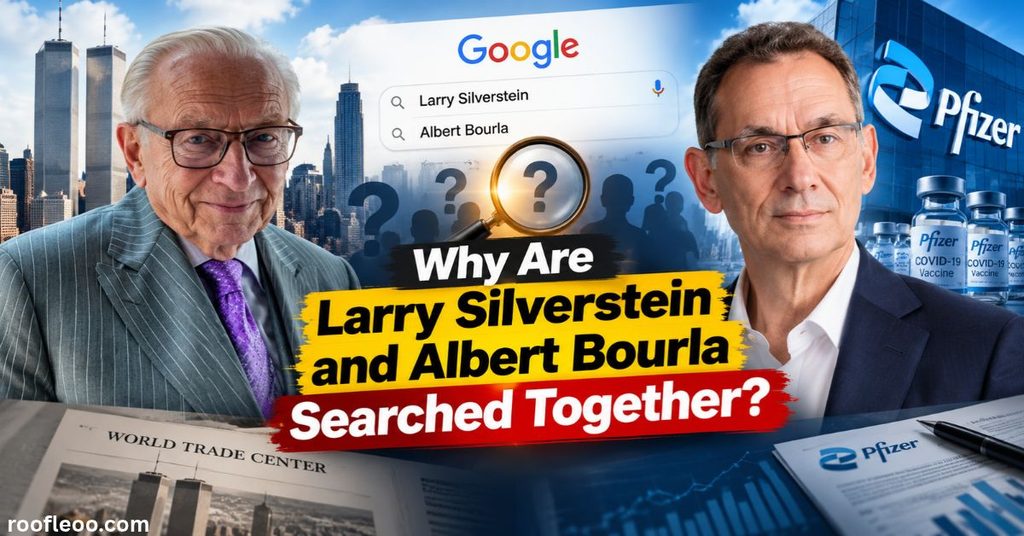
It’s a fair question. Few people would predict this pairing. A few forces likely explain it.
Reason One: Wealth and Success Lists
Many websites publish pages about “successful leaders” or “billionaires and CEOs.” Those pages often group unrelated names together. Search engines notice the overlap. Over time, the pairing grows.
Reason Two: Major Historical Moments
Silverstein is tied to the aftermath of 9/11. Bourla is tied to the COVID-19 era. Each event defined a generation. Readers curious about one crisis often explore the other.
Reason Three: Comparison Searches
Some searchers want to compare careers. They ask who earned more, who had more influence, or whose story is more inspiring. Putting two names in one query is the easiest way to do that.
Reason Four: Autocomplete and Trending Topics
When a few people search both names together, autocomplete picks it up. Others then click the suggestion. A small trend becomes a pattern.
Bottom line: The pairing reflects curiosity about high-stakes leadership rather than any shared company or deal.
Lessons From Silverstein and Bourla for Anyone Building a Career
You don’t need a skyscraper or a pharma giant to learn from these men. Their stories offer practical ideas.
Lessons From Silverstein
- Play the long game. His career spans nearly seven decades in one industry.
- Protect your relationships. Lenders and partners stuck with him in tough years.
- Fight for your position. His insurance battle was bruising yet it kept the project alive.
- Finish what you start. He saw towers through to completion.
Lessons From Bourla
- Build range. He worked in animal health, vaccines, oncology, and operations before leading the company.
- Move fast on big moments. The vaccine decision shows how speed can change outcomes.
- Partner smartly. BioNTech brought skills Pfizer lacked.
- Adapt after success. The post-pandemic reset shows that winning once isn’t enough.
Common Threads
| Trait | Silverstein | Bourla |
|---|---|---|
| Persistence | Rebuilt a destroyed site | Led through a global crisis |
| Risk-taking | Signed a massive lease | Funded vaccine work at speed |
| Adaptability | Reworked plans after 2001 | Reset Pfizer after the pandemic |
| Public visibility | Became the face of rebuilding | Became the face of the vaccine |
Frequently Asked Questions About Larry Silverstein and Albert Bourla
Who is Larry Silverstein?
Larry Silverstein is a New York real estate developer, born May 30, 1931. He founded Silverstein Properties in 1957. He is best known for leasing the World Trade Center complex in July 2001 and leading much of its rebuilding. Forbes has estimated his net worth at about $1 billion.
Who is Albert Bourla?
Albert Bourla is the Chairman and CEO of Pfizer. He was born in Thessaloniki, Greece, in 1961. He joined Pfizer in 1993, became CEO in January 2019, and led the company through the COVID-19 vaccine effort with BioNTech.
Are Larry Silverstein and Albert Bourla business partners?
No. There’s no known business partnership between them. Silverstein works in real estate through Silverstein Properties. Bourla leads Pfizer, a pharmaceutical company. Their names appear together mostly in search trends and comparison articles.
What companies are associated with Larry Silverstein and Albert Bourla?
Silverstein is linked to Silverstein Properties, the developer behind 7, 4, and 3 World Trade Center. Bourla is linked to Pfizer. On the vaccine side, Pfizer partnered with BioNTech, a German biotechnology firm.
Why are their names discussed together?
People compare them because each reached the top of a major industry. Each also faced intense public attention during a defining moment. Search engines reinforce the pairing when many users look up both names.
Do Larry Silverstein and Albert Bourla work in the same industry?
No. Silverstein works in commercial real estate. Bourla works in pharmaceuticals. The industries use different business models, face different regulators, and deal with different kinds of risk.
How old are Larry Silverstein and Albert Bourla in 2026?
Silverstein turned 95 on May 30, 2026. Bourla turned 65 on October 21, 2026.
Who earns more, Silverstein or Bourla?
Estimated wealth favors Silverstein. Forbes places him near $1 billion. Bourla earns roughly $21–25 million in annual pay, while published net worth estimates sit in the tens of millions. Silverstein owns his company. Bourla works as a salaried executive.
Conclusion: What Larry Silverstein and Albert Bourla Show Us in 2026
The story of Larry Silverstein and Albert Bourla isn’t about a partnership. It’s about two leaders who carried enormous weight in front of the whole world.
Silverstein turned a family real estate trade into a defining role in rebuilding lower Manhattan. At 95, he still stands as one of the most recognizable names in New York development. His fortune, estimated near $1 billion, grew from decades of patient bets on buildings.
Bourla climbed from a veterinary background in Greece to the top of Pfizer. He steered the company through the COVID-19 vaccine race and the sharp reset that followed. In 2026, he faces a new test: proving Pfizer can thrive in the post-pandemic world.
Key takeaways:
- No known business tie exists between the two men.
- Silverstein built wealth as a founder-owner. Bourla earned his as a top executive.
- Both faced harsh public scrutiny at pivotal moments.
- Their careers show that persistence and adaptability matter more than any single win.
So the next time you see these two names side by side, you’ll know why. They share no company, yet they share a lesson. Big responsibility draws big attention, and the leaders who last are the ones who keep building.

