
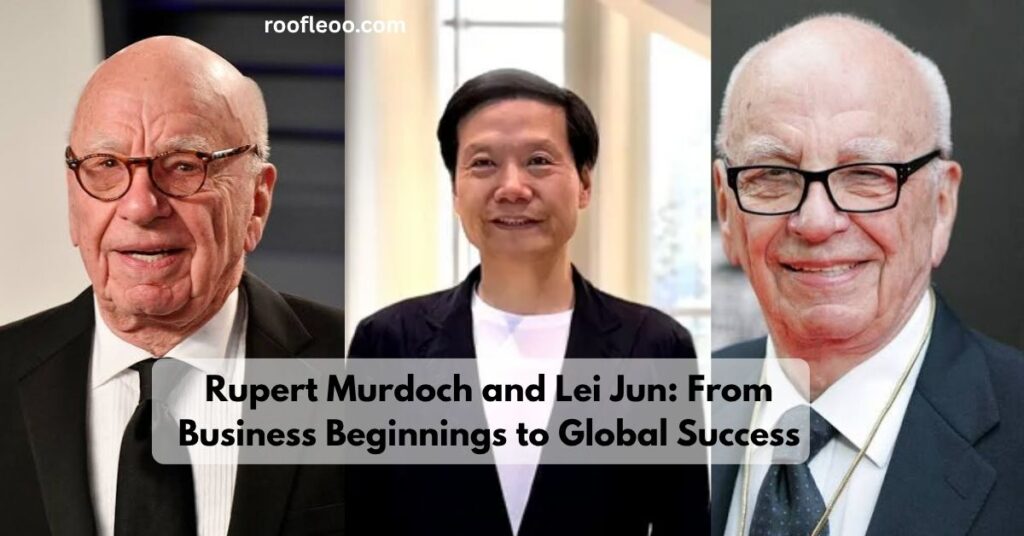
Meta description: Rupert Murdoch built a global media empire. Lei Jun built Xiaomi into a phone, device, and electric car giant. Compare their careers, strategies, and lessons for entrepreneurs.
One man turned a single Adelaide newspaper into a worldwide media empire. The other started a smartphone company in a Beijing office and ended up building electric cars. On the surface, Rupert Murdoch and Lei Jun have almost nothing in common. They come from different generations, countries, and industries.
So why does the pairing deserve a closer look? Because their stories show two very different ways to build something huge. Murdoch bought, merged, and expanded. Lei Jun built, tested, and connected. Put their careers side by side and you get a practical lesson in how growth really works.
Quick clarification before we go further. This article is a comparison. Searches for these two names together sometimes suggest a partnership, but no publicly known business tie exists between them. We’ll cover that in detail later.
For now, let’s meet the two founders.
Who Is Rupert Murdoch?
Keith Rupert Murdoch was born on March 11, 1931, in Melbourne, Australia. He turned 95 in 2026. That makes him one of the longest-serving business leaders in modern history. His estimated net worth sits around $20 billion, though the number moves with the stock market and with the value of his family’s holdings.
His father, Sir Keith Murdoch, was a well-known newspaper executive. Rupert studied at Oxford. After his father died in 1952, the young Murdoch returned home to take charge of The News, a small afternoon paper in Adelaide. He was just 21. Most people his age were still figuring out a career. He was running a newsroom.
That small paper became the seed of an empire. Murdoch used a simple playbook in those early years:
- Find a weak or overlooked paper. He targeted outlets that rivals ignored.
- Cut costs and sharpen the product. Bold headlines and punchy writing became his signature.
- Reinvest the profits. Each win funded the next purchase.
By the 1960s he had a growing chain of Australian papers. In 1964 he launched The Australian, the country’s first national daily. Then he looked abroad.
The Move From Newspapers to a Media Empire
Murdoch’s story has three big chapters. Australia came first. Britain followed. The United States came last and proved the most lucrative.
In each country, he used the same approach. He bought a struggling title. He changed its tone. He pushed its circulation up. Then he used the cash flow to buy something larger.
Over time, his company expanded from print into television and film. That shift changed everything. A newspaper reaches readers once a day. A television network reaches them every hour. Murdoch understood that difference earlier than most of his rivals.
Where Murdoch Stands Today
In November 2023, Murdoch stepped down as chairman of both Fox Corporation and News Corp. He became chairman emeritus of each company. His son Lachlan Murdoch took over as chairman of both. Lachlan also serves as CEO of Fox Corporation.
The succession question didn’t end there. In September 2025, the family reached a settlement over control of the Murdoch family trust. Under the deal, Lachlan secured control of the family’s voting stake. His siblings Prudence, Elisabeth, and James agreed to sell their interests. Reports at the time put the payout at roughly $1.1 billion each. That settlement ended a long-running family dispute and gave the companies a clearer path forward.
Rupert Murdoch’s Major Business Achievements
Few executives can match the sheer range of Murdoch’s deals. Here’s a timeline of the milestones that shaped his empire.
| Year | Milestone | Why It Mattered |
|---|---|---|
| 1953 | Takes over The News in Adelaide | Starting point of the entire company |
| 1964 | Launches The Australian | First national daily newspaper in Australia |
| 1969 | Buys News of the World and The Sun in the UK | Broke into the British market |
| 1976 | Buys the New York Post | First major foothold in the US |
| 1981 | Acquires The Times and The Sunday Times | Gained a prestigious British brand |
| 1985 | Buys a stake in 20th Century Fox and becomes a US citizen | Opened the door to film and TV |
| 1986 | Launches Fox Broadcasting | Created a fourth US television network |
| 1989 | Launches Sky Television | Started satellite TV in Europe |
| 1996 | Launches Fox News Channel | Reshaped American cable news |
| 2007 | Acquires Dow Jones and The Wall Street Journal | Added a top financial news brand |
| 2013 | Splits publishing and entertainment into separate companies | Created News Corp and 21st Century Fox |
| 2019 | Sells most 21st Century Fox assets to Disney | Deal valued at about $71 billion |
Each step built on the last. Notice how the pattern shifts over time. The early deals involve newspapers. The middle deals add television and film. The late deals focus on premium news and financial data.
A few of these moves deserve extra attention.
The Fox Broadcasting launch (1986). Before Murdoch, the three big US networks dominated television. Many analysts doubted a fourth network could survive. Fox not only survived but thrived. Shows like The Simpsons became cultural landmarks. The network proved that a challenger could break into a market that looked locked.
Fox News (1996). Murdoch hired veteran media strategist Roger Ailes to run the new channel. Fox News grew into the most-watched cable news network in America. It also became a lightning rod for debate about media bias. Supporters saw a voice for audiences who felt ignored. Critics saw a divisive force. Either way, its commercial impact was enormous.
The Disney sale (2019). After decades of building, Murdoch sold the bulk of his entertainment assets for tens of billions of dollars. He kept the Fox broadcast network, Fox News, and Fox Sports under a new company called Fox Corporation. He also kept the publishing arm, News Corp. That arm includes The Wall Street Journal, the New York Post, The Times of London, and HarperCollins. Fox Corporation later added the free streaming service Tubi, which has grown fast in the US.
Who Is Lei Jun?
Lei Jun was born on December 16, 1969, in Xiantao, a city in China’s Hubei province. He’s 56 years old. Forbes and other trackers have put his net worth in the tens of billions of dollars, and it climbed sharply in 2025 as Xiaomi’s share price surged. He owns roughly a quarter of Xiaomi.
His story starts in a university dorm. Lei studied computer science at Wuhan University and finished his four-year degree in just two years. He has often told the story of reading a book about Silicon Valley’s early days as a student. It lit a fire. He wanted to build a great technology company in China.
After graduation, Lei joined Kingsoft in 1992. At the time, it was a small software firm. He rose through the ranks and became CEO in 1998. Under his leadership, Kingsoft built WPS Office, a word processor that competed with Microsoft Office. The company went public in Hong Kong in 2007. Lei stepped away from the CEO role the same year.
Then came a quieter, more experimental phase. Lei did three things:
- He founded Joyo.com in 2000. It was an online bookstore. Amazon bought it in 2004 for about $75 million, and it became Amazon China.
- He became an angel investor. He backed several tech startups, including the mobile browser UCWeb and the video-chat platform YY.
- He studied the market. He watched smartphones change the world and spotted a gap. Good phones cost too much in China.
In April 2010, he launched Xiaomi with a team of co-founders. The rest is business history.
Lei Jun’s Major Business Achievements
Xiaomi’s rise was fast by almost any standard. Here’s the timeline.
| Year | Milestone | Why It Mattered |
|---|---|---|
| 1992 | Joins Kingsoft | Started his software career |
| 1998 | Becomes Kingsoft CEO | Led China’s best-known office software firm |
| 2004 | Sells Joyo.com to Amazon | First major exit |
| 2010 | Founds Xiaomi and releases the MIUI operating system | Built a software community before selling a phone |
| 2011 | Launches the first Xiaomi smartphone | Premium specs at a low price |
| 2018 | Takes Xiaomi public in Hong Kong | Raised about $4.7 billion |
| 2021 | Announces an electric vehicle project | Committed $10 billion over ten years |
| 2021 | Xiaomi briefly ranks second worldwide in smartphone shipments | Passed Apple for a quarter |
| 2024 | Launches the SU7 electric sedan | Delivered over 136,000 vehicles in its first year |
| 2025 | Launches the YU7 electric SUV | Drew more than 240,000 orders within 18 hours |
A few details bring these numbers to life.
The software-first approach. Xiaomi released its MIUI operating system before it sold any phones. Lei recruited early fans through online forums. These users tested updates and sent feedback. Engineers then shipped improvements nearly every week. That habit built loyalty before the first handset reached a customer.
The 2018 IPO. Xiaomi was one of the first companies to list in Hong Kong under new rules that allowed founders to keep extra voting power. The offering raised around $4.7 billion and valued the company at roughly $54 billion. Shares dipped on day one. Still, Xiaomi has since grown into one of the largest technology firms listed in Hong Kong.
The ecosystem. Lei didn’t stop at phones. Xiaomi expanded into TVs, air purifiers, scooters, rice cookers, robot vacuums, and fitness bands. Many of these came from startups that Xiaomi backed rather than built itself. Today, hundreds of millions of devices connect through Xiaomi’s platform. That network keeps customers inside the brand.
The electric vehicle bet. When Lei announced the car project in 2021, he called it the last major venture of his career. He also said he was putting his personal reputation behind it. Critics doubted a phone maker could succeed in cars. The SU7 answered many of those doubts. The company hit its first-year delivery goal and set an even bigger target of 350,000 vehicles for 2025. The YU7 SUV followed in mid-2025 and drew a flood of orders within hours.
Xiaomi’s 2024 annual revenue climbed to roughly 365 billion yuan. That’s a long way from a startup in a rented office.
Rupert Murdoch and Lei Jun: Is There a Business Connection?
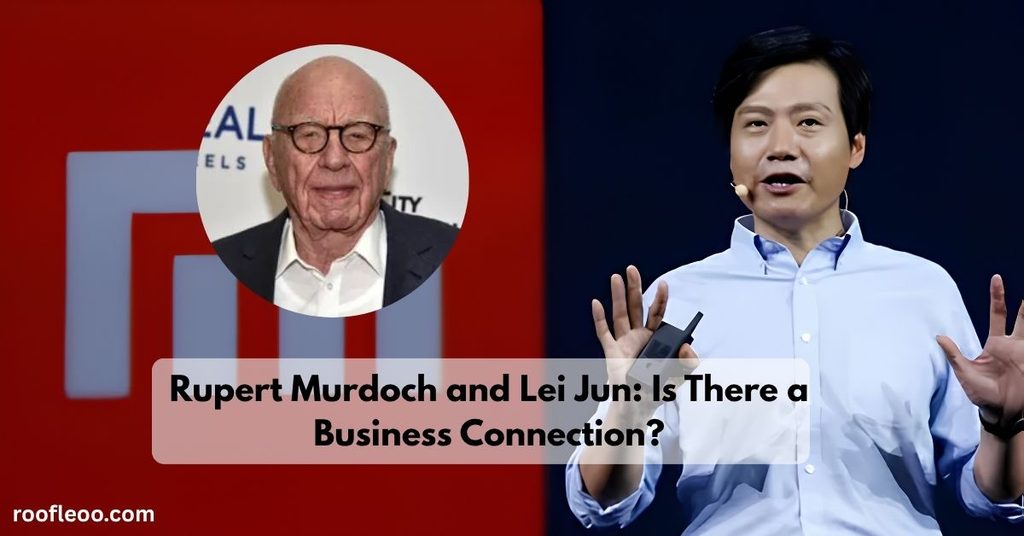
Short answer: no. There’s no publicly known partnership, joint venture, shared board seat, or co-owned company linking Rupert Murdoch and Lei Jun.
So why do people search for them together? Several reasons come to mind:
- They’re both famous founders. Search engines often group well-known business names.
- Both built global brands. Their companies reach hundreds of millions of people.
- Both have China-related stories. Murdoch once owned Star TV in Asia and spent years trying to grow in China. Lei Jun builds products for the Chinese market and beyond. Operating in the same large country doesn’t create a partnership.
- Curiosity about contrasts. Readers like to compare an old-media titan with a young-tech star.
Don’t read too much into the pairing. Two famous people appearing in the same list doesn’t mean they’ve worked together. When you see a claim of a hidden connection, treat it with healthy skepticism.
What Evidence Would Confirm a Connection?
A real business link leaves a paper trail. If you want to test any claim about two public figures, look for these signs:
- Official filings. Public companies must disclose major partnerships, investments, and board changes in regulatory documents.
- Press releases from either company. A genuine deal usually gets an announcement.
- Shareholder and ownership records. These show who holds stakes in which firms.
- Coverage from major, established news outlets. Reputable newsrooms check facts before they publish.
- Direct statements from the people involved. Interviews, speeches, and official social accounts count.
Here’s a simple rule. If none of these exist, the claim isn’t verified. A rumor on a forum or a screenshot with no source proves nothing. In the case of Murdoch and Lei Jun, none of these records point to a shared business.
Rupert Murdoch and Lei Jun: A Business Comparison
The contrast between these two founders is far more interesting than any overlap. One built his fortune on content. The other built his on devices and software. One grew mostly by purchasing. The other grew mostly by building. Here’s a side-by-side look.
| Category | Rupert Murdoch | Lei Jun |
|---|---|---|
| Birth year and country | 1931, Australia | 1969, China |
| Age in 2026 | 95 | 56 |
| Industry | Media and entertainment | Consumer electronics, software, and electric vehicles |
| Starting point | Inherited a small Adelaide newspaper in 1952 | Software engineer, then entrepreneur and angel investor |
| Core products | Newspapers, TV networks, news channels, books | Smartphones, smart home devices, EVs |
| Main growth method | Acquisitions and mergers | Product launches and ecosystem investments |
| Main markets | Australia, UK, US | China, India, Europe, Southeast Asia |
| Key public-company moment | Splits and the Disney sale (2013 to 2019) | Hong Kong IPO (2018) |
| Estimated wealth | Around $20 billion | Tens of billions of dollars |
| Biggest challenge | Phone-hacking scandal and legal settlements | Quality scrutiny, driver-assist safety debates, and trade tensions |
| Succession | Son Lachlan now leads both companies | Still chairman and CEO of Xiaomi |
The big takeaway is simple. Murdoch’s empire grew like a collection. He added pieces one at a time and held them under one umbrella. Lei Jun’s company grew like a web. Each new product connected to the ones before it, and every device pulled users deeper into the system.
Neither approach is better by default. Each fit its time and industry. Media in the late twentieth century rewarded whoever controlled distribution. Consumer technology in the 2010s rewarded whoever controlled the user relationship.
How Their Business Strategies Differ
Strategy is where the two careers pull apart most clearly. Let’s look at five angles. Each one shows how Murdoch and Lei Jun solved the same basic problem in very different ways. That problem is how to grow a company without losing control of it.
Business Expansion and Growth
Murdoch grew through acquisition. When he saw a paper or network that was underperforming, he bought it. Then he trimmed costs and rebuilt the product. He used borrowed money often. That made his empire powerful but also fragile at times.
Think of it like this. Murdoch collected houses. Each purchase added rent, value, and risk. Lei Jun built a neighborhood from the ground up. He started with one street, a phone, and then laid down the next one.
Lei Jun grew through organic expansion. Xiaomi launched a flagship phone. It then added a budget line called Redmi. Soon came tablets, wearables, TVs, and home appliances. Finally came cars. He also invested in dozens of partner startups so that Xiaomi didn’t have to build everything alone.
Here’s how the two models compare:
| Factor | Acquisition (Murdoch) | Organic and Ecosystem (Lei Jun) |
|---|---|---|
| Speed | Fast | Gradual at first |
| Capital needed | Very high | High but spread over time |
| Integration risk | High | Lower |
| Control over culture | Harder to maintain | Easier to maintain |
| Brand consistency | Mixed | Strong |
Brand Building and Customer Relationships
Murdoch’s brands rely on editorial identity. A reader picks The Wall Street Journal for sober business coverage. A viewer picks Fox News for a particular style of commentary. The brand promise is a point of view. Loyalty comes from that voice.
Lei Jun’s brand rests on community and value. He called Xiaomi’s early users “friends,” and he meant it. Fans joined forums. They voted on features. They shared feedback that shaped the next update. That closeness turned customers into promoters.
There’s another difference worth noting. Media audiences consume content, often for free or for a small subscription. Hardware customers buy a physical object and expect it to work. A bad headline loses a reader for a day. A faulty phone loses a customer for years. That’s why Lei Jun obsesses over reviews and word of mouth.
Rupert Murdoch and Lei Jun Competition and Market Positioning
Murdoch competed as a challenger. In Britain, The Sun shook up the tabloid market with aggressive pricing and bold content. In the US, Fox Broadcasting took on three dominant networks. In cable news, Fox News went after an audience that rivals had overlooked. He rarely tried to out-polish incumbents. He tried to out-hustle them.
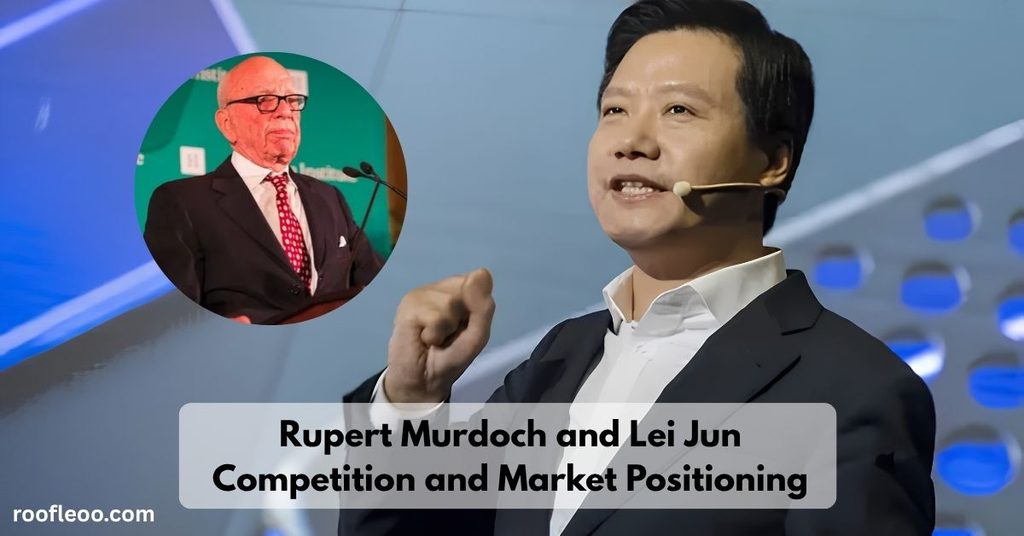
Lei Jun also competed as a challenger, but on specs and price. In 2011, a high-end smartphone in China cost far more than most families could afford. Xiaomi offered similar performance for much less. Lei Jun also pledged publicly that Xiaomi’s overall hardware net profit margin would stay at or below 5 percent. That promise gave customers a reason to trust the pricing. It also shaped the company’s culture around efficiency.
Over time, though, Xiaomi moved upmarket. The company now sells premium phones and cars at higher price points. That shift shows how positioning has to evolve as a brand matures.
Innovation and Adaptability
Both men adapted, but in different ways.
Murdoch moved from print to broadcast to satellite to cable to digital. Some bets paid off hugely. Sky and Fox are proof. Others stumbled. The best-known miss was MySpace. News Corp bought the social network in 2005 for about $580 million. Facebook soon overtook it. News Corp sold MySpace in 2011 for around $35 million. That’s a painful lesson about how quickly digital markets move.
Lei Jun pivoted from phones to connected devices and then to cars. Each shift reused the same core assets: software skills, supply-chain relationships, and a loyal user base. In 2025, Xiaomi also unveiled its own in-house smartphone chip. That move signaled a push to control more of the technology stack.
Adapting means different things in each industry. In old media, it meant finding new ways to deliver content. In consumer tech, it means reinventing the product itself every few years.
Leadership, Reputation, and Accountability
Reputation tells a sobering part of both stories.
Murdoch’s career includes serious controversies. In 2011, the phone-hacking scandal at News of the World forced the paper to close after 168 years. Murdoch told a UK parliamentary committee that it was the “most humble day” of his life. The fallout cost his company hundreds of millions of dollars in settlements and legal fees. In 2023, Fox Corporation agreed to pay $787.5 million to settle a defamation lawsuit brought by the voting-machine company Dominion. That figure ranks among the largest media defamation settlements on record.
Lei Jun faces a different kind of scrutiny. Manufacturing carries physical risk. After Xiaomi’s cars hit the road, safety questions followed. A fatal crash in March 2025 involving an SU7 using driver-assist features led to public debate. It also raised questions about how carmakers describe those systems. Regulators in China tightened rules on marketing for assisted driving. Xiaomi has responded by emphasizing safety upgrades and clearer communication.
Here’s the contrast in a nutshell:
- Media risk centers on truth, ethics, and legal exposure.
- Manufacturing risk centers on safety, quality, and product recalls.
Both can shake public trust. Both demand fast, honest responses.
Two Case Studies Every Founder Should Study
Strategy sounds tidy on paper. Real life gets messy. These two case studies show how each founder handled a high-stakes moment.
Case Study: Murdoch and the Sky Gamble
In 1989, Murdoch launched Sky Television in Britain. The idea was bold. Deliver dozens of channels by satellite to British homes. The costs were huge. Sky and a rival called British Satellite Broadcasting lost millions each week as they battled for viewers.
By 1990, News Corp itself was in trouble. The company carried more than $7 billion in debt. Banks grew nervous. For a short time, the whole empire seemed at risk. Murdoch negotiated with lenders and pushed through a merger of Sky and its rival. The combined company became BSkyB.
The gamble worked. BSkyB became Britain’s dominant pay-TV company. Murdoch’s side later sold its Sky stake to Comcast in 2018. The long-term payoff was enormous.
Lesson: Big bets can save or sink a company. Murdoch survived because he kept relationships with lenders and acted fast when the pressure peaked.
Case Study: Xiaomi and the US Blacklist
In January 2021, the US Defense Department added Xiaomi to a list of companies with alleged ties to the Chinese military. The move hit investor confidence. Xiaomi’s stock fell sharply. The company denied the claim and filed a lawsuit.
A US federal court sided with Xiaomi and blocked the designation. By May 2021, the company was removed from the list. Xiaomi’s shares recovered. Later that year, it briefly passed Apple in global smartphone shipments.
Lesson: Political and regulatory risk can strike without warning. Xiaomi responded calmly. It used legal channels and kept its product focus. It didn’t let a headline derail operations.
What Entrepreneurs Can Learn From Rupert Murdoch and Lei Jun
You don’t need a billion-dollar company to borrow from these founders. The principles scale down. Here are five takeaways that any small business owner or startup founder can use.
Understand Your Market
Murdoch read audiences well. He knew what working-class British readers wanted from a daily paper. He gave them short stories, big photos, and a sharp tone. Whether you like it or not, it sold.
Lei Jun read buyers well. He saw people who wanted a great phone but couldn’t pay premium prices. He built for them.
Try this: Before you scale, talk to twenty real customers. Ask what they hate about current options. Write down the exact words they use. Then build around those frustrations.
Build a Strong Business Identity
Both men built brands that people recognize in a second. Murdoch’s papers and channels have a distinct voice. Xiaomi’s orange logo, its fan community, and its price-to-performance message are just as clear.
A strong identity answers one question. What do we stand for? If you can’t say it in a single sentence, customers can’t either.
Try this: Write your brand promise in under fifteen words. Test it on three strangers. If they can repeat it back, you’re on the right track.
Choose the Right Growth Strategy
Acquisition and organic growth both work. Each has trade-offs.
- Acquisition gives you speed and market share. But it needs capital and carries integration risk.
- Organic growth gives you control and a consistent culture. But it takes longer.
- Partnerships and investments sit in the middle. Xiaomi used them to grow its ecosystem without building every product in-house.
Match your strategy to your resources. A small team with limited cash usually grows best through focused product building. A well-funded company with strong operations may find acquisitions efficient.
Adapt to Industry Changes
Murdoch kept moving across formats. Lei Jun kept moving across categories. Neither stayed still.
But adaptation has a dark side. MySpace shows what happens when you move without a clear plan. Xiaomi’s early struggles in some markets show the same. Adapt with care. Move early on trends that match your strengths. Skip trends that pull you away from them.
A quick checklist:
- Is this new market close to what we already do well?
- Do we have a way to reach customers there?
- Can we afford to fail once?
If you answer yes to all three, test it. If not, wait.
Protect Your Reputation
Reputation takes years to build and moments to lose. Murdoch’s legal battles and Lei Jun’s safety scrutiny both prove it.
Three habits help any company protect trust:
- Correct mistakes fast. A quick, honest fix beats a slow denial.
- Communicate clearly. Say what happened, what you’re doing, and when customers will see results.
- Build internal checks. Review claims, marketing, and product quality before they reach the public.
Common Misconceptions About Rupert Murdoch and Lei Jun
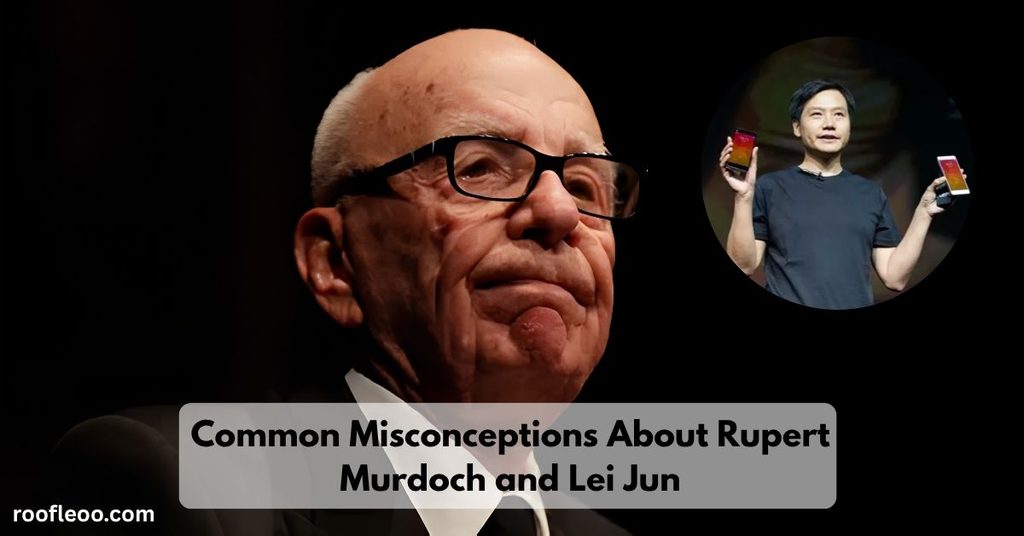
A pairing like this attracts a few myths. Let’s clear them up.
Myth: They’re business partners or rivals. Public records show no partnership. They also don’t compete directly. One works in media. The other works in electronics and vehicles.
Myth: They built their companies the same way. The comparison above shows how different their paths are. Murdoch bought and merged. Lei Jun launched and connected.
Myth: Their success happened overnight. Murdoch spent decades building his empire. Lei Jun spent nearly twenty years in software and investing before Xiaomi took off. Both faced setbacks along the way.
Myth: A famous name makes a claim true. A quote or story gains no credibility just because a celebrity’s name is attached. Always check primary sources.
Myth: Xiaomi only sells cheap phones. Early on, price was the draw. Today, the company sells flagship phones, premium appliances, and cars with a much wider price range.
Frequently Asked Questions
Who are Rupert Murdoch and Lei Jun?
Rupert Murdoch is an Australian-born media mogul who built News Corp and Fox Corporation. Lei Jun is a Chinese technology entrepreneur who founded Xiaomi. They work in different industries and countries.
Are Rupert Murdoch and Lei Jun business partners?
No public evidence shows a partnership between them. No joint companies, shared investments, or announced deals exist. Always look for official filings and major news coverage before believing a claim of a connection.
What companies are associated with Rupert Murdoch?
Murdoch is tied to News Corp and Fox Corporation. News Corp includes The Wall Street Journal, the New York Post, The Times, and HarperCollins. Fox Corporation includes Fox News, Fox Broadcasting, Fox Sports, and Tubi. He also built 20th Century Fox and Sky in earlier decades.
What company did Lei Jun found?
Lei Jun founded Xiaomi in April 2010. Before that, he led Kingsoft as CEO and founded the online bookstore Joyo.com, which Amazon acquired in 2004. Xiaomi now sells smartphones, smart home products, and electric vehicles.
What is the main difference between Rupert Murdoch and Lei Jun?
Murdoch built a media business mostly through acquisitions and content. Lei Jun built a technology business through product launches and an interconnected device ecosystem. Their eras, industries, and risk profiles differ too.
Is Rupert Murdoch still chairman of Fox Corporation and News Corp?
No. He stepped down in November 2023 and became chairman emeritus of both companies. His son Lachlan Murdoch became chairman of both. Lachlan also serves as CEO of Fox Corporation. The family trust dispute was settled in 2025, with Lachlan gaining control.
What can entrepreneurs learn from their careers?
Know your market well. Build a clear brand. Match your growth style to your resources. Adapt carefully when your industry shifts. Protect your reputation at all costs.
Where can readers verify information about these business leaders?
Start with each company’s official investor relations pages. News Corp, Fox Corporation, and Xiaomi all publish annual reports and press releases. Regulatory filings in the US and Hong Kong offer audited facts. Established news agencies and business publications round out the picture.
Conclusion
Go back to the contrast we started with. A young heir took over a small newspaper and built a global media network. A software engineer from Hubei launched a phone company and ended up selling cars. Their paths never crossed in any documented way. Yet Rupert Murdoch and Lei Jun each offer a rich case study in how ambition, timing, and strategy shape a business.
Murdoch teaches boldness. He took huge risks and nearly lost everything once. He also shows the cost of reputation damage. Lei Jun teaches focus. He built trust with users first and expanded outward one step at a time. His story also shows how fast safety and quality issues can test a brand.
For entrepreneurs, the message is practical. Study your customers closely. Build a brand that says something clear. Pick the growth path that fits your cash and your team. Adapt, but don’t chase every trend. And guard your reputation as if it were your most valuable asset. It probably is.
So here’s a question to take with you. Does your business look more like a collection or a web? Your answer could shape your next big move.

