

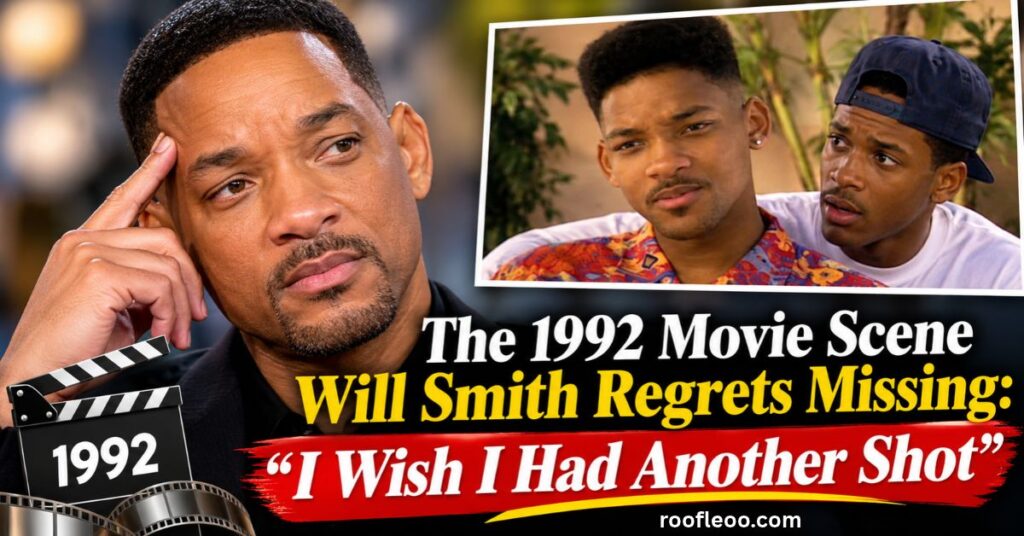
Picture yourself at 23. You’ve got a hit TV show and a Grammy on your shelf. Hollywood just handed you a serious dramatic role. Then comes the one scene that scares you, and you freeze.
That’s exactly what happened to Will Smith during the filming of Six Degrees of Separation. The mistake wasn’t a flop or a rejected script. He simply refused to shoot one moment, and the choice followed him for decades.
This article walks through what happened on set and why it mattered. It also covers how it shaped the career of one of the biggest movie stars on the planet. Along the way, you’ll find timelines, tables, case studies, and lessons you can use in your own life.
Quick Facts About Will Smith
Before we dive into the story, here’s a snapshot of the man behind it.
| Detail | Fact |
|---|---|
| Full name | Willard Carroll Smith Jr. |
| Born | September 25, 1968, in Philadelphia, Pennsylvania |
| Current age | 58 |
| Height | 6 feet 2 inches (188 cm) |
| Estimated net worth | Roughly $350–$400 million |
| Spouse | Jada Pinkett Smith (married in 1997) |
| Children | Trey (born 1992), Jaden (born 1998), Willow (born 2000) |
| Breakout TV role | The Fresh Prince of Bel-Air (1990–1996) |
| First film role | Where the Day Takes You (1992) |
| Oscar win | Best Actor for King Richard (2022) |
| Grammy wins | Four, split between his work with DJ Jazzy Jeff and his solo career |
| Production company | Overbrook Entertainment |
These numbers matter because they show the scale of what came after 1992. The kid who flinched at one scene became a global box office force.
Will Smith in 1992: A TV Star Chasing Movie Credibility
In 1992, Will Smith had the kind of fame most people only dream about. The Fresh Prince of Bel-Air ran on prime time and pulled in millions of viewers every week. His music career had already earned him a Grammy as half of DJ Jazzy Jeff & The Fresh Prince. He was young and charming. Everybody knew his face.
Yet fame on television doesn’t automatically open the door to film respect. Plenty of sitcom stars have crashed into that wall. Studios often see them as one-note personalities. Critics tend to wait for them to fail.
Think of it like a sprinter trying a marathon. The skills overlap but the demands differ. Television asks for consistency and warmth. Prestige drama asks for risk, silence, and sometimes discomfort.
Where the Day Takes You: The First Step
Smith made his movie debut that same year in Where the Day Takes You. He played Manny, a character far from the cheerful teenager audiences loved on TV. The role was small but it signaled ambition. He wanted to prove he could handle darker, heavier material.
Then came a much bigger swing.
Will Smith Early Career Timeline
Here’s how the early years stacked up.
| Year | Milestone |
|---|---|
| 1985–1988 | Starts rapping with DJ Jazzy Jeff and releases early albums |
| 1989 | Wins the first Grammy ever given in the rap category with Jazzy Jeff |
| 1990 | The Fresh Prince of Bel-Air premieres on NBC |
| 1992 | Debuts on the big screen in Where the Day Takes You |
| 1992 | Films Six Degrees of Separation |
| 1993 | Six Degrees of Separation reaches theaters |
| 1995 | Bad Boys turns him into an action star |
| 1996 | Independence Day becomes a worldwide blockbuster |
| 1997 | Men in Black cements his Fourth of July dominance |
Notice the pattern. The risky 1992–1993 stretch came right before his explosion into blockbuster stardom. That timing makes the Six Degrees story even more interesting.
Six Degrees of Separation: The Film Behind the Will Smith Regret
To understand the regret, you first need to understand the movie.
Six Degrees of Separation arrived in theaters in December 1993. John Guare wrote the original stage play and the screenplay. Fred Schepisi directed. The film follows a wealthy New York couple whose lives change when a charming young stranger shows up at their door.
Smith played that stranger, Paul.
The True Story Behind the Plot
Guare didn’t invent this tale from thin air. Real events inspired it. In the early 1980s, a young man named David Hampton talked his way into the homes of well-off New Yorkers. He claimed to be the son of actor Sidney Poitier. His confidence opened doors and dinner tables across the city.
Guare turned that bold con into a story about identity, class, and how little we know about the people we let into our lives. The title comes from the famous idea that any two people on Earth connect through a chain of about six acquaintances.
The Cast Around Will Smith
The film surrounded its young star with serious talent. Here’s who shared the screen.
| Actor | Role |
|---|---|
| Stockard Channing | Ouisa Kittredge |
| Donald Sutherland | Flan Kittredge |
| Will Smith | Paul |
| Ian McKellen | Geoffrey |
| Anthony Michael Hall | Trent |
| Bruce Davison | Larkin |
| Heather Graham | Elizabeth |
Channing earned an Oscar nomination for Best Actress. That tells you how strong the ensemble was. Smith stepped into a room full of veterans and carried real weight in the story.
Why Paul Was Such a Bold Role
Paul isn’t an easy part. He lies and he charms. He fakes his family history, flirts, and hides pain behind a polished smile. The character also happens to be gay, and the script treats that fact with honesty.
Every one of those layers demanded trust from the actor. Smith knew the character’s sexuality when he accepted the job. So the question isn’t whether he understood the role. The real question is what happened between signing the contract and standing in front of the camera.
The 1992 Movie Scene Will Smith Wouldn’t Shoot
Now we reach the heart of the story.
What the Script Asked For
The screenplay included a moment where Paul kisses another man on the mouth. Anthony Michael Hall played the other man. The kiss wasn’t a gimmick. It showed Paul’s intimacy, his vulnerability, and the way he used closeness as both a gift and a weapon.
In other words, the beat served the story.
The Last-Minute Refusal
Here’s the part that surprises people. Smith didn’t raise concerns during rehearsals or script talks. He stayed quiet until right before the cameras rolled. Then he said no.
Imagine the scene on set. Lights are placed. The crew is ready. The director has a plan. Then the lead actor changes the deal in the final moments. That kind of late reversal puts everyone in a tough spot.
The Stand-In Fix
Schepisi had to solve the problem fast. He used a stand-in whose face the camera never showed. The workaround kept the scene alive but it cost something.
When the audience can’t see the star’s face in an emotional moment, the connection weakens. Viewers feel the gap even if they can’t name it. A kiss between two characters becomes a technical trick instead of a human beat.
One choice put the actor’s comfort above the character’s truth.
Why Will Smith Said No
It’s easy to judge a decision like this from the outside. It’s harder to understand the pressures behind it. Several forces likely pushed him that day.
Image Anxiety
Smith had spent years building a warm, friendly, family-safe public persona. He was the kid from West Philadelphia who made everyone laugh. A film role that challenged that image carried risk, at least in his mind.
Many stars guard their brand like a fortress. They fear one wrong move will crack the wall. At 23, Smith had worked hard to build his. He didn’t want to gamble it on a single scene.
Hollywood in the Early 1990s
Context matters here. Studios and audiences in 1992 reacted very differently to gay characters than they do today. Plenty of straight actors worried that playing gay on screen could hurt their careers. Some feared the public would confuse the role with the real person.
That fear was unfair. It also was real. It shaped decisions across the industry.
A Young Actor’s Blind Spot
Youth plays a role too. Early in a career, many performers confuse protecting themselves with protecting the work. They haven’t yet learned that the best performances often come from the scariest choices.
Smith later described his reaction as immature, and that word fits. He didn’t act out of malice. He acted out of fear and inexperience.
Will Smith Regret in His Own Words
Years later, Smith faced the moment honestly. In a later interview, he admitted he made the wrong call.
“It was very immature on my part.”
He went further. He explained that the film featured actors, a director, and a writer of high caliber. Against that backdrop, he felt he brought something cheesy to the project. He called the experience a valuable lesson.
That honesty stands out. Many celebrities dodge blame or rewrite history. Smith named the mistake and moved on.
Coverage of the story often sums up his feeling with the line “I wish I had another shot at it.” Readers should treat that phrasing as a headline summary of his regret rather than a verified transcript. The core message stays the same either way: he wanted a do-over.
Why Honest Regret Works
Public regret does something powerful. It turns a stumble into a teaching moment. Fans connect with stars who admit mistakes because it makes them feel human.
Here’s what Smith’s admission accomplished:
- It showed self-awareness about an early-career error.
- It reminded young actors that fear can hurt the work.
- It gave audiences a more complete picture of his growth.
- It proved that big success doesn’t erase old lessons.
What the Missing Kiss Cost the Movie
Let’s talk about the practical damage. Did one stand-in sink a film? No. But small choices add up.
The Emotional Cost
Cinema runs on trust between viewer and screen. When the audience senses a cheat, such as a hidden face or an awkward angle, that trust slips. Viewers may not consciously notice. They still feel a slight distance.
For a story about intimacy and deception, that distance matters more than usual.
The Creative Cost
The kiss also carried meaning for Paul’s character. It showed how he blurred affection and manipulation. Removing the actor’s face removed some of that complexity.
The Human Cost
Everyone else on set had to adapt. Hall, Schepisi, and the crew all absorbed the change. Smith later acknowledged how much talent surrounded him. That awareness likely deepened his regret.
| Area affected | Result of the refusal |
|---|---|
| Audience connection | Slight emotional distance in a key beat |
| Character depth | Paul’s intimacy felt less direct |
| Production flow | Last-minute workaround with a stand-in |
| Smith’s reputation | A lesson he later called humbling |
Case Study: Tom Hanks and Philadelphia
Consider what happened in Hollywood that very same year. Philadelphia reached theaters in December 1993, the same month as Six Degrees of Separation. Tom Hanks played Andrew Beckett, a gay lawyer fighting discrimination and illness.
Hanks didn’t hide from intimacy or vulnerability. He leaned into the role fully. The performance won him the Academy Award for Best Actor.
What This Comparison Shows
- Hanks faced the same cultural pressure as Smith.
- He chose commitment over comfort.
- The risk paid off artistically and professionally.
- The film also helped shift public conversation about prejudice and illness.
The point isn’t to shame Smith. The point is to show what’s possible when an actor trusts the material. Both men were stars guarding strong public images. Only one let go of that fear on screen.
How the Role Still Launched Will Smith’s Film Career
Here’s the good news. The refused kiss didn’t wreck anything. Six Degrees of Separation still became a turning point.
Proof of Range
Critics saw a young star step beyond sitcom comfort. Paul required charm, sadness, and sharp timing. Smith delivered enough to convince Hollywood he could handle drama.
A Bridge to Bigger Roles
Within two years, he led Bad Boys. Within three, he saved the world in Independence Day. The dramatic credibility from Six Degrees helped studios see him as more than a comedian.
Lessons Carried Forward
Smith has often talked about learning through failure. This early misstep fits that pattern. He took the lesson and applied it in the years that followed.
Will Smith’s Other Career Regrets
The 1992 scene isn’t his only regret. Smith has spoken openly about several choices he’d change. Here’s a quick comparison.
| Regret | Year | What happened | Type of regret |
|---|---|---|---|
| The kiss in Six Degrees of Separation | 1992 | Refused to shoot a scene | A choice he controlled in the moment |
| Turning down The Matrix | 1997–1999 | Passed on Neo to make another film | A career-direction mistake |
| Making Wild Wild West | 1999 | Starred in a poorly reviewed blockbuster | A bad project choice |
| Passing on Inception | 2000s | Didn’t connect with the pitch | A missed opportunity |
Wild Wild West
Smith has called this film a thorn in his side. Critics panned it. Audiences didn’t embrace it. He later joked about how uncomfortable he felt in the costume.
The Matrix
The Wachowskis offered him the role of Neo. He said no and chose Wild Wild West instead. Keanu Reeves took the part and the film became a cultural landmark. Smith has said he regrets that decision.
Inception
Christopher Nolan personally pitched him the film. Smith admitted he didn’t get it at the time. He later said he was hurt by missing both this movie and The Matrix, and he explained that films set in alternate realities can be hard to pitch.
Why the Kiss Regret Feels Different
Passing on The Matrix or Inception involved guesswork about the future. Nobody can predict a movie’s legacy. The 1992 scene was different. Smith knew exactly what the story needed. He simply stopped himself.
Case Study: Ali and the Power of Total Commitment
Fast forward to 2001. Smith took on one of the most demanding roles of his career, playing boxing legend Muhammad Ali.
What He Did Differently
- He trained for roughly a year and a half to build the physique and boxing skills.
- He studied Ali’s voice, movement, and personality.
- He accepted the physical and emotional strain without hedging.
The Result
The performance earned Smith his first Oscar nomination for Best Actor. Critics praised his transformation. The film showed an actor willing to disappear into a part.
The Connection to 1992
Compare the two moments side by side. In 1992, Smith protected his image. In 2001, he risked it for the character. The contrast shows real growth. The lesson from Six Degrees clearly stuck.
The Comeback of Courage: King Richard and Beyond
Smith kept pushing into serious territory. In 2006 he earned another Oscar nomination for The Pursuit of Happyness. The story of a struggling father trying to build a better life showed his emotional depth.
The Oscar Win
In King Richard (2021), he played Richard Williams, the determined father of tennis stars Venus and Serena. The role won him the Academy Award for Best Actor at the ceremony held on March 27, 2022.
That same night became controversial after an on-stage incident involving comedian Chris Rock. The Academy later banned Smith from attending its events for ten years. The episode reminded fans that growth isn’t a straight line. Even a veteran star can stumble in public.
What the Pattern Reveals
Smith’s career shows a mix of triumph and regret. He has taken enormous risks. He has also made visible mistakes. Both sides shaped the man he is now.
Lessons from Will Smith’s Missed Scene
You don’t need to be a movie star to learn from this story. Here are the takeaways.
Speak Up Early
Smith waited until the last moment to refuse. Raising concerns during preparation would have given everyone time to adjust. Whether you’re at work or school, honest conversations work best before deadlines hit.
Serve the Work, Not Your Ego
The scene needed an authentic kiss. Smith’s comfort mattered but the story mattered more. Ask yourself whether a decision helps the project or only protects your image.
Treat Fear as Information
Fear isn’t always a stop sign. Sometimes it points toward growth. Smith’s later roles prove that leaning into discomfort can unlock your best work.
Own Your Mistakes
Admitting error earns respect. Smith could have ignored the incident. He chose honesty instead.
Quick Checklist for Your Own Do-Over Moments
- Write down what you regret and why.
- Identify the fear behind the choice.
- Decide what you’d do differently next time.
- Apply that lesson to your next big decision.
Frequently Asked Questions About the Will Smith Regret
What movie scene does Will Smith regret not shooting?
He regrets refusing to film a kiss with actor Anthony Michael Hall in Six Degrees of Separation. The production used a stand-in instead.
When did he film the scene?
Production took place in 1992. The movie reached theaters in December 1993.
Why did he refuse the scene?
He felt uncomfortable and wanted to protect his public image. He later called his choice very immature.
Did the refusal hurt his career?
No. The film still showed his dramatic range and helped lead to major roles in Bad Boys, Independence Day, and Men in Black.
Has he regretted other movie decisions?
Yes. He has expressed regret over Wild Wild West and over turning down The Matrix and Inception.
What is his biggest role since then?
Many fans point to King Richard, which won him the Best Actor Oscar. Others prefer Ali or The Pursuit of Happyness.
Final Thoughts on Will Smith and the Scene He Wishes He Could Redo
Everyone carries a moment they’d love to replay. For Will Smith, that moment lives on a 1992 film set. He faced a scene that scared him. Fear won and a stand-in took his place.
Yet the story doesn’t end in failure. Smith owned the mistake and learned from it. He went on to chase tougher roles and deliver some of his best work. That journey makes the regret useful instead of shameful.
So here’s a question for you. What’s your “I wish I had another shot” moment? Maybe you can’t redo it. But you can carry the lesson into the next big choice. Smith did exactly that and it changed his career.
Share your own story in the comments. Your experience might help someone else find the courage to say yes when it counts.

