

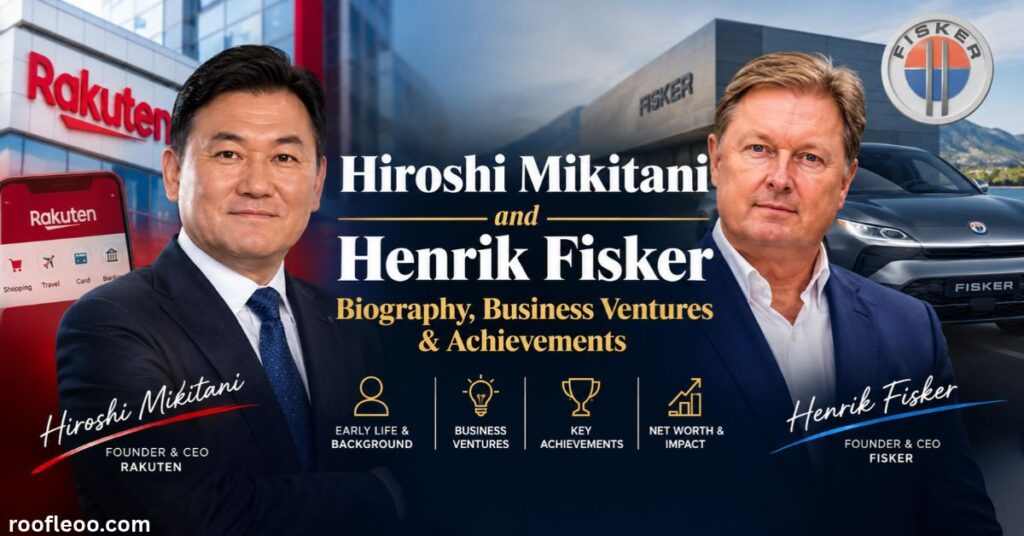
One founder turned a tiny online mall into a sprawling digital empire. The other designed some of the world’s most beautiful cars and then ran headfirst into the brutal math of mass manufacturing. Hiroshi Mikitani and Henrik Fisker share the “entrepreneur” label, yet their careers look nothing alike.
This guide gives you a clear biography of each man. You’ll see what they built, what they won, and where things went wrong. Then you’ll get the lessons. Let’s clear up one thing right away: these two aren’t business partners. The comparison itself is the point.
You’ll find profiles first, then a side-by-side comparison, the hard business realities, practical lessons, and a FAQ at the end.
Who Is Hiroshi Mikitani?
Hiroshi Mikitani is the founder, chairman, and CEO of Rakuten Group, one of Japan’s biggest internet and fintech companies. He was born on March 11, 1965, in Kobe, Japan. His father taught economics at a university in the city.
Mikitani studied commerce at Hitotsubashi University, a school famous for producing business leaders. Later he earned an MBA from Harvard Business School. That mix of Japanese finance training and American business education shaped his style. He thinks globally but runs a company with deep Japanese roots.
Today people see him as a platform builder. He doesn’t sell one thing. He connects many things.
Quick Facts: Hiroshi Mikitani
| Detail | Information |
|---|---|
| Full name | Hiroshi Mikitani (三木谷 浩史) |
| Born | March 11, 1965, Kobe, Japan |
| Education | Hitotsubashi University; Harvard Business School (MBA) |
| Known for | Founding Rakuten |
| Role | Chairman and CEO of Rakuten Group |
| Estimated net worth | Roughly $5 billion in recent Forbes-style rankings |
| Signature ideas | Ecosystem strategy, “Englishnization,” Rakuten Shugi |
Who Is Henrik Fisker?
Henrik Fisker is a Danish-born automotive designer and entrepreneur. He was born in 1963 in Denmark. He trained at the Art Center College of Design in Switzerland, a school that has sent many graduates into the world’s top car studios.
His name carries real weight among car fans. He worked on the BMW Z8 and led design work at Aston Martin. Later he founded two car companies bearing his own name: Fisker Automotive and Fisker Inc.
His reputation is simple. He’s a design-first founder who believes beautiful cars can also be sustainable ones. Both of his car companies ended in bankruptcy. That fact shapes how people now read his story.
Quick Facts: Henrik Fisker
| Detail | Information |
|---|---|
| Full name | Henrik Fisker |
| Born | 1963, Denmark |
| Education | Art Center College of Design (Europe campus, Switzerland) |
| Known for | BMW Z8 design, Aston Martin DB9 and V8 Vantage work |
| Companies founded | Fisker Coachbuild, Fisker Automotive, Fisker Inc. |
| Flagship products | Fisker Karma, Fisker Ocean |
| Public listing | Fisker Inc. listed on the NYSE in October 2020 |
No. There’s no known business partnership between Hiroshi Mikitani and Henrik Fisker. They have never co-founded a company together. They don’t share a board. Neither man has publicly backed the other’s ventures.
So why do people search for both names in one breath? A few reasons stand out:
- Both are famous founders with strong personal brands.
- Both appear in “entrepreneur” and “innovator” lists.
- Search engines often group similar names and topics together.
- Comparison articles like this one connect them on purpose.
Think of it like comparing a chef and a farmer. They work in the same broad world of food. Their daily jobs couldn’t be more different. You can read the FAQ below for a short answer to this question.
Why Their Names Make an Interesting Comparison
The best comparisons set two things side by side that look alike at first. Then the differences teach you something. That’s exactly what happens here.
Mikitani works with software and services. Fisker worked with hardware and manufacturing. One built an ecosystem. The other built a product. One model compounds as it grows. The other demands huge cash before the first sale lands.
This raises the central question of the article. Why did one model scale while the other stalled? The answer isn’t “one man is smarter.” The answer lies in how industries reward and punish different choices. Keep that question in mind as you read.
Hiroshi Mikitani Early Career and Entrepreneurial Shift
After Hitotsubashi, Mikitani joined the Industrial Bank of Japan in 1988. Banking gave him a front-row seat to how money, mergers, and strategy work. He then went to Harvard Business School and finished his MBA in 1993.
He returned to the bank afterward. However, something nagged at him. Many accounts of his life point to the Kobe earthquake of January 1995 as a turning point. Kobe was his hometown. The disaster reminded him that life can change in a moment. Mikitani has said in interviews that this experience pushed him to chase his own ideas.
He left banking in 1995. Soon after, he began studying the internet and its potential for small businesses. At the time, most Japanese shops had no online presence at all. That gap became his opportunity.
The Birth of Rakuten
In February 1997, Mikitani founded a company called MDM, Inc. Three months later, the first online marketplace, Rakuten Ichiba, opened for business. It launched with just 13 merchants. The company later took the name Rakuten, which roughly means “optimism” in Japanese.
Rakuten’s model stood apart from its rivals. Many online malls acted like a landlord who collects rent and walks away. Mikitani did the opposite. He empowered merchants with training, tools, and community. Shop owners could build their own storefronts and brand identities.
Picture a shopping mall where the landlord helps every shopkeeper thrive. When the shops grow, the mall grows. That alignment of interests made Rakuten Ichiba a hit.
Early Milestones
| Year | Event |
|---|---|
| 1997 | Company founded; Rakuten Ichiba opens with 13 merchants |
| 1999 | Company renamed Rakuten |
| 2000 | Shares begin trading publicly in Japan |
| 2004 | Rakuten enters professional baseball with the Tohoku Rakuten Golden Eagles |
| 2010 | Englishnization policy announced |
The Rakuten Ecosystem Strategy
Rakuten stopped being “just a marketplace” a long time ago. Mikitani built a connected web of services instead. A single customer can shop, pay with a card, bank, trade stocks, book travel, and use a mobile plan. All of it runs under one account.
The glue is the Rakuten Points program. You earn points when you shop online. You earn them again when you pay with a Rakuten Card. You can then spend those points across the group. Every service feeds the others.
How the Flywheel Works
- A customer shops on the marketplace and earns points.
- Points encourage the customer to use Rakuten Card and banking.
- More services mean more data and more loyalty.
- Loyal customers shop again and spend more.
- The cycle repeats and strengthens.
Rakuten’s Main Business Areas
| Segment | Examples |
|---|---|
| E-commerce | Rakuten Ichiba, Rakuten Rewards (formerly Ebates) |
| Fintech | Rakuten Card, Rakuten Bank, Rakuten Securities |
| Mobile | Rakuten Mobile |
| Digital content | Rakuten Kobo, Rakuten Viki |
| Sports | Golden Eagles, Vissel Kobe |
Case Study: Rakuten Mobile
Rakuten Mobile shows Mikitani’s appetite for bold bets. The company launched its own mobile network in 2020. It built a cloud-based, virtualized network rather than copying the older telecom model. Japan already had three giant carriers. Few people thought a newcomer could break in.
The costs were enormous. Network buildout drained billions of dollars and weighed heavily on group profits for years. Yet subscribers kept climbing and passed the multi-million mark. In 2025 the unit reached a milestone in operating performance. The bet remains capital-hungry. It also shows how Mikitani thinks. He plays a long game and accepts short-term pain.
Henrik Fisker’s Design Career
Fisker’s story begins in a drawing studio. After training at the Art Center College of Design in Switzerland, he moved into professional car design. His early reputation grew at BMW’s Designworks group in California.
Career Highlights
- BMW Z8: Fisker is widely credited as the designer of this retro-modern roadster. The car debuted around 1999. It appeared in a James Bond film and became a collector favorite. Note that car design is a team sport. Fisker led the work, but others shaped it too.
- Aston Martin DB9: He served as design director at Aston Martin and oversaw this elegant grand tourer.
- Aston Martin V8 Vantage: This smaller sports car pushed the brand toward younger buyers.
Why His Name Carries Weight
Enthusiasts admire his sense of proportion. His cars look sleek and a little dramatic. Therefore, when Fisker announced his own car brands, people paid attention. A strong design pedigree is a rare marketing asset.
From Designer to Entrepreneur
In the mid-2000s, Fisker left Aston Martin. He launched Fisker Coachbuild in 2005 with a partner. The company took existing luxury cars and gave them custom bodywork. One example was the Tramonto, built on a Mercedes-Benz SL platform. These were low-volume, high-price creations.
Then came a bigger dream. In 2007, he founded Fisker Automotive to build a stylish plug-in hybrid sedan. The Karma arrived around 2011. It looked stunning. It also suffered from quality issues and recalls.
Case Study: The Karma and Its Battery Supplier
Fisker Automotive received a large loan from the U.S. Department of Energy. Its battery supplier, A123 Systems, went bankrupt in 2012. A battery recall further damaged the Karma’s reputation. By late 2013, Fisker Automotive filed for bankruptcy. The Chinese firm Wanxiang later bought its assets.
The lesson is blunt. A great design can’t rescue a shaky supply chain. Moving from studio to boardroom demands skills that a designer doesn’t automatically have. Those skills include manufacturing planning, cash management, and supplier oversight.
The Fisker Ocean and the EV Ambition
Fisker didn’t quit. He founded Fisker Inc. in 2016 and aimed to make a sustainable, stylish electric SUV. The result was the Fisker Ocean. The company went public in October 2020 through a merger with a special purpose acquisition company. Its shares traded on the NYSE under the ticker FSR.
The plan sounded smart on paper. Fisker would use an asset-light model. Instead of building its own factory, it would hire Magna Steyr to assemble the Ocean in Graz, Austria. This approach could cut upfront costs. It could also speed up the launch.
Fisker Ocean at a Glance
| Feature | Detail |
|---|---|
| Body style | Electric SUV |
| Assembly | Magna Steyr, Graz, Austria |
| Production start | Late 2022 |
| Signature touches | Vegan interior, recycled materials, solar roof option, California Mode |
| Starting price | Around $39,000 for the base trim at launch; top trims ran much higher |
Early buyers loved the styling. Many of them also reported problems. Complaints centered on software bugs, glitches, and slow fixes. Reviewers praised the design while criticizing the polish. That gap hurt the brand at a crucial moment.
Fisker’s Bankruptcy and What It Reveals About Automotive Scale
Let’s treat the bankruptcy as a case study, not gossip. Cars punish small mistakes. One flawed part can trigger a recall across thousands of vehicles. One delayed shipment can freeze an entire assembly line.
Several pressures hit at once:
- Tooling costs: Factories need expensive machines before the first sale.
- Supply chains: Hundreds of suppliers must deliver on time.
- Recalls: Safety fixes cost millions and dent trust.
- Service networks: Owners expect repairs close to home.
- Cash burn: Spending ran far ahead of delivery volume.
A software startup can survive a messy launch. A carmaker often can’t. That difference sits at the heart of Fisker’s story.
What Happened to Fisker Inc.?
The collapse took less than two years from the first deliveries. Here’s a simplified timeline.
Fisker Inc. Timeline
| Date | Event |
|---|---|
| 2016 | Fisker Inc. founded |
| October 2020 | Public listing on the NYSE |
| Late 2022 | Ocean production begins in Austria |
| 2023 | Deliveries start; quality and software complaints grow |
| Early 2024 | Going-concern warning; production pauses; recalls mount |
| Spring 2024 | Talks with a major automaker for investment fall through |
| June 2024 | Fisker Inc. files for Chapter 11 bankruptcy |
The failed investor talks mattered a great deal. A big partner could have injected cash and manufacturing help. When those talks collapsed, the company ran out of runway.
After the filing, the bankruptcy process sold the remaining assets and inventory. Ocean owners faced uncertainty about warranties and support. Owner groups and third-party service providers stepped in to help keep the cars on the road. If you own an Ocean, check with owner communities and independent repair networks for the latest support options.
A Direct Comparison of Their Careers
Let’s put Hiroshi Mikitani and Henrik Fisker side by side.
| Category | Hiroshi Mikitani | Henrik Fisker |
|---|---|---|
| Industry | Internet, fintech, telecom | Automotive design and EVs |
| Core skill | Strategy, finance, platform building | Design and brand vision |
| Flagship venture | Rakuten | Fisker Automotive, Fisker Inc. |
| Business model | Ecosystem of connected services | Single product line, contract manufacturing |
| Capital intensity | High in telecom; moderate elsewhere | Very high from day one |
| Scaling path | Add services and acquire companies | Raise cash and ramp factory output |
| Outcome | Large, enduring global group | Two bankruptcies |
Here’s the takeaway. Mikitani’s model lets success in one area fund and support the next. Fisker’s model puts the whole company on the line with each vehicle launch.
Innovation Means Different Things in Different Industries
Software teams can ship an update on Monday and fix it by Wednesday. Car companies don’t enjoy that luxury. A vehicle must pass crash tests and satisfy regulators in every market. Mistakes can put lives at risk.
Consider the difference. A buggy app update annoys users for a day. A faulty brake component can trigger a recall of thousands of cars. Both count as failures. However, they carry very different price tags.
For this reason, “move fast and break things” works well for apps. It works poorly for vehicles. Mikitani’s world rewards speed. Fisker’s world rewards patience and precision.
The Importance of Systems in Entrepreneurship
A product ends when the customer stops using it. A system keeps going. That’s the core idea behind Mikitani’s approach.
Rakuten’s points, logistics, and payment tools work together. Each piece makes the others more valuable. Over time, the system compounds the way interest does in a savings account.
Fisker’s business leaned on one hero product. If the Ocean stumbled, little else could catch the fall. The company planned more models, including the Pear, but they never reached scale. A system spreads risk. A single product concentrates it.
Design helped Fisker enormously at first. His cars grabbed attention in a crowded EV market. They looked different. Reservation numbers and media buzz followed.
Good design offers real benefits:
- It attracts early adopters.
- It builds a recognizable brand.
- It lets a company charge more for the same underlying hardware.
Still, design only opens the door. Buyers keep a car for years. They notice panel gaps, software lag, and service delays. Design earned Fisker the first look. It couldn’t earn a second sale on its own.
Technology and Customer Experience
Rakuten works hard to make digital life smooth. You log in once and move from shopping to banking to travel. Points follow you everywhere.
Fisker’s customers described a rougher journey. Some reported software crashes and delays in repairs. Others struggled to get service appointments. The car looked futuristic, but the experience felt unfinished.
The lesson: the experience after the sale matters as much as the sale itself. A beautiful product that frustrates owners damages the brand fast. Word of mouth spreads quickly online.
Globalization in Mikitani Career
Mikitani never wanted Rakuten to stay a Japanese-only story. He pushed overseas through acquisitions and partnerships. Here are some of the best-known moves:
- Buy.com (2010): Rebuilt as Rakuten.com in the United States.
- Kobo (2011): An e-reader and e-book business.
- Viber (2014): A messaging app bought for roughly $900 million.
- Ebates (2014): A cash-back site that became Rakuten Rewards.
He also made a famous cultural bet. In 2010, he announced that English would become the company’s official language. Employees in Japan needed to pass English tests. The press called the policy “Englishnization.” Critics said it was extreme. Mikitani argued it was necessary to compete globally.
Results abroad were mixed. Some foreign ventures struggled or closed. Rakuten shut down or sold several overseas marketplaces. A balanced view admits both the ambition and the misses.
The Role of Brand Identity
Rakuten’s brand feels bold and simple. Its crimson “R” logo shows up on shopping sites, credit cards, a mobile network, and even a baseball team’s jerseys. This consistency tells customers that every service shares the same trusted family.
Fisker built a very different brand. It presented itself as sustainable luxury. The pitch included recycled materials and a vegan interior. This message appealed to eco-minded buyers who still wanted style.
Both brands made clear promises. Rakuten kept more of its promises over time. When a brand makes a big claim, the product must back it up. Otherwise, trust erodes.
Building an Ecosystem Versus Building a Product
Why do ecosystems win so often? Switching costs provide one big reason. If your points, card, bank, and phone plan all live in one place, leaving feels like a hassle. Customers stay.
A single product faces all the risk at once. If it flops, the company has nothing else to sell. If it ships late, cash runs out.
A simple comparison helps:
| Factor | Ecosystem | Single Product |
|---|---|---|
| Revenue sources | Many | One |
| Customer lock-in | Strong | Weak |
| Risk of one failure | Contained | Company-threatening |
| Growth pattern | Compounding | Linear and fragile |
This doesn’t mean product companies can’t win. Apple built an ecosystem around hardware, for instance. It means a lone product needs extra discipline and cash.
Capital Requirements and Business Risk
Money shapes everything. Let’s compare how much each model needs before revenue arrives.
An online marketplace can launch with a small team and a basic website. Rakuten started with 13 merchants. It grew step by step. The big spending, such as the mobile network, came after years of profit and scale.
A car company needs capital up front. It must design the vehicle, certify it, line up suppliers, build or rent a factory, and ship inventory. Revenue arrives much later. During that gap, cash vanishes.
Therefore, the risk profile differs dramatically. Mikitani could grow with moderate risk and then take large bets. Fisker faced a heavy bet from the very start.
The Challenge of Scaling
Scaling a digital service means adding servers and customers. Scaling a car company means adding bolts, parts, and people.
Here’s a quick analogy. Copying a file costs almost nothing. Building a second factory costs billions. The first scales with a click. The second scales with concrete.
That’s the heart of this issue. Each extra car consumes materials and labor. Quality problems also scale. A flaw in one design multiplies across every vehicle that rolls off the line. Software businesses enjoy far cheaper growth.
Fisker isn’t alone. Many electric vehicle startups have stumbled. Several companies, including Canoo, Lordstown Motors, and Nikola, also sought bankruptcy protection after burning through cash. The pattern repeats for good reasons.
Key Hurdles for New Carmakers
- Tooling costs: Stamping dies and assembly equipment cost a fortune.
- Supplier dependence: One late part can halt production.
- Regulation: Safety, emissions, and homologation rules differ by country.
- Warranty exposure: Every defect becomes the company’s bill.
- Dealer and service networks: Owners expect support nearby.
- Long development cycles: A new model takes years, not months.
Established automakers spread these costs across millions of vehicles. A startup must cover them with a handful of sales. That math is brutal.
The Role of Partnerships
Mikitani uses partnerships and acquisitions as growth tools. Rakuten invested in companies such as Lyft and Pinterest. It also bought businesses that fit its ecosystem. Each deal added users, technology, or markets.
Fisker relied on contract manufacturing. Magna Steyr built the Ocean. The company also sought other partners for future models and for fresh capital. These relationships made sense in theory. They left Fisker dependent on others to deliver.
When a key partnership deal stalled in 2024, Fisker had no cushion. Partnerships can speed up growth. They can also create single points of failure. Smart founders diversify their alliances.
Leadership and Organizational Culture
Mikitani leads with a clear philosophy known as Rakuten Shugi. It’s a set of principles for employees. The five core ideas include:
- Always improve and always advance.
- Professionalism.
- The cycle of hypothesize, practice, validate, and build a system.
- Maximize customer satisfaction.
- Speed, speed, speed.
He is also known for a hands-on style. Employees describe a culture of intense pace and regular goal checks. Daily morning meetings and strict habits have long been part of Rakuten’s lore.
Fisker took the founder-as-face approach. He appeared in launch events, interviews, and social media posts. This built excitement. However, it also meant that the company’s reputation rested on one person’s shoulders.
The Importance of Founder Experience
Experience comes in different flavors. Fisker had deep domain expertise in design. Mikitani had operational and financial expertise from banking and years of running Rakuten.
A great designer still needs a seasoned bench around him. A car company needs veterans in manufacturing, supply chain, finance, and quality control. Without them, even brilliant ideas break down during production.
Mikitani’s banking background gave him an edge in capital planning. He understood funding, debt, and risk before he ever launched a shop. That quiet advantage rarely makes headlines. It matters a lot.
A Quote About Entrepreneurial Systems
“A great idea is a spark. A great system keeps the fire burning.”
This line captures the contrast between the two careers. Fisker lit bright sparks with every car he sketched. Mikitani built a machine that feeds itself.
Lessons for Technology Entrepreneurs
If you build software or digital services, you can learn plenty from Mikitani. Consider these takeaways:
- Build loops that reward repeat use. Points, rewards, and bundled services keep people coming back.
- Start small and expand. Rakuten began with 13 shops before it grew into a giant.
- Respect physical-world costs. If you ever move into hardware or telecom, plan for a very different cash curve.
Rakuten Mobile shows that big bets can work. They also show how long payback takes. Digital founders should prepare for years of heavy spending before any victory lap.
Lessons for Product Entrepreneurs
Product founders can learn from Fisker’s journey too. Here are a few key points:
- Fund the whole journey. Launch money isn’t enough. You need cash for recalls, service, and slow quarters.
- Pressure-test manufacturing before marketing. A flashy debut means little if the factory can’t deliver quality.
- Diversify suppliers and partners. Dependence on one party creates hidden risk.
- Test with real customers early. Beta groups can reveal bugs before a mass rollout.
A product isn’t a promise until customers can use it reliably. Execution turns design into value.
Common Misconceptions About Their Careers
Several myths float around when people talk about Hiroshi Mikitani and Henrik Fisker. Let’s clear a few of them.
Myth: They’re partners or rivals.
They aren’t. Their industries barely overlap. Neither competes with the other.
Myth: Fisker’s story is only a design failure.
The design drew praise from many reviewers. The real trouble came from software quality, production ramp-up, service capacity, and cash.
Myth: Rakuten’s path was smooth.
Not at all. Rakuten has absorbed heavy losses from its mobile push. It has also closed several overseas operations. The group’s debt load has drawn scrutiny from analysts.
Success stories always look neater from a distance. Up close, every founder fights messy battles.
What Their Stories Say About Risk
Risk comes in different shapes. Mikitani took calculated risks that he could stage over time. He tested a marketplace before he tried banking. He built a card business before he launched a network.
Fisker took capital-heavy risks at the outset. He needed hundreds of millions of dollars before seeing steady income. Even a good plan can fail when a single delay burns months of cash.
Ask yourself two questions before any big move. How much can I lose if this fails? How long can I survive if it takes twice as long as planned? Honest answers save companies.
The Evolution of Modern Entrepreneurship
Old-school startups focused on a single killer product. Modern entrepreneurs increasingly think in platforms. They want users to stay for many reasons, not just one.
Mikitani represents this newer approach. He treats Rakuten as a living network. Each piece strengthens the whole. This thinking shows up across tech, from payment apps to super-apps in Asia.
Product-first founders can still succeed. Yet the bar keeps rising. Customers expect software, service, and community around every purchase.
Digital Platforms and Physical Products
The line between digital and physical keeps blurring. Cars now run on software. Phones act as wallets. Networks run on cloud systems.
Fisker’s Ocean showed this clearly. Its software troubles hurt the car as much as any mechanical flaw. Meanwhile, Rakuten Mobile shows a digital company stepping into physical infrastructure, with towers, radios, and cables.
Both stories carry the same message. Anyone crossing between the two worlds must respect the strengths of each. Bits need agility. Atoms need patience.
Innovation Requires Commercial Discipline
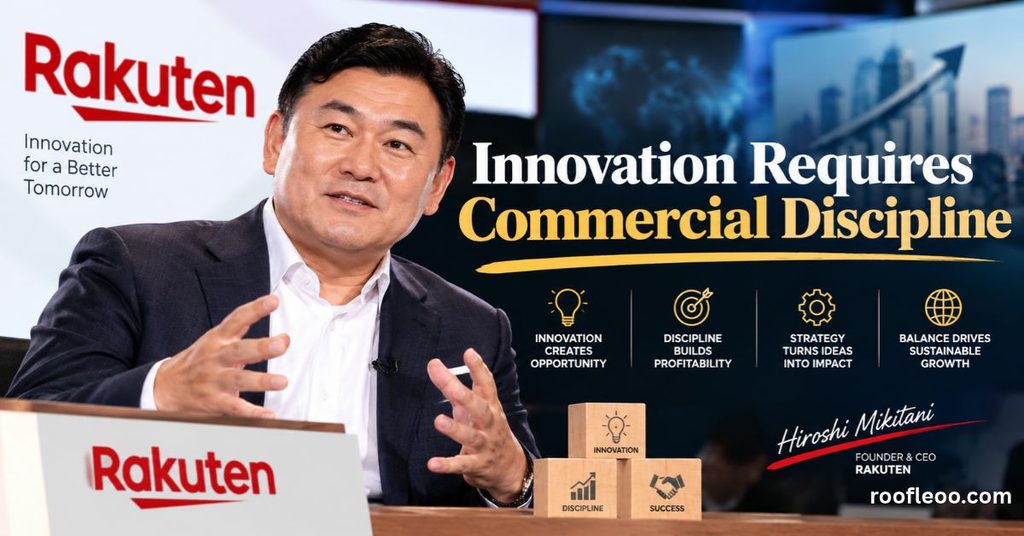
Great ideas need unit economics. That means each sale must earn more than it costs to deliver. Without that, growth just deepens losses.
Reports around Fisker pointed to heavy spending compared with the volume of vehicles delivered. The company produced far more cars than it successfully sold, which left inventory sitting and cash locked up. This pattern is a classic warning sign.
Mikitani’s ecosystem approach tends to improve economics over time. Each added service shares costs such as customer acquisition. In short, innovation excites people. Discipline keeps companies alive.
Why Customer Trust Matters
Trust builds slowly and breaks fast. It rests on three things:
- Reliability: The product works as promised.
- Support: Help arrives when something goes wrong.
- Honesty: The company tells customers the truth, even when it hurts.
Owners of the Ocean felt the pain of a broken support promise after the bankruptcy. Warranty questions loomed. Resale values dropped. That fallout shows why trust must come first, especially in categories where buyers expect years of service.
Rakuten’s points and consistent shopping experience reinforce trust each day. Small, repeated good experiences add up.
The Role of Long-Term Thinking
Mikitani plays a patient game. He has spent decades assembling Rakuten piece by piece. Even the costly mobile network reflects a long view. He expects the payoff to arrive through shared customers and data across the group.
Fisker raced a different clock. Public investors watched every quarter. Cash ran thin. Each missed target raised pressure. Long-term thinking becomes hard when the bank balance shrinks every month.
The takeaway is simple. Build a financial runway that matches your timeline. Otherwise, a good long-term plan dies in the short term.
What Entrepreneurs Can Take From Mikitani
Here are the key lessons from the Rakuten founder:
- Think in systems, not single products.
- Help your partners win. Rakuten thrives when merchants thrive.
- Embrace bold cultural moves. Englishnization shook the company but opened doors.
- Stay hands-on. Strong goals and daily routines drive execution.
His career also teaches humility. Some overseas bets failed. Great leaders adjust course instead of defending every decision.
What Entrepreneurs Can Take From Fisker
Fisker’s path offers lessons too:
- Great design builds attention but not a business alone.
- Surround yourself with operational experts. Manufacturing needs veterans.
- Plan for cash, recalls, and delays. Assume things will take longer.
- Protect the customer experience after delivery.
Failure also teaches. His first company’s collapse didn’t stop him from trying again. Persistence matters. Learning from the first attempt matters even more.
A Practical Framework for Comparing Entrepreneurs
You can use this five-question checklist for any founder you study.
| Question | What to Look For |
|---|---|
| What do they build? | Product, service, platform, or all three |
| How does it scale? | Software-style growth or factory-style growth |
| What does it cost? | Upfront capital and ongoing burn |
| Who else is involved? | Partners, suppliers, investors, regulators |
| What do customers experience? | Quality, support, and trust over time |
Applying the Framework
Take Rakuten first. It builds a platform. It scales through services. It needs heavy capital in only some areas. It works with merchants and partners. Customers enjoy a connected experience.
Now apply it to Fisker Inc. It built a vehicle. It scaled through contract manufacturing. It needed large capital early. It relied on a major partner. Customers faced a mixed experience.
Try it on any founder you admire. The answers reveal strengths and weak spots quickly.
Why Their Stories Matter Beyond Their Industries
You don’t need to care about cars or online shopping to learn from these men. Their stories reveal a universal truth. Fit matters. A founder’s skills, the business model, and the market must line up.
Mikitani’s finance and strategy skills matched a platform model. Fisker’s design talent matched a product model. But the product model’s economics demanded much more than design. The mismatch between vision and capital requirements told the real story.
Ask yourself where your own strengths meet your market’s demands. Then fill the gaps with partners who complement you.
Current Perspective on Hiroshi Mikitani
Mikitani remains the chairman and CEO of Rakuten Group. He continues to steer the company through its mobile push and wider fintech expansion. Rakuten generates annual revenue in the range of roughly two trillion yen. Its mobile arm has grown to millions of subscribers and has moved closer to profitability.
He also stays active in Japan’s business community. He founded and leads the Japan Association of New Economy, which supports startups and digital policy. Furthermore, he speaks often about artificial intelligence and its role in commerce and telecom.
For the freshest numbers, check Rakuten’s investor relations page and its latest earnings releases. Figures shift every quarter.
Current Perspective on Henrik Fisker
After the 2024 bankruptcy, Henrik Fisker stayed visible in the car design world. He has continued to talk about future vehicle concepts and about lessons learned. The Fisker Inc. entity went through the Chapter 11 sale process, and its assets passed to other owners.
The brand’s future remains tied to those buyers and to whatever Fisker builds next. He isn’t a novice anymore. He has now seen the full cycle of launch, growth, and collapse twice.
If you follow his work, watch for new design projects, partnerships, and announcements on his official channels. Those sources will give you the most reliable updates.
The Broader Business Lesson
Three things must line up for any venture to thrive: model, capital, and execution.
The model defines how you earn money. Capital pays for the journey. Execution delivers the product and the service day after day. Mikitani’s story shows those pieces lining up, though not perfectly. Fisker’s story shows the pieces drifting apart.
Neither man lacked talent or ambition. The difference came from the structure of their chosen industries and from how each handled the pressure points. Learn the structure first. Then choose your battles wisely.
Conclusion
Hiroshi Mikitani and Henrik Fisker don’t share a company, but they share a lesson. Ideas matter. Systems and funding matter more.
Mikitani built a connected ecosystem that grows stronger with every new service. Fisker designed gorgeous cars and then met the harsh economics of manufacturing at scale. One story shows compounding. The other shows concentration of risk.
Here’s the memorable takeaway: match your vision to a model you can fund, scale, and support. Do that and your odds improve dramatically.
Which founder’s path speaks to you most? Share your thoughts in the comments. If this guide helped, pass it along to a fellow entrepreneur.
FAQ
Are Hiroshi Mikitani and Henrik Fisker business partners?
No. There’s no documented partnership between them. People compare the two because both are well-known founders. Their companies operate in very different industries.
What is Hiroshi Mikitani best known for?
He’s best known for founding Rakuten and leading its ecosystem of e-commerce, fintech, and mobile services. He also championed the English-only workplace policy in Japan.
What is Henrik Fisker best known for?
He’s known for automotive design, including his work on the BMW Z8 and Aston Martin models. He also founded Fisker Automotive and Fisker Inc.
What company did Hiroshi Mikitani found?
He founded Rakuten, which launched in 1997 as an online marketplace. It has since grown into a global group spanning shopping, banking, cards, and mobile networks.
What happened to Fisker Inc.?
Fisker Inc. filed for Chapter 11 bankruptcy in June 2024. Cash shortages, production troubles, and failed investment talks drove the collapse. Its assets then moved through the court-supervised sale process.
Did Henrik Fisker design the BMW Z8?
He’s widely credited as the designer of the BMW Z8. Car design involves large teams. Fisker led the project, but others contributed to the final car.
What makes Hiroshi Mikitani’s business model different from Henrik Fisker’s?
Mikitani runs an ecosystem of connected services that reinforce one another. Fisker’s model centered on a capital-heavy physical product. That difference changed their risk, costs, and scaling paths.
Why are Hiroshi Mikitani and Henrik Fisker compared?
Their contrasting paths show how industry and business model shape outcomes. Readers can learn what works in software ecosystems and what struggles in automotive manufacturing.
What is the biggest entrepreneurial lesson from their careers?
Match your vision to a model you can fund and scale. Great ideas need strong systems, patient capital, and reliable execution to survive.
Is Rakuten still associated with Hiroshi Mikitani?
Yes. He remains the chairman and CEO of Rakuten Group and still guides its strategy. Check the company‘s official site for any leadership updates.

