

One of them sold a virtual reality startup to Facebook at 21. The other made a fortune betting against the housing market before it cracked. Their paths never crossed in any formal way, yet people keep searching their names together.
That curiosity makes sense. Palmer Luckey and Jeff Greene both climbed to the billionaire ranks. Both also say loud, clear things about taxes, risk, and building things that last. This guide walks through who they are, how they earned their money, and what their fortunes look like in November 2026.
You’ll find tables, timelines, short case studies, and plain-English explanations. Every figure comes with a date, because billionaire net worth moves fast. By the end, you’ll understand why one man’s fortune lives inside a defense company and the other’s lives inside buildings, land, and smart trades.
Quick Answer About Palmer Luckey vs Jeff Greene
Let’s start with a snapshot. This table gives you the basics at a glance.
| Detail | Palmer Luckey | Jeff Greene |
|---|---|---|
| Born | September 19, 1992, Long Beach, California | Worcester, Massachusetts (now in his early 70s) |
| Known for | Founding Oculus VR, co-founding Anduril Industries | Real estate investing, the subprime mortgage short |
| Home base | Southern California (Anduril is headquartered in Costa Mesa) | Palm Beach, Florida |
| Forbes net worth | About $6 billion (September 2026) | About $9 billion (2026 reporting) |
| Main source of wealth | Anduril equity and Oculus sale proceeds | Real estate, investments, the 2007–08 trade |
| Political activity | Opposed California’s Proposition 40 | Ran for U.S. Senate (2010) and governor (2018) |
| Giving | Not a headline part of his story | Giving Pledge signer, founder of The Greene School |
A few things jump out right away. Luckey is much younger. Greene is far older and has a longer track record. Yet Greene’s fortune is larger on paper, while Luckey’s has grown much faster in the past two years.
Quick takeaways:
- Luckey’s wealth is concentrated in one private company.
- Greene’s wealth is spread across land, buildings, hotels, and investments.
- Both men have spoken out about wealth taxes.
- Neither man’s net worth figure is exact, because both hold assets that don’t trade on a stock exchange.
Are Palmer Luckey and Jeff Greene Related or Business Partners?
Short answer: no. Let’s look at why people ask anyway.
What the public record shows
There’s no family connection between the two men. They aren’t cousins, in-laws, or old classmates. They don’t co-own a company, and they haven’t announced a joint deal or investment. Luckey builds autonomous weapons systems and defense software. Greene builds apartment towers and buys waterfront land. Those worlds barely touch.
Even their locations differ. Luckey lives and works in Southern California. Greene lives in Palm Beach, Florida, in an oceanfront home near Mar-a-Lago.
Why their names are searched together
So why do Palmer Luckey and Jeff Greene show up in the same searches? Several simple reasons explain it.
- Billionaire lists group them. Net worth sites often place people with similar fortunes side by side.
- Both have tax stories in the news. Luckey’s fight against California’s billionaire tax grabbed headlines in October 2026. Greene has spoken for years about how hard it is to measure and tax wealth.
- Both made money through timing. Luckey sold Oculus at the right moment. Greene made his name by betting against mortgages at the right moment.
- Name overlap in search suggestions. Search engines often connect two high-profile names without any real link between them.
Think of it like two athletes from different sports in one “richest athletes” list. They share a list. They don’t share a team.
Palmer Luckey and Jeff Greene Net Worth in 2026
Net worth is the hardest part of any billionaire profile. Numbers shift with markets, funding rounds, and appraisals. Here’s where things stand as of early November 2026.
| Person | Latest Forbes-type estimate | Earlier 2026 snapshot | What drives it |
|---|---|---|---|
| Palmer Luckey | About $6 billion (September 2026) | About $3.5 billion (February 2026) | Anduril’s rising valuation |
| Jeff Greene | About $9 billion | Reported near $9 billion through spring 2026 | Real estate and investments |
Look at Luckey’s jump. His estimated fortune rose by roughly $2.5 billion in about seven months. That didn’t happen because he sold anything. It happened because Anduril raised money at a much higher price.
Greene’s story looks steadier. Back in 2019, Forbes put him near $3.9 billion. By 2026, the estimate sat around $9 billion. Real estate values, smart deals, and long holding periods did most of that work.
Why net worth figures differ across websites
You’ll find wildly different numbers online. Some pages say Luckey is worth $1.9 billion. Others say $3.6 billion, $4.7 billion, or $6 billion. For Greene, you’ll see $3.5 billion, $4.5 billion, $7 billion, and $9 billion. Why the mess?
- Different dates. A February number and a September number describe two different worlds.
- Copy-and-paste pages. Many sites repeat old figures without checking them.
- Different methods. Some sources use the last funding round. Others use a discount.
- Guesswork. Low-quality sites fill gaps with estimates and call them facts.
A simple rule: trust numbers that come with a date and a named method. Be careful with pages that give a round figure and no explanation.
Anduril shows how fast one number can change. The company raised $5 billion at a $61 billion valuation in May 2026. Reports then described an employee share sale near $90 billion in October. Talk of a future round near $120 billion also surfaced, though no such round has closed. Each new price tag changes the math for Luckey’s stake.
Why private stakes and property are hard to value
Imagine you own a house nobody has bought or sold in years. What’s it worth? You’d guess from nearby sales. Billionaires face the same problem on a giant scale.
For Luckey: Anduril has no daily stock price. Analysts rely on the latest funding round. Employee share sales add another clue. Still, he owns only a slice of the company. The rest belongs to investors, co-founders, and staff.
For Greene: Buildings and land depend on appraisals, loans, zoning, and timing. A tower under construction has a different value than a finished one. A project stuck in approvals loses value on paper. Greene himself has made this point. He’s said wealth that isn’t publicly traded stock is simply hard to measure.
That’s why every figure in this article carries the word estimate in spirit.
Who Is Palmer Luckey?
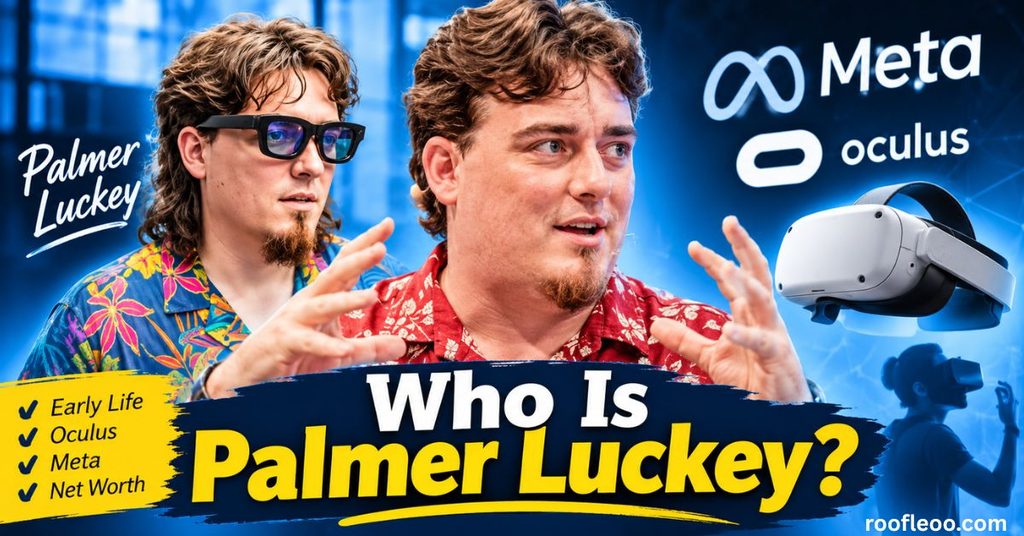
Palmer Luckey is an American entrepreneur who changed two industries. First he helped revive virtual reality. Then he pushed Silicon Valley into defense. Let’s trace his steps.
Early Life and Education
Luckey grew up in Long Beach, California, with three younger sisters. Even as a kid, he loved taking electronics apart. He taught himself how to modify gadgets and build circuits at home.
As a teenager, he became obsessed with virtual reality. The headsets on the market back then were clunky and expensive. Many cost thousands of dollars and still looked blurry. Luckey collected old prototypes and tinkered with them in his parents’ garage.
He later attended California State University, Long Beach. He also worked in a university-linked virtual reality lab, which gave him real exposure to cutting-edge hardware. His side project soon became more important than his classes. He left school to build it full time.
Key early facts:
- Hometown: Long Beach, California
- Early passion: VR headsets and electronics
- College: California State University, Long Beach (did not finish)
- Big move: left school to focus on the Oculus Rift
Oculus VR and the Facebook Acquisition
In 2012, Luckey launched a crowdfunding campaign for a headset called the Oculus Rift. The pitch was simple. Build a lightweight, affordable VR headset that actually worked. Backers loved it. The campaign raised more than $2 million, far above its goal.
Money brought help. Brendan Iribe joined as CEO. The team grew fast, and big names in gaming took notice. Oculus soon became the face of the new VR wave.
Then came the shock. In 2014, Facebook agreed to buy Oculus. Luckey was just 21. Reports put the deal at roughly $2 billion, with extra payments tied to goals. Different outlets quote slightly different totals, because the price mixed cash, stock, and later bonuses. The exact split doesn’t change the headline. A college dropout had become a multimillionaire, and then some, almost overnight.
Forbes estimated his net worth at about $700 million in 2015. He also landed on lists of the richest young entrepreneurs in America.
A rough timeline of the Oculus era:
| Year | Event |
|---|---|
| 2012 | Rift crowdfunding campaign succeeds |
| 2012 | Brendan Iribe joins as CEO |
| 2014 | Facebook announces its Oculus purchase |
| 2015 | Forbes estimates Luckey’s wealth near $700 million |
| 2017 | Legal fight with ZeniMax ends in a large jury verdict, later settled |
| 2017 | Luckey leaves Facebook |
The ZeniMax case deserves a short note. The gaming company sued over trade secrets and code. A jury awarded hundreds of millions of dollars against Oculus-related parties. The matter was later settled. It showed that even a fast, famous startup faces serious legal risk.
Leaving Facebook and the Road to Anduril
Luckey left Facebook in 2017. Press reports at the time tied his exit to controversy over a political donation. Facebook gave its own account. Whatever the full story, the departure freed him to try something very different.
That same year, he co-founded Anduril Industries. His partners included Matt Grimm, Brian Schimpf, Trae Stephens, and Joe Chen. The idea was bold. The Pentagon needed modern software and autonomous hardware. Traditional contractors moved slowly. A startup could move faster.
Many investors doubted the plan at first. Defense companies had long dominated the market. Newcomers rarely won big contracts. Yet Anduril kept building. Its first fundraising was a small seed round of around $18 million in 2017. From there, the climb began.
What the founders wanted to prove:
- Software can guide weapons and sensors more intelligently
- Startups can beat old contractors on speed
- Defense products can ship faster and cost less
Anduril Industries Today
Anduril now sits among the most valuable private companies in America. The numbers tell the story.
| Milestone | Detail |
|---|---|
| Founded | 2017 |
| Series G (June 2025) | $2.5 billion raised at a $30.5 billion valuation |
| Series H (May 2026) | $5 billion raised at a $61 billion valuation |
| Lead investors, Series H | Andreessen Horowitz and Thrive Capital |
| Revenue | Roughly $2.2 billion reported by mid-2026 |
| Total raised | About $11 billion across several rounds |
| October 2026 | Employee share sale reported near $90 billion |
Revenue growth stands out. The company reportedly earned about $200 million in late 2022. By 2026, that figure had climbed past $2 billion. Few hardware companies grow that quickly.
What does Anduril sell? Its product line spans several categories:
- Lattice: software that links sensors, drones, and weapons into one picture
- Sentry towers: autonomous surveillance towers used at borders and bases
- Drones and aircraft: including a combat aircraft program for the Air Force
- Counter-drone systems: tools that detect and stop hostile drones
- Underwater vehicles: unmanned craft for naval missions
The company also builds big factories. Its Ohio site, called Arsenal-1, aims to produce systems at scale. Luckey has said the firm employs roughly six thousand people.
Why this matters for net worth: Luckey owns a minority share of a company worth tens of billions. Each higher valuation lifts his paper wealth. A drop would lower it just as fast.
Other Ventures
Luckey doesn’t stop at defense. He also runs ModRetro, a company that makes retro-style gaming hardware. It reflects his lifelong love of classic consoles. Fans of old handheld games follow it closely.
He also joined a Pentagon effort called Project Meridian, which brought together tech leaders to study how new technology could reshape warfare. That kind of role shows how far he has moved from gaming headsets.
His public style is memorable too. He often wears bright Hawaiian shirts, even at serious events. That look has become part of his brand.
Latest News: Luckey and California’s Proposed Wealth Tax (Oct 2026)
October 2026 put Luckey in the political spotlight. California voters faced Proposition 40, often called the billionaire tax. Here’s how it worked.
| Prop 40 detail | What it said |
|---|---|
| Tax rate | One-time 5% on net worth |
| Who paid | Billionaires who lived in California on January 1, 2026 |
| When wealth counted | Measured at the end of 2026 |
| Payment plan | Five yearly installments, with a charge on unpaid balances |
| Where money went | 90% to health care, 10% to food aid and education |
| People affected | Roughly 200 billionaires |
Luckey hated the idea. He argued that it would force founders to sell large chunks of their companies. He also objected to a rule he said taxed control, not just ownership. In his view, taxing voting power inside a private company went too far.
Several wealthy tech figures talked about leaving the state. Luckey went the other way. At a press event in late October, he said, “I am staying.” He added that he wanted to fight for California. He also hoped that legal challenges would follow if the tax passed.
What happened next: Voters went to the polls on November 3. Early counts showed the measure trailing by roughly 55 to 45 percent. Reports on November 5 described it as headed for defeat, though counting continued. Opponents had spent hundreds of millions of dollars against it. Two competing measures, Propositions 41 and 42, also appeared on the ballot and could have wiped out the tax anyway.
For Luckey, the likely result removes a major financial worry. It also keeps one of California’s best-known founders in the state.
Who Is Jeff Greene?
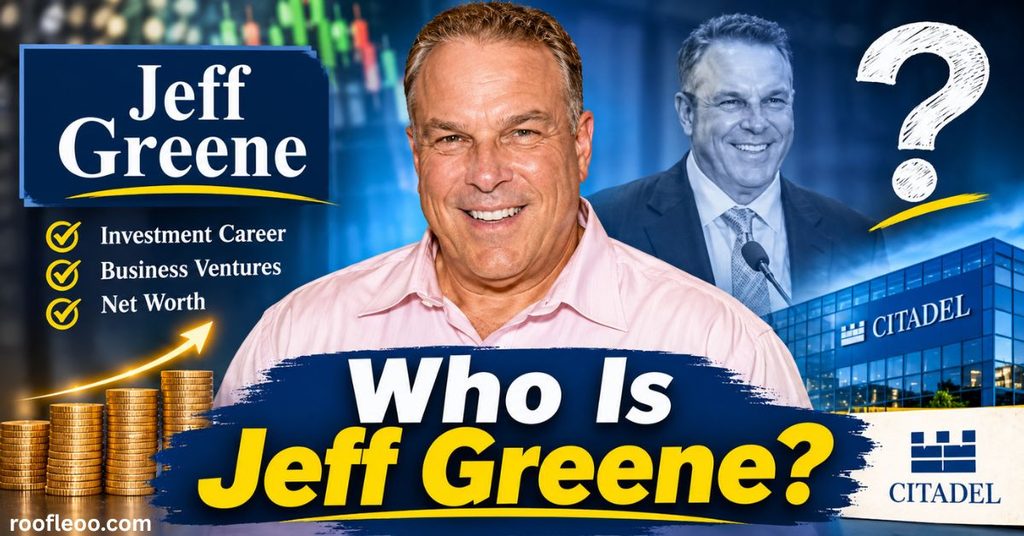
Jeff Greene tells a very different story. He didn’t invent a product. He bought, built, and traded. His fortune grew through patience, nerve, and one famous bet.
Early Life and Education
Greene grew up in Worcester, Massachusetts, in a working-class family. He didn’t start with money or connections. As a young man, he worked jobs like busboy and waiter at The Breakers, a famous Palm Beach resort.
Think about the irony. He once carried plates for wealthy guests there. Decades later, he became one of the wealthiest people on the island.
He continued his education beyond college and began investing in property while still in graduate school. That early start mattered. He learned how deals worked before most people his age had finished studying.
Early life at a glance:
- Raised in Worcester, Massachusetts
- First jobs in hospitality at The Breakers
- Began investing in real estate during graduate studies
- Built wealth slowly before his big 2007 trade
Early Real Estate Investments
Greene stayed hands-on from the start. He bought properties, improved them, and held or sold when the timing felt right. California became an early base for his deals. He built a reputation as a sharp negotiator who spotted bargains.
His approach followed a few clear habits:
- Buy where others hesitate. Distressed or overlooked properties offered better prices.
- Stay involved. He studied each project instead of leaving everything to managers.
- Think long term. Many assets stayed in his portfolio for years.
Those habits built a strong base. Then came the move that made him famous.
The Subprime Mortgage Bet and the 2008 Crisis
Around 2006 and 2007, Greene noticed something troubling. Banks were issuing home loans to people who couldn’t afford them. Those risky loans were packaged into bonds and sold as safe investments. Greene believed the whole structure would collapse.
So he placed a bet. He bought credit default swaps on subprime mortgage bonds. Here’s a simple way to picture it. Imagine buying fire insurance on a neighbor’s house because you think the wiring is awful. If the house burns, you collect. If it doesn’t, you lose only the small insurance payment.
The housing market did burn. Mortgage bonds crashed, and Greene’s contracts soared in value. He reportedly made hundreds of millions of dollars. The trade turned him into a billionaire.
Why this case study matters:
| Element | Lesson |
|---|---|
| The setup | He studied the loans instead of trusting ratings |
| The tool | Swaps limited his downside and magnified his upside |
| The risk | Being early could have meant years of small losses |
| The result | One correct call produced a lasting fortune |
After the crisis, Greene used his new capital to buy real estate at discounted prices. He moved from California to Palm Beach in the late 2000s and began investing heavily in Florida.
Greene’s Property Portfolio
Today, Greene’s holdings center on Palm Beach County, especially downtown West Palm Beach. He once assembled much of the vacant waterfront land there. He bought one downtown block for about $24 million and planned a roughly $400 million luxury development on it.
Here are some of his best-known assets and projects:
| Asset or project | What to know |
|---|---|
| Tideline Ocean Resort & Spa | A luxury hotel in Palm Beach, formerly the Omphoy. Reports in 2025 said he explored selling it. |
| One West Palm | A planned two-tower complex. A deadline requires completion by the end of 2027 or a $5 million penalty applies. |
| Live Local Act tower | A planned 25-story apartment tower using prefabricated mass timber. |
| Downtown waterfront site | Reported 2026 sale to a developer group for more than $90 million. |
| Manalapan estates | Two side-by-side ocean-to-lake properties listed together at about $99 million in May 2026. |
| Oceanfront Palm Beach home | A mansion near Mar-a-Lago where he lives with his family. |
Not every project has gone smoothly. Greene has clashed with city officials. He once sued West Palm Beach to push stalled condo approvals forward. Some neighbors fought his high-rise plans. In his own words, “I’ve built over 100 buildings, there’s always trouble.”
That quote captures his attitude. Delays and fights come with the territory. He keeps building anyway.
Political Campaigns
Greene entered politics as a Democrat. In 2010, he ran in Florida’s Democratic primary for the U.S. Senate. He lost to Kendrick Meek. In 2018, he returned and ran for governor. He promised to spend “whatever it takes” from his own pocket. Andrew Gillum won that primary.
Neither campaign won, but both raised his public profile. They also showed his comfort with risk. A billionaire who bets on markets will also bet on elections.
Greene still speaks publicly about the economy and inequality. He has voiced worry that resentment toward the very rich could grow. He has also criticized tax plans aimed at billionaires, arguing that valuing wealth is messy and unfair.
Philanthropy and The Greene School
Greene and his wife, Mei Sze, signed the Giving Pledge in 2011. That pledge asks billionaires to give away most of their wealth over time. The couple has three sons.
They also founded The Greene School in West Palm Beach in 2016. It’s a private school serving students from pre-kindergarten through high school. Demand has risen as more wealthy families move into the area.
In March 2026, the couple announced a major land gift. They donated 1.3 acres, valued at about $80 million, to Vanderbilt University’s planned campus in downtown West Palm Beach. That campus carries a planned price tag near $520 million.
Giving highlights:
- Giving Pledge signer since 2011
- Founder of The Greene School (2016)
- $80 million land donation toward Vanderbilt’s West Palm Beach campus (2026)
Career Timeline: Luckey and Greene at a Glance
Seeing both careers on one timeline helps. Notice how Luckey’s biggest moves cluster in a short period, while Greene’s unfold over decades.
| Year | Palmer Luckey | Jeff Greene |
|---|---|---|
| Late 2000s | Teenager tinkering with VR headsets | Moves from California to Palm Beach after his subprime windfall |
| 2010 | Still in school | Runs for U.S. Senate in Florida |
| 2011 | Studying and building prototypes | Signs the Giving Pledge |
| 2012 | Oculus Rift crowdfunding succeeds | Expands Florida real estate holdings |
| 2014 | Facebook buys Oculus | Continues buying Palm Beach County land |
| 2016 | Works inside Facebook | Founds The Greene School |
| 2017 | Leaves Facebook and co-founds Anduril | Builds West Palm Beach pipeline |
| 2018 | Anduril’s early Series A valuation near $800 million | Runs for Florida governor |
| June 2025 | Anduril raises $2.5 billion at $30.5 billion | Explores selling Tideline hotel (early 2025) |
| March 2026 | Anduril continues rapid growth | Donates $80 million of land to Vanderbilt |
| May 2026 | Anduril raises $5 billion at $61 billion | Plans Live Local Act tower |
| October 2026 | Says he’s staying in California; employee sale near $90 billion | Lists Manalapan estates and sells West Palm site (spring) |
| November 2026 | Prop 40 appears headed for defeat | Continues development work |
Palmer Luckey vs. Jeff Greene: Key Similarities and Differences
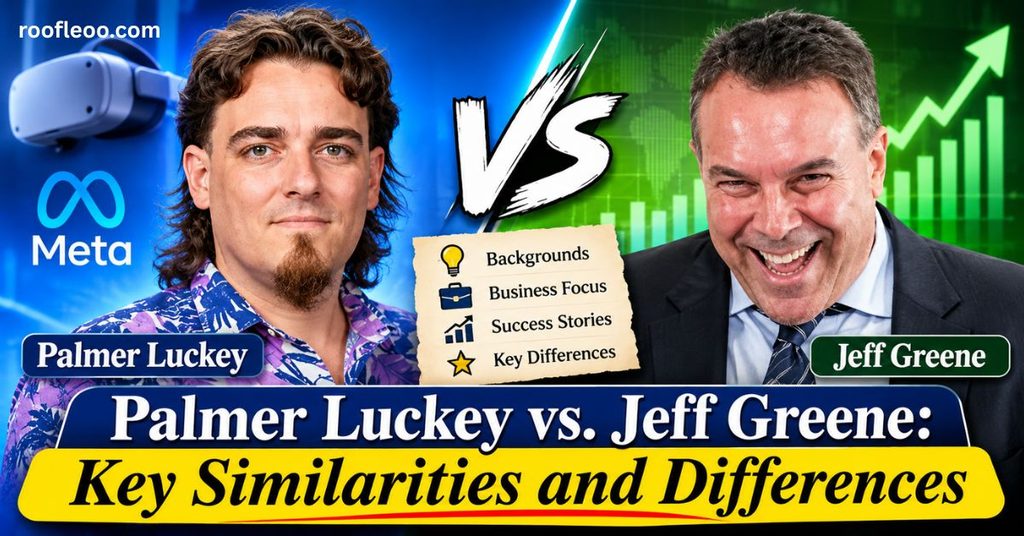
Comparing Palmer Luckey and Jeff Greene shows how many roads lead to a billion dollars.
What they share
- Big, well-timed moves. Luckey sold at the right moment. Greene bet at the right moment.
- Loud public voices. Both speak openly about taxes and politics.
- Comfort with risk. Neither built wealth by playing it safe.
- Roots in ordinary families. Neither came from famous money.
- Local fights. Luckey battled a state ballot measure. Greene has battled city councils.
Where they differ
| Category | Palmer Luckey | Jeff Greene |
|---|---|---|
| Industry | Defense technology | Real estate and investing |
| Age and stage | Early 30s, still scaling a company | Early 70s, managing a mature empire |
| Asset type | Private company stock | Land, buildings, hotels, investments |
| Liquidity | Hard to sell without selling company shares | Easier to sell individual properties |
| How wealth grows | Funding rounds raise valuation | Appraisals, development, market timing |
| Biggest risk | A valuation drop or lost contracts | Market downturns, delays, and debt |
| Political path | Advocate on tax issues | Candidate for office |
A simple way to remember it: One man builds machines that move. The other builds towers that stay put.
What Their Careers Teach About Building Wealth
You don’t need a billion dollars to learn from these two. Their stories share useful lessons about money, risk, and patience. This section isn’t financial advice. It simply explains the ideas behind their results.
A Company Valuation Is Not Personal Wealth
Many people hear “Anduril is worth $61 billion” and assume Luckey owns that much. He doesn’t. Valuation measures the whole company. Founders own a share. Investors and employees own the rest.
Picture a pizza. The whole pizza may be worth $61. Luckey holds a few slices. His fortune equals the value of his slices, not the pie.
Case study: the wealth tax puzzle. Suppose a founder’s stake were valued at $6 billion. A 5% levy would equal $300 million. Founders rarely hold that much cash. They’d likely sell shares or borrow. Luckey argued this would force founders to give up pieces of their companies. His argument shows a real gap between paper wealth and spendable money.
Takeaways:
- Always ask what share someone actually owns
- Remember that private valuations come from deals, not daily trading
- Paper wealth can’t pay bills without a sale or loan
Timing Risk Cuts Both Ways
Greene’s subprime trade looks genius now. But timing made it risky. Imagine he had bet against mortgages in 2004. The market kept rising for years. He would have paid steady costs while waiting, and he might have quit before the crash.
Luckey faced his own timing question. Selling Oculus early gave him security. Yet staying at Facebook might have limited his next move. Leaving let him build Anduril, which grew into a far bigger story.
Lessons on timing:
- Being right is not enough. Being right at the right time matters
- Insurance-style bets limit losses but still cost money
- A first success can fund a second, bolder attempt
Assets Reprice Fast
Look at Anduril’s valuation path. It sat near $800 million in 2018. By mid-2025, it reached $30.5 billion. Less than a year later, it hit $61 billion. Reports in October pointed even higher.
Greene’s world moves more slowly but still shifts. A site worth one price before rezoning can fetch another after approval. A tower stuck in court loses value on paper. Penalties, like the $5 million deadline on One West Palm, show how delays create real costs.
Quick reference: how fast assets can move
| Asset type | Typical pace of repricing | Example from these stories |
|---|---|---|
| Private startup stock | Fast, in big jumps after funding rounds | Anduril from $30.5B to $61B in under a year |
| Development land | Medium, tied to approvals | Greene’s downtown waterfront sale |
| Finished buildings | Slower, tied to rents and rates | Greene’s hotel and tower projects |
| Hedging trades | Very fast in a crisis | Greene’s 2007–08 swaps |
The practical lesson: Treat any net worth number as a snapshot. Next month’s picture may look very different.
FAQs About Palmer Luckey and Jeff Greene
Who are Palmer Luckey and Jeff Greene?
They’re two unrelated American billionaires. Palmer Luckey founded Oculus VR and co-founded Anduril Industries. Jeff Greene is a Palm Beach real estate investor who became famous for betting against subprime mortgages before the 2008 crash.
Are Palmer Luckey and Jeff Greene related?
No. There’s no family connection between them. They work in different industries and live in different states. People often search their names together because both appear on billionaire lists and both have spoken out on wealth taxes.
What is Palmer Luckey’s net worth?
Forbes estimated his net worth at about $6 billion as of September 2026. That’s up from roughly $3.5 billion in February. Anduril’s valuation jump to $61 billion in May 2026 drove most of the increase.
What is Jeff Greene’s net worth?
Recent reporting based on Forbes puts Greene’s fortune near $9 billion. Forbes estimated about $3.9 billion in 2019, so his wealth has more than doubled since then. Real estate gains and investments explain most of the growth.
How did Palmer Luckey make his money?
He earned his first fortune by selling Oculus VR to Facebook in 2014 for roughly $2 billion. He then co-founded Anduril in 2017. Anduril’s rising valuation, which hit $61 billion in May 2026, now drives most of his paper wealth.
How did Jeff Greene become a billionaire?
He combined real estate investing with a famous trade. Before the 2008 crisis, he bought credit default swaps on subprime mortgage bonds. When the housing market collapsed, those contracts paid off massively. He then invested the proceeds in property.
Do Palmer Luckey and Jeff Greene work together?
No. They haven’t announced any joint company, investment, or project. Luckey focuses on defense technology. Greene focuses on development and investing in Florida.
Is Palmer Luckey leaving California?
No. At a press event in late October 2026, Luckey said he planned to stay in California. He opposed Proposition 40, the proposed 5% billionaire tax, but chose to fight it rather than move. Early results showed the measure losing at the ballot box.
Conclusion
Palmer Luckey and Jeff Greene have no family tie and no business partnership. Yet their stories rhyme. Each man spotted a big opportunity early. Each took a risk that others avoided. Each now holds a fortune that sits mostly in assets that don’t trade on a stock ticker.
As of November 2026, Luckey’s estimated net worth sits near $6 billion, driven by Anduril’s soaring valuation. Greene’s sits near $9 billion, built over decades through property, investments, and one legendary trade. Those numbers will keep shifting. Anduril may raise again at a higher price. Greene’s towers may rise, stall, or sell.
Two news threads deserve a watch. First, California’s Proposition 40 appears headed for defeat, which would keep Luckey in the state without the tax bill he feared. Second, Anduril’s next funding round could redraw his fortune overnight.
The deeper lesson is simple. Wealth comes in many shapes. Some live in code and hardware. Some live in land and concrete. And all of it depends on timing, patience, and nerve. Bookmark this page, and check back for updates as the numbers change.

