

One man built a fortune from battle raps in Detroit basements. The other built his from a lost USB drive on a bus ride. Their industries couldn’t be more different. Yet both stories have the same engine: a bold idea, years of stubborn work, and a mentor who opened the right door at the right time.
That’s why Eminem and Drew Houston show up side by side in so many searches about wealth and success. One is a rap legend with over 200 million records sold worldwide. The other is the co-founder and CEO of Dropbox, a company that taught the world to stop emailing files to itself.
In this guide, you’ll learn how each man made his money, what setbacks nearly derailed him, and what you can borrow from both journeys. We’ll cover early lives, breakthroughs, earnings, achievements, and practical lessons. Grab a coffee. It’s a good story.
Eminem and Drew Houston Net Worth Snapshot
Before we dive into the backstories, here’s the big picture. Think of this table as the trailer before the movie.
| Detail | Eminem | Drew Houston |
|---|---|---|
| Full name | Marshall Bruce Mathers III | Andrew W. Houston |
| Born | October 17, 1972 | March 4, 1983 |
| Birthplace | St. Joseph, Missouri | Acton, Massachusetts |
| Estimated net worth (late 2026) | Around $250 million | Roughly $2 billion to $3 billion |
| Main income sources | Album sales, streaming, touring, music publishing, Shady Records, film royalties | Dropbox shares, salary, board compensation |
| Known for | The Marshall Mathers LP, “Lose Yourself,” Slim Shady | Founding Dropbox, taking it public in 2018 |
| Biggest career moment | Oscar win for Best Original Song | Nasdaq IPO of Dropbox |
A quick note on these numbers. Eminem’s wealth comes mostly from cash flow: royalties, touring, and catalog income. Houston’s wealth comes mostly from stock. That means his net worth moves with the Dropbox share price. On a strong trading week, it climbs. On a weak one, it dips. Eminem’s number stays steadier because it’s built on income he has already banked.
Key insight: A rapper’s fortune looks like a river. It flows steadily from many streams. A founder’s fortune looks more like a mountain. It’s tall and impressive but exposed to the weather.
Early Life and Background of Eminem
Marshall Mathers was born on October 17, 1972, in St. Joseph, Missouri. His childhood was anything but settled. His mother, Debbie, moved the family often, bouncing between Missouri and Michigan. Eventually they landed in the Detroit area, where he spent his teenage years.
Money was tight. Rent was a constant worry. Marshall often changed schools, and being the new kid made him an easy target. He has described years of bullying in his lyrics and interviews. Detroit’s working-class neighborhoods, especially the area around 8 Mile Road, became the backdrop of his life and later his art.
Hardship acted like sandpaper on his talent. It rubbed away any polish and left something raw and sharp. Many of his later songs trace back to this period: fights with his mother, financial stress, and relationships that fell apart.
Key Facts About Eminem’s Early Years
- Born: October 17, 1972, in St. Joseph, Missouri
- Raised: Mostly in Warren and Detroit, Michigan
- Education: Left high school before graduating
- Early jobs: Worked low-wage kitchen jobs while chasing rap dreams
- Daughter: Hailie Jade, born in 1995, who became his biggest motivation
That last point matters. When Hailie arrived, Marshall had almost no money. He worked long shifts and wrote rhymes in whatever time was left. The pressure to provide pushed him to take rap seriously as a career instead of a hobby.
Eminem Discovers Hip-Hop Storytelling
Marshall fell for hip-hop as a young teenager. A copy of a Ice-T record and the album Licensed to Ill by the Beastie Boys, according to his own accounts, lit the fuse. He loved how rappers could turn rhythm and wordplay into narrative.
He started writing his own rhymes in notebooks. Then he started performing. Detroit’s cypher circles and open-mic nights were brutal places to test your skills. If you stumbled, the crowd let you know. Marshall was one of the few white rappers in those rooms. Some people doubted him at first.
He answered with sheer technical skill. Every battle sharpened his timing, his comebacks, and his stage nerve. By the mid-1990s, local crowds knew his name. Those basement battles served as his real-world college. He just didn’t know yet that the final exam would be a global audience.
Drew Houston Childhood and Educational Journey
Drew Houston’s early years looked very different. He was born on March 4, 1983, and grew up in Acton, Massachusetts, a quiet suburb northwest of Boston. His parents supported his curiosity. One was an electrical engineer, and the other worked in a field that valued education, so the household leaned toward science and problem solving.
Drew fell in love with computers young. He taught himself to program and spent hours building small projects. While other kids played outside, he tinkered with code. That’s not to say he was a recluse. Friends describe him as upbeat and sociable. He simply found programming more fun than almost anything else.
He attended Acton-Boxborough Regional High School, where he excelled at math and computer science. Then came the big step. Houston enrolled at the Massachusetts Institute of Technology (MIT) and earned a degree in electrical engineering and computer science. He graduated in 2005.
Quick Snapshot of Houston’s Education
| Stage | Details |
|---|---|
| Hometown | Acton, Massachusetts |
| High school | Acton-Boxborough Regional High School |
| College | MIT |
| Field | Electrical engineering and computer science |
| Graduation | 2005 |
The contrast with Eminem is striking. One man studied in a world-class lab. The other studied in a parking-lot cypher. Yet both used their environment to build a skill that later paid off enormously.
Early Ventures Before Dropbox
Houston didn’t jump straight from campus to Dropbox. He spent several years learning how real tech companies operate. He worked as a software engineer at Bit9, a security company, and also held roles at HubSpot and Accolade. Along the way, he ran a side business offering SAT preparation, which taught him how to build, market, and sell a product on his own.
These jobs shaped his thinking in two big ways. First, he saw how frustrating clunky software could be for ordinary users. Second, he learned how startups hire, ship products, and handle customers. Think of it as an apprenticeship. He collected tools he’d later use to build a billion-dollar company.
By 2007, Houston was a young engineer with strong skills, a little savings, and an itch he couldn’t ignore. He was about to scratch it on a bus.
How Eminem Started His Music Career
Eminem’s first big step came in 1996 with his debut album, Infinite. It was a modest release, pressed in small numbers and sold around Detroit. Critics weren’t impressed. Some said he sounded too much like other rappers of the time. Money didn’t flow in either. He lost his job, fell behind on rent, and struggled to keep his family afloat.
That could have been the end. Instead, Marshall changed direction. He stopped imitating others and started leaning into his own strange, twisted humor. He moved from polite storytelling to something sharper and darker.
Key Early Career Milestones
- 1996: Releases Infinite independently
- 1997: Releases the Slim Shady EP
- 1997: Places second at the Rap Olympics in Los Angeles
- 1998: Signs with Aftermath Entertainment and Interscope
- 1999: Releases The Slim Shady LP
The Rap Olympics was a turning point. Marshall traveled to Los Angeles with little money and big hopes. He didn’t win, but his performance impressed people in the room. Word of his talent traveled fast. A copy of his work soon made its way to some of the most powerful ears in the music business.
The Birth of Eminem’s Slim Shady
After the failure of Infinite, Marshall created an alter ego. Slim Shady was a mischievous, violent, cartoonish character who said what Marshall wouldn’t say as himself. The persona gave him creative freedom. He could joke about dark topics, poke fun at celebrities, and stretch his imagination without limits.
It worked because it felt real beneath the shock. Behind the horror-movie humor were genuine stories about poverty, anger, and family pain. Listeners could sense the honesty. That emotional core separated him from gimmick acts.
From a money standpoint, Slim Shady was gold. A bold character is easy to remember and easy to market. It gave him a brand, a look, and a voice. Within a few years, that brand would sell tens of millions of albums.
Dr. Dre Changes Everything
Here’s where the story gets cinematic. A demo tape of the Slim Shady EP reached Jimmy Iovine, the head of Interscope Records. Iovine passed it to Dr. Dre, the legendary producer who had already shaped West Coast hip-hop. Dre listened and was hooked by the first few bars. He has since said he couldn’t believe a white kid from Detroit had that much talent.
Dre invited Marshall to Los Angeles. Within days, they were in a studio. Soon after, Eminem signed to Dre’s label, Aftermath Entertainment, with Interscope as the distributor. The advance was modest by today’s standards. The long-term value was enormous.
Dre gave him more than a record deal. He gave him credibility, polished production, and access to an industry machine. Eminem’s raw ability met world-class beats. The result would reshape pop culture.
Case study: The mentor effect. Dre’s belief in Eminem turned a struggling Detroit rapper into a global star in under two years. Many careers pivot not on talent alone but on one person who vouches for you at the right moment.
Eminem’s Breakthrough and International Recognition
The Slim Shady LP arrived in February 1999 and hit the mainstream hard. Singles like “My Name Is” turned him into a household name nearly overnight. The album went multi-platinum. It also won a Grammy for Best Rap Album, announcing that this new artist wasn’t a fluke.
Controversy followed him everywhere. Critics called his lyrics offensive. Parents’ groups protested. Politicians weighed in. Yet every headline pushed more curious listeners to the record store. Outrage and sales fed one another in a loop that made him richer with each news cycle.
Eminem’s Rapid Rise by the Numbers
| Year | Milestone |
|---|---|
| 1999 | The Slim Shady LP released |
| 2000 | The Marshall Mathers LP breaks sales records |
| 2002 | The Eminem Show tops charts worldwide |
| 2002 | 8 Mile hits theaters |
| 2003 | Wins an Academy Award |
| 2004 | Encore released |
By the mid-2000s, he had become the best-selling artist of the decade in the United States by many measures. Several of his albums reached the rare Diamond certification, which means ten million copies sold in the US. Few artists ever see even one.
The Marshall Mathers LP and the Stan Song
The Marshall Mathers LP, released in May 2000, is the album that cemented his legend. It sold nearly two million copies in its first week in the United States. At the time, that made it the fastest-selling solo album in American history. Today, it’s regarded as one of the defining hip-hop records ever made.
Then there’s “Stan.” The song, featuring a haunting hook from British singer Dido, tells the story of an obsessed fan who writes increasingly desperate letters to his idol. It’s a masterclass in storytelling. The tension builds line by line until the final tragic moment.
The song’s impact went beyond music. The word “stan” entered everyday language and later appeared in major dictionaries. People now use it to describe an overly devoted fan. That’s an unusual achievement for a rap song. Very few tracks reshape the English language.
How the Album Boosted His Earnings
- Album sales: Tens of millions of copies worldwide over the years
- Touring: Sold-out arena shows across North America and Europe
- Licensing: Songs placed in films, shows, and video games
- Publishing: Ongoing royalties as radio and streaming grew
Notice how many income streams flow from one great album. That’s the power of owning your art and building a catalog.
8 Mile and an Oscar Win
In 2002, Eminem took a risk. He starred in 8 Mile, a semi-autobiographical drama about a young rapper in Detroit trying to escape poverty. Many wondered whether a musician could carry a film. Marshall answered with a restrained, believable performance.
The film grossed over $240 million worldwide on a modest budget. Critics praised it. Audiences filled theaters. And the soundtrack’s lead single, “Lose Yourself,” became a monster hit.
At the 2003 Academy Awards, “Lose Yourself” won Best Original Song. It was the first rap song ever to receive that honor. Eminem didn’t attend the ceremony, which added to the legend. The win proved that hip-hop belonged on cinema’s biggest stage.
The film also widened his financial base. Movie earnings, soundtrack royalties, and ongoing licensing all added up. To this day, “Lose Yourself” is one of the most streamed and most-played motivational anthems in the world. Athletes use it before games. Students play it before exams. That kind of lasting popularity quietly pays royalties for decades.
How Drew Houston Developed the Idea for Dropbox
Now let’s jump to Boston, 2007. Houston boarded a bus to New York City, laptop in hand and ready to work. Then he realized he’d forgotten his USB drive. The files he needed were sitting at home. He spent the entire trip with nothing to do.
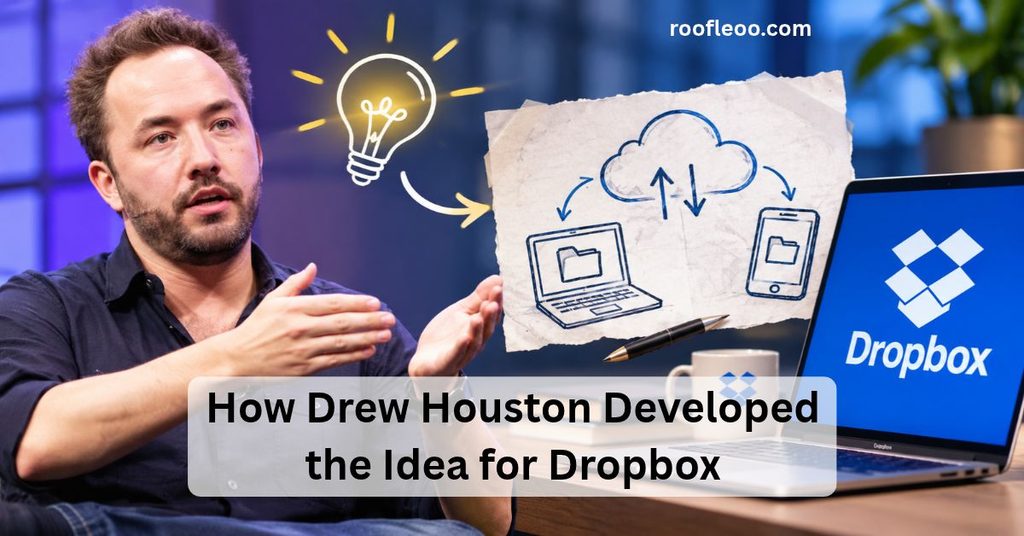
Annoyed, he started coding instead. He built a rough solution that would keep files in sync across computers automatically. No drive. No email attachments. No remembering. By the time the bus reached its destination, the seed of Dropbox was growing.
Other tools existed back then, but they were clunky. Some crashed. Some synced slowly. Some required complicated setups. Houston wanted something so simple that anyone could use it. Drag a file into a folder, and it shows up everywhere. That was the entire pitch.
The Early Prototype and the Famous Demo Video
Houston built an early prototype and faced a classic startup problem. How do you explain a product people don’t know they need? His answer was a short demo video. It walked viewers through the experience in plain language, with a few clever inside jokes for tech fans.
He posted it on a popular tech news site. The reaction was explosive. The waiting list for the beta reportedly jumped from about 5,000 people to roughly 75,000 almost overnight. A simple video had validated the idea faster than any survey could.
Case study: Test before you build. Houston proved demand with a three-minute video before building the full product. Many founders spend a year coding something nobody wants. He spent a weekend filming and got his answer.
Teaming Up With Arash Ferdowsi and Y Combinator
Houston knew he couldn’t do everything alone. At a startup event, he met Arash Ferdowsi, a talented MIT student with a strong sense of design and product vision. The two clicked. Houston handled much of the technical architecture. Ferdowsi helped shape the user experience and the company’s direction. Ferdowsi even dropped out of school to join full-time.
Then came a big break. In 2007, they were accepted into Y Combinator, the famous startup accelerator run at the time by Paul Graham and his partners. YC gave them seed money, advice, and an enormous network. Paul Graham’s guidance helped Houston sharpen his pitch and think bigger about growth.
Early investors followed. Sequoia Capital led an early funding round in 2008. Later rounds brought in more heavyweight investors, and by 2014 the company’s private valuation had climbed to around $10 billion.
The Referral Program That Fueled Growth
Dropbox grew in a clever way. Instead of buying expensive ads, it rewarded existing users with free storage for inviting friends. Both people won. The program was cheap, friendly, and viral. Sign-ups jumped dramatically, and the company’s marketing costs stayed low.
It’s a perfect lesson in product-led growth. The product itself became the marketing channel. If your offering is good enough, your customers do the selling for you.
Drew Houston’s Rise in the Technology Industry
Dropbox officially launched to the public in 2008 and scaled fast. By the early 2010s, tens of millions of people were using it. By the middle of the decade, the number crossed hundreds of millions of registered users. Today, Dropbox reports over 700 million registered users and around 18 million paying customers.
Growth brought competition. Google launched Drive. Microsoft pushed OneDrive. Apple expanded iCloud. Suddenly Dropbox found itself fighting giants who could bundle storage with other products for free. Many experts predicted the company would be crushed.
Houston refused to fold. He kept improving the product, expanded into business tools, and doubled down on simplicity. He also made smart acquisitions along the way, including HelloSign for electronic signatures and DocSend for secure document sharing. Those deals moved Dropbox beyond basic storage into broader workflow software.
Dropbox at a Glance
| Metric | Figure |
|---|---|
| Founded | 2007 |
| Headquarters | San Francisco, California |
| Registered users | Over 700 million |
| Paying users | Around 18 million |
| Annual revenue | Roughly $2.5 billion |
| Ticker | DBX (Nasdaq) |
Houston also stayed in the CEO seat throughout. That’s rare. Many tech founders step aside once their company grows large. Houston kept leading, learning, and adjusting. In 2020, he added another major role by joining the board of directors at Meta.
Drew Houston Takes Dropbox Public in March 2018
On March 23, 2018, Dropbox went public on the Nasdaq under the ticker DBX. The company priced its shares at $21 and opened trading at around $29. By the end of the first day, the stock had closed near $28.50, a gain of roughly 36 percent. The offering raised about $750 million and valued the company at around $12 billion at the IPO price.
It was a landmark moment for tech. It was also the moment that turned Houston’s paper wealth into a publicly measurable fortune. As the largest individual shareholder, he held a stake worth well over a billion dollars at the time.
Here’s the key point for his net worth story. Houston’s wealth is tied to Dropbox’s stock. When the share price rises, his fortune grows. When it falls, so does his net worth. That’s why estimates of his wealth vary from one report to the next. They depend on the day they were calculated.
Eminem’s Musical Style and Creative Approach
Ask any fellow rapper about Eminem and you’ll hear the same word: craft. He treats writing like engineering. He rewrites verses again and again. He fills notebooks. He tests different word choices until the rhythm clicks perfectly. Friends and collaborators describe a man who obsesses over details most listeners never notice.
His style rests on a few pillars:
- Storytelling: Songs that unfold like short films, with characters and twists
- Dark humor: Jokes that shock first and sting later
- Emotional honesty: Raw confessions about family, fame, and addiction
- Technical skill: Rapid delivery and tightly packed rhymes
- Persona play: Switching between Marshall, Eminem, and Slim Shady
His influence on later rappers is hard to overstate. Artists across several generations cite him as a reason they started writing. He also showed younger performers that vulnerability could be powerful instead of embarrassing.
Internal Rhymes and Multisyllabic Wordplay
Let’s break down his signature technique in plain language.
Internal rhyme means rhyming words within a single line, not only at the end. Imagine a sentence where the middle and the end both chime with each other. It creates a bouncing, musical feel, like a drummer adding extra beats between the main ones.
Multisyllabic rhyme means matching several syllables at once instead of just one. Rhyming single words like “cat” and “hat” is basic. Rhyming a whole phrase with another phrase that shares the same vowel sounds across several syllables is far harder. It’s like matching an entire chord instead of a single note.
Eminem stacks both tricks together. A single line might hold three or four connected sounds. Then he delivers it at breakneck speed without losing clarity. That’s what makes his verses feel so dense and satisfying on repeat listens.
His song “Rap God” became the showcase for this ability. It holds a Guinness World Record for the most words in a hit single, with more than 1,500 words packed into just over six minutes. One section alone races through a staggering number of words in about fifteen seconds. Fans still replay it to marvel at the breath control.
Technical brilliance like this also supports his earning power. Fans stay loyal to artists who demonstrate mastery. Loyal fans stream catalogs for years.
Drew Houston’s Approach to Innovation and Business
If Eminem’s guiding word is craft, Houston’s is simplicity. His philosophy is straightforward: remove friction. If a user has to think hard about how a tool works, the tool has failed. Dropbox became a household name because it hid complicated technology behind a simple folder.
His approach to innovation follows a few habits:
- Start with a real annoyance. The bus ride came from genuine frustration.
- Show, don’t tell. The demo video explained the product faster than any pitch.
- Obsess over reliability. Syncing has to work every single time.
- Expand carefully. Build outward from a trusted core product.
- Listen to users. Feedback guides new features.
From File Storage to Collaboration Platform
Cloud storage alone isn’t enough to survive long term, because rivals can offer similar space cheaply. Houston understood this and pushed Dropbox toward broader collaboration. Features such as shared folders, document editing, e-signatures, and team workspaces moved the product from a digital drawer toward a full workspace.
More recently, the company has invested in artificial intelligence tools that help users search and organize their files. The idea is to turn a pile of documents into a searchable knowledge base. Whether that bet pays off will shape the next chapter of his career.
Leadership Style and Remote Work
Houston’s leadership voice is calm and thoughtful. He tends to talk openly about mistakes. In 2020, he announced that Dropbox would become a “Virtual First” company, meaning remote work became the default for most employees. The company kept some collaboration spaces for in-person meetups but stopped requiring daily office attendance.
That decision drew attention across the industry. Some companies later pushed workers back into offices. Dropbox largely stuck with its approach, arguing that flexibility helps attract talent. It was a clear example of Houston acting on a belief rather than following the crowd.
Personal Difficulties and Challenges in Eminem’s Career
Fame didn’t fix Marshall’s problems. In some ways, it amplified them. His rise came with intense media scrutiny, lawsuits, and painful public battles. His family life stayed turbulent for years. Relationships with his mother and with his former wife, Kim, were strained and often played out in headlines and songs.
Behind the scenes, he was also fighting addiction. Fame, pressure, and exhaustion led him to rely on prescription pills. His health spiraled. In December 2007, he suffered a near-fatal overdose. Doctors later said he came very close to dying. He was hospitalized and spent weeks relearning how to take care of himself.
That period also coincided with personal losses. The death of his close friend and fellow Detroit rapper Proof in 2006 hit him hard. Grief and substance use fed one another.
It’s worth treating this chapter with compassion. Eminem has spoken about it openly, which has helped many fans facing similar struggles feel less alone. His honesty is part of why people trust him.
Eminem’s Relapse and Recovery Albums
After years away from the spotlight, Eminem returned in 2009 with Relapse. The album sold well and won a Grammy. Yet Eminem himself has said he wasn’t fully satisfied with it. He felt he had been too focused on voices and gimmicks rather than real storytelling.
He responded with Recovery in 2010, and it was a triumph. The album debuted at number one and became the best-selling album worldwide of 2010. It spawned massive hits such as “Not Afraid” and “Love the Way You Lie,” the latter featuring Rihanna. The record didn’t just save his career. It showed a more mature, focused artist.
Sobriety became a central part of his public identity. He regularly marks his milestones and encourages fans to seek help. He has also spoken about how staying sober sharpened his writing. For many listeners, the comeback is as inspiring as the early rise.
Key insight: Recovery proves that a career can restart after a collapse. The album’s success rested on honesty. Fans forgave the stumble because he told the truth about it.
Business Challenges Faced by Drew Houston
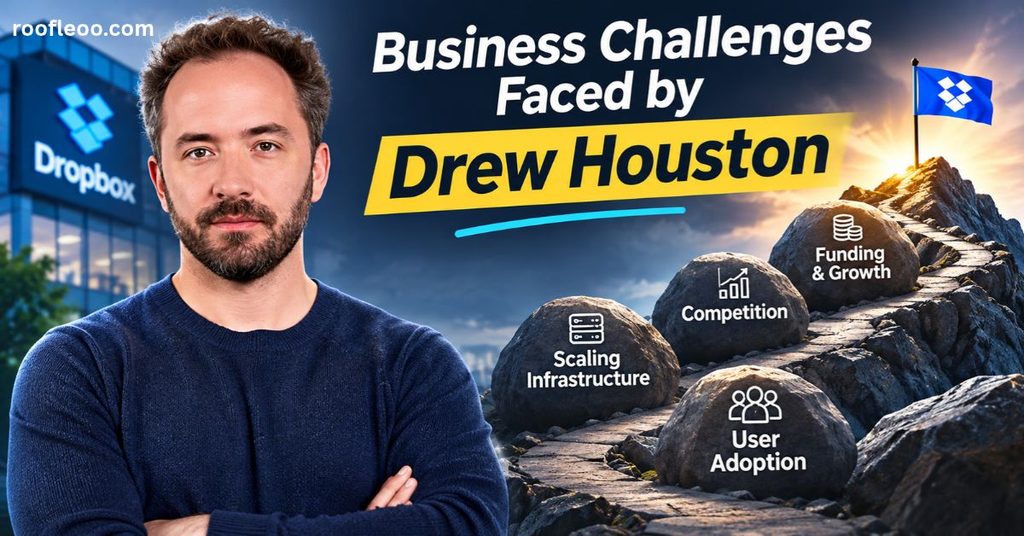
Houston’s road wasn’t smooth either. His struggles weren’t personal crises. They were strategic ones, and some were intense.
The Big-Tech Squeeze
When Google, Microsoft, and Apple entered cloud storage, Dropbox faced a David and Goliath situation. Those firms could give away storage as a perk. Dropbox had to charge for it. Many analysts questioned whether a standalone storage company could survive.
The Steve Jobs Meeting
A widely told story describes an early meeting with Apple co-founder Steve Jobs. Jobs reportedly told Houston that Dropbox was a feature, not a product, and that Apple wanted to buy the company. Reports from the time suggested an offer in the neighborhood of $800 million. Houston turned it down. That choice was risky. It also proved decisive, because Dropbox later reached a valuation many times larger.
Slower Growth After the IPO
Going public brought a new kind of pressure. Investors want steady growth every quarter. After the initial excitement, Dropbox’s user growth slowed, and its stock price struggled to match its early highs. Critics argued the company had peaked. Houston responded by focusing on profitability and paying users rather than raw sign-ups.
Layoffs and Restructuring
Tough decisions followed. In early 2023, Dropbox cut about 16 percent of its workforce, roughly 500 people. In late 2024, it announced another round of cuts affecting around 20 percent of staff, or roughly 500 employees. Houston explained that the company needed to shift resources toward AI-driven products.
Layoffs are painful for everyone involved. They also reveal how hard it is to lead a mature company through a technology shift.
Challenge Comparison Table
| Challenge Type | Eminem | Drew Houston |
|---|---|---|
| Main struggle | Addiction and personal loss | Competition and slowing growth |
| Turning point | 2007 overdose and recovery | Rejecting a buyout and going public |
| Response | Release Recovery | Expand into collaboration tools |
| Lesson | Honesty rebuilds trust | Patience beats panic |
Eminem’s Contribution to Music and Entertainment
Eminem is widely counted among the best-selling music artists in history, with total sales above 220 million records worldwide. He helped push hip-hop into the center of mainstream pop. Before him, few white rappers earned respect from both fans and critics. He earned both through undeniable skill.
His impact reaches well beyond his own songs. He mentored and signed artists through Shady Records, which he co-founded with his manager Paul Rosenberg. The label introduced acts such as D12, 50 Cent, and Obie Trice to wider audiences. He also hosts a radio channel on SiriusXM called Shade 45, giving a platform to up-and-coming rappers.
He has also branched into food. His Detroit restaurant, Mom’s Spaghetti, started as a pop-up and later became a permanent spot. It’s a quirky, fan-friendly business that nods to one of his famous lines without turning him into a corporate mogul.
Where His Money Comes From
- Streaming royalties: His catalog earns steady income every month
- Touring and festivals: Headline slots and special appearances
- Music publishing: Ownership stakes in his songs
- Shady Records: Profits from label releases
- Film and soundtrack royalties: Ongoing income from 8 Mile
- Brand deals and licensing: Selective partnerships and song placements
This diversified mix explains why his net worth stays strong even years after peak album sales. Streaming has been especially kind to artists with deep, beloved catalogs.
Eminem Grammy Awards and Honors
Eminem has won 15 Grammy Awards across his career, including multiple wins for Best Rap Album. He has been nominated dozens of times. Beyond the Grammys, he has collected an Academy Award, numerous MTV honors, and, in 2022, induction into the Rock and Roll Hall of Fame.
| Honor | Year | Notes |
|---|---|---|
| Grammy: Best Rap Album | 2000 | The Slim Shady LP |
| Grammy: Best Rap Album | 2001 | The Marshall Mathers LP |
| Grammy: Best Rap Album | 2003 | The Eminem Show |
| Academy Award: Best Original Song | 2003 | “Lose Yourself” |
| Grammy: Best Rap Album | 2011 | Recovery |
| Rock and Roll Hall of Fame | 2022 | Inducted in his first year of eligibility |
His Hall of Fame induction was especially symbolic. It signaled that hip-hop had earned a permanent place in the broader history of popular music.
Drew Houston’s Contribution to Technology
Houston’s contribution is quieter but just as significant. Before Dropbox, sharing files meant emailing attachments, burning discs, or carrying drives. Many people lost work because of a crashed laptop or a forgotten device. Dropbox helped make cloud storage a normal part of daily life.
Think about how much has changed. Today, it’s common to start a document on your phone and finish it on a laptop. Teams across continents edit the same files in real time. Students submit projects with a simple shared link. Dropbox didn’t create all of that alone, but it helped teach millions of people to expect it.
Key Contributions at a Glance
- Mainstream cloud storage: Made syncing simple for everyday users
- Team collaboration: Shared folders and workspaces changed how groups work
- Product-led growth: Proved referral programs can power a global company
- Startup inspiration: Became one of Y Combinator’s biggest success stories
- Remote work leadership: Helped normalize flexible work models
Houston also contributes through investing and board service. His seat on the board at Meta gives him a voice in one of the world’s most influential tech companies. He has also spoken at universities, including a well-known MIT commencement address, encouraging graduates to build things they care about.
What Makes Eminem and Drew Houston Different?
On the surface, Eminem and Drew Houston have almost nothing in common. One performs in front of stadiums. The other presents to shareholders. Yet comparing them side by side reveals how many paths lead to wealth.
| Category | Eminem | Drew Houston |
|---|---|---|
| Industry | Music and entertainment | Technology and software |
| Background | Working-class Detroit | Middle-class Massachusetts suburb |
| Education | Left high school | MIT graduate |
| Path to wealth | Albums, touring, publishing | Building and owning a company |
| Type of wealth | Royalties and cash income | Stock-based equity |
| Public profile | Loud, controversial, instantly recognizable | Low-key, rarely in tabloids |
| Biggest risk | Personal demons | Market competition |
| Estimated net worth | Around $250 million | Roughly $2 billion to $3 billion |
Artist Versus Engineer
Eminem sells emotion. Houston sells efficiency. One turns personal pain into stories that resonate with millions. The other turns technical frustration into a product that saves people time.
Royalties Versus Equity
This is the most interesting financial difference. Eminem earns money each time someone streams a song, buys a ticket, or licenses a track. His income is spread across many small payments that add up. Houston’s fortune sits mostly in company shares. His wealth can swing by hundreds of millions of dollars depending on the stock market.
Neither model is better. Royalties offer stability. Equity offers a much higher ceiling.
Public Persona Versus Quiet Founder
Eminem built a famous character. Houston built a famous product. Ask a stranger to describe Slim Shady and you’ll get a vivid answer. Ask the same stranger to describe the man behind Dropbox and you might get a blank stare. Houston is fine with that. Many founders prefer to let the product take the spotlight.
Is There a Connection Between Eminem and Drew Houston?
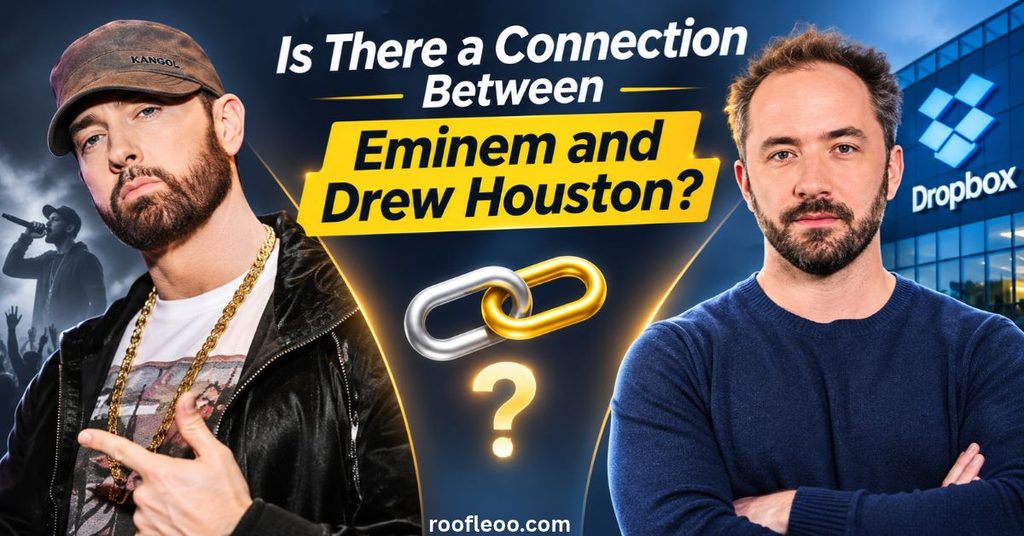
Here’s the straight answer: no known business or personal connection exists between them. They don’t co-own a company. They haven’t announced any joint project. They work in completely different fields.
So why do people search for them together? There are a few simple reasons:
- Both are self-made figures who built wealth without inheriting it
- Both are famous in their own worlds
- Both frequently appear on lists and articles about net worth
- Both started with a single bold idea and a lot of persistence
Search engines also love comparison queries. Readers often look up two successful people at once to see how their stories stack up.
Still, it’s fun to imagine a crossover. Picture a rapper dropping a track called “Sync Me Up,” with a chorus about files that never go missing. Or a Dropbox ad with Slim Shady complaining about lost attachments. It’s silly. But it shows how different worlds can share the same stage.
Lessons From the Careers of Eminem and Drew Houston
Strip away the fame and the fortune, and both men teach the same handful of lessons. Here are the five biggest takeaways.
- Persistence beats early failure. Eminem’s first album flopped. Houston’s early prototype was rough. Both kept refining until the work connected.
- Solve a real problem. Eminem gave voice to feelings people couldn’t express. Houston fixed a frustration everyone shared. Genuine needs create lasting demand.
- Find the right mentor. Dr. Dre opened the music industry’s door for Eminem. Paul Graham and Y Combinator did the same for Houston. A great guide can shorten your journey by years.
- Reinvent after setbacks. Eminem rebuilt his life and career with Recovery. Houston shifted Dropbox from storage toward collaboration and AI tools. Adapting keeps you relevant.
- Bet on your own skills. Eminem trusted his pen. Houston trusted his code. Both turned a personal strength into a livelihood.
Key insight: Neither man waited for perfect conditions. They started with what they had, tested ideas in public, and improved along the way.
A Simple Action Plan You Can Use
- Identify one problem you personally understand deeply.
- Build the smallest possible version of a solution.
- Show it to real people and watch their reactions.
- Seek out one mentor who has done something similar.
- Keep improving, even when the first results disappoint.
Frequently Asked Questions
Are Eminem and Drew Houston business partners?
No. There’s no known partnership between them. They work in completely different industries. Eminem’s business interests center on music, radio, and a few food ventures. Houston’s focus is Dropbox and his board role at Meta.
When did Dropbox go public?
Dropbox went public on March 23, 2018, listing on the Nasdaq under the ticker DBX. Shares were priced at $21 and opened near $29. The company raised roughly $750 million, and the stock jumped more than 30 percent on day one.
How many Grammy Awards has Eminem won?
Eminem has won 15 Grammy Awards. Many of those came in rap categories, including several for Best Rap Album. He has also earned an Academy Award for “Lose Yourself” and a place in the Rock and Roll Hall of Fame.
Where did Drew Houston go to college?
Drew Houston attended the Massachusetts Institute of Technology (MIT). He studied electrical engineering and computer science and graduated in 2005. His MIT network later played a role in finding his co-founder, Arash Ferdowsi.
What is Eminem’s net worth?
Eminem’s net worth is estimated at around $250 million. Most of it comes from album sales, streaming royalties, touring, music publishing, and his stake in Shady Records.
What is Drew Houston’s net worth?
Drew Houston’s net worth is estimated between $2 billion and $3 billion. The exact figure depends on the Dropbox share price, since most of his wealth is held in company stock.
Final Thoughts
The stories of Eminem and Drew Houston prove that success has no single recipe. One man came from a rough Detroit neighborhood and turned hurt into hit records. The other came from a quiet Boston suburb and turned a lost USB drive into a tech giant. Their wealth comes from different sources, and their personalities couldn’t be further apart.
Yet the common thread is clear. Both took one bold idea and stuck with it through doubt, rejection, and tough years. Both found a mentor who believed in them. Both stumbled badly at some point and came back stronger.
So here’s a question for you. Which story inspires you more: the rapper who clawed his way out of poverty or the engineer who built something millions use every day? Share your answer in the comments. And if you’re sitting on an idea of your own, maybe this is your sign to start building.

