

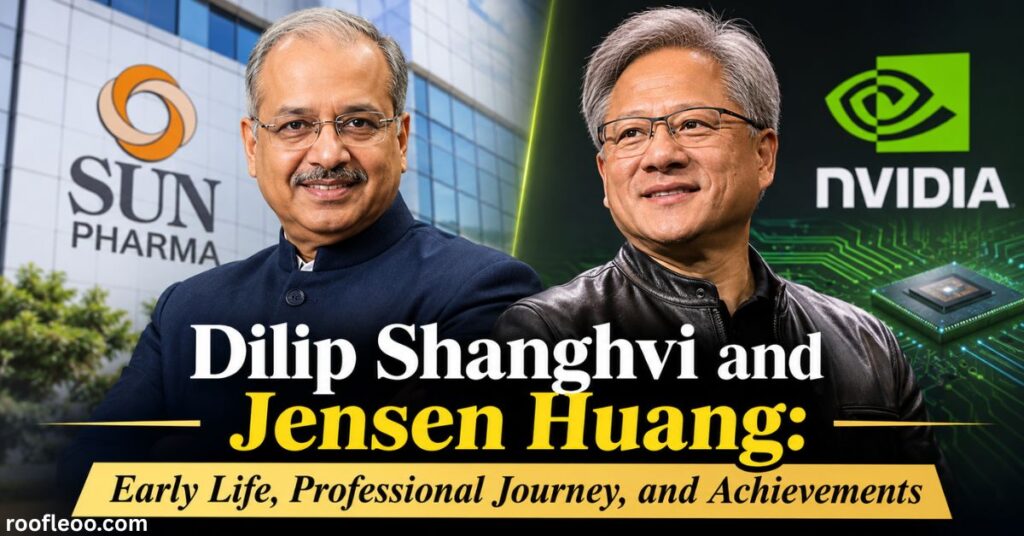
One man built a pharmaceutical giant with a small loan from his father. The other planned a chip company over coffee in a roadside diner. Their stories couldn’t look more different on the surface. Yet the names keep landing in the same search box.
If you’ve typed “dilip shanghvi and jensen huang” into Google, you’re in good company. People compare billionaire founders all the time. Some readers hunt for a hidden link between the two. Others simply want to know how a medicine maker in India and a chip designer in California reached the top of the wealth charts.
This guide covers it all. You’ll learn where each man came from and how each built his company. You’ll also see what the public record says about any connection between them. Along the way you’ll find tables, timelines, case studies, and plain-English lessons you can use.
Who Are Dilip Shanghvi and Jensen Huang?
Two founders. Two continents. Two industries that barely overlap. Still, both men turned small beginnings into companies that touch millions of lives. One company makes the pills in your cabinet. The other makes the chips behind modern artificial intelligence.
Here’s a quick snapshot before we dig deeper.
| Detail | Dilip Shanghvi | Jensen Huang |
|---|---|---|
| Born | October 1, 1955 | February 17, 1963 |
| Birthplace | Amreli, Gujarat, India | Tainan, Taiwan |
| Company | Sun Pharmaceutical Industries | NVIDIA |
| Founded | 1983 | 1993 |
| Founding base | Vapi, Gujarat | San Jose, California |
| Education | Commerce degree, Kolkata | Engineering degrees, Oregon State and Stanford |
| Role | Founder, Chairman, and Managing Director | Co-founder, President, and CEO |
| Known for | Building a global generics and specialty drug leader | Leading the shift from graphics chips to AI computing |
Dilip Shanghvi and Sun Pharma
Early life in Gujarat and Kolkata
Dilip Shanghvi was born in 1955 in Amreli, a town in Gujarat. His family belonged to a business-minded community. His father, Shantilal Shanghvi, ran a pharmaceutical wholesale and distribution business in Kolkata. So young Dilip grew up around medicines, invoices, and shopkeepers.
He didn’t study science. He earned a bachelor’s degree in commerce at a college in Kolkata. That choice shaped his whole career. He learned to think like a trader before he thought like a chemist.
Starting small in 1983
After college, Shanghvi helped in the family trade. He soon spotted a gap. Large companies ignored small, specialized drug categories. He decided to fill it.
In 1983 he borrowed about 10,000 rupees from his father and launched Sun Pharma. The first factory operated in Vapi, Gujarat. The company began with just a handful of products. Most targeted psychiatric conditions, a niche that bigger rivals overlooked.
Think of it like opening a tiny specialty shop. You don’t compete with the supermarket. You stock the one aisle nobody else wants. Then you grow aisle by aisle.
Growth through focus and acquisitions
Sun Pharma kept expanding into other therapy areas such as cardiology, diabetes, and neurology. The company went public in 1994 and drew heavy investor interest. Cash from the market fueled the next phase.
That phase relied on acquisitions. Shanghvi became known for buying struggling companies and fixing them. Here are some of the best-known deals:
- Caraco Pharmaceutical (US): An early foothold in the American generics market.
- Taro Pharmaceutical: A long, complicated deal that ended with full ownership in 2024.
- DUSA Pharmaceuticals: A move into dermatology.
- Ranbaxy: The blockbuster merger that reshaped Indian pharma.
- Concert Pharmaceuticals: A 2023 purchase that brought in a treatment for severe alopecia areata.
Fast fact: Sun Pharma now ranks among the world’s largest specialty generic drug makers. It sells in more than 100 countries.
Recognition
Shanghvi rarely gives interviews. Even so, his results speak loudly. He received the Padma Shri, one of India’s civilian honors, and he’s appeared on global rich lists for well over a decade. Business leaders often describe him as quiet, careful, and patient.
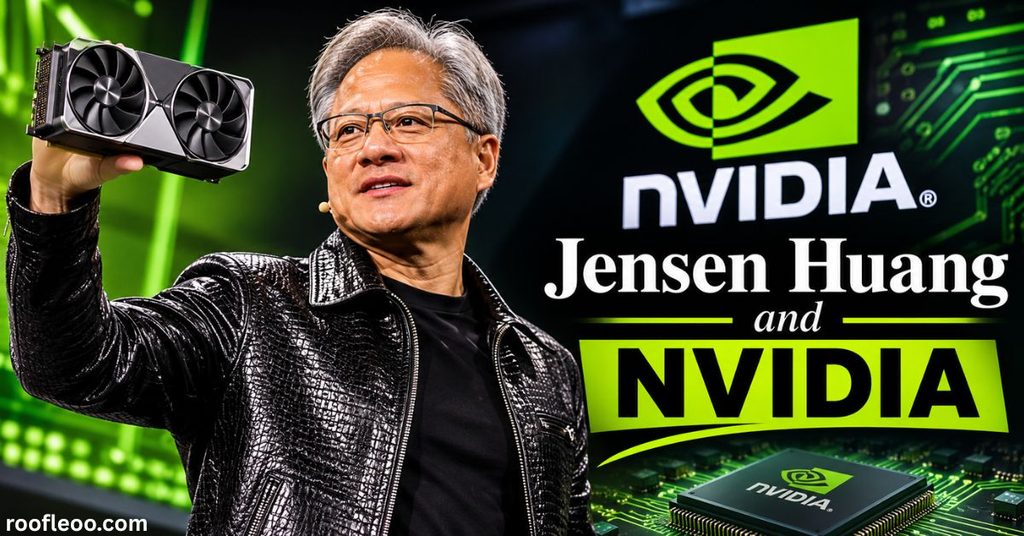
Jensen Huang and NVIDIA
A childhood on the move
Jensen Huang was born in Tainan, Taiwan, in 1963. His family later moved to Thailand. When Jensen was about nine, his parents sent him and his older brother to the United States for school.
The plan hit a bump. The boys landed at the Oneida Baptist Institute in rural Kentucky. The family thought it was a regular boarding school. In reality it also served troubled teens. Jensen shared a room with an older roommate and cleaned the bathrooms as part of his chores.
He has since described those years as tough but formative. They taught him to handle pressure and stay calm when things feel unfair.
Oregon, Denny’s, and engineering
Soon after, his parents joined the family in Oregon. Jensen attended Aloha High School and graduated at 16. He also played competitive table tennis. In his teens he worked as a dishwasher and busboy at Denny’s.
That detail turns out to be poetic. Years later he’d sketch the plan for NVIDIA inside a Denny’s booth.
He studied electrical engineering at Oregon State University and graduated in 1984. There he met Lori Mills, who later became his wife. He then earned a master’s degree in electrical engineering from Stanford University, studying part-time while he worked.
Early career
Huang’s first jobs put him inside the chip industry. He worked at LSI Logic and at Advanced Micro Devices. He designed microprocessors and ran product teams. Those years gave him two things: deep technical skill and a front-row seat to how chip companies win or lose.
Founding NVIDIA in 1993
In 1993, Huang teamed up with two engineers, Chris Malachowsky and Curtis Priem. They believed the future of computing needed a new type of processor, one built for graphics and parallel work. Each founder put in a small amount of money. A venture firm added more.
They picked the name NVIDIA. It nods to invidia, the Latin word for envy. The idea was simple. They wanted rivals to turn green with envy.
Major achievements
NVIDIA’s list of wins keeps growing:
- 1999: Went public and launched GeForce 256, marketed as the first GPU.
- 2006 to 2007: Introduced CUDA, a platform that let programmers use GPUs for general computing.
- 2012: Researchers trained a landmark image-recognition network on NVIDIA GPUs, which helped spark the deep learning boom.
- 2023: NVIDIA’s market value passed one trillion dollars.
- 2025: The company became the first to hit a five trillion dollar valuation.
Huang also earned top industry honors, including the Robert N. Noyce Award from the semiconductor industry. He’s one of the most recognized CEOs on Earth, partly thanks to his trademark black leather jacket.
Are Dilip Shanghvi and Jensen Huang Connected?
Let’s answer the big question straight away. No, there’s no verified link between them. They aren’t relatives. They aren’t business partners. They haven’t co-founded a company or launched a joint project.
So why does the question keep popping up? Because search engines group famous names together. When readers browse lists of billionaires, founders, or Asia-born business leaders, these two appear side by side. Curiosity does the rest.
What the Public Record Establishes
Here’s what you can say with confidence about Dilip Shanghvi and Jensen Huang:
- Both founded or co-founded major, publicly traded companies.
- Both rank among the wealthiest people in their home regions and appear on global billionaire lists.
- Both still hold senior leadership roles at the firms they started.
- Both run companies that matter to global supply chains. One feeds the medicine chain. The other feeds the computing chain.
- Both come from outside the usual Silicon Valley or Big Pharma power circles.
Notice what’s missing from that list. There’s no shared board seat. There’s no joint investment. There’s no family tie. Reputable news coverage and company filings don’t mention one.
What Remains Unverified
Plenty of online chatter makes bolder claims. You may see posts about secret friendships, shared deals, or private meetings. None of these claims hold up. They lack named sources, dates, or official statements.
Why do these myths spread? Three reasons stand out:
- Comparison content. Articles that list billionaires together make readers assume a relationship.
- Autocomplete. Search tools suggest pairs of names that people often look up together.
- Name confusion. Some readers mix up founders, family members, or similarly named executives.
How to check a claim yourself
Don’t take viral posts at face value. Try this quick routine:
- Look for the claim in company annual reports or stock exchange filings.
- Check whether major business newspapers have covered it.
- Search for a direct statement from either company.
- Be wary of posts with no date, author, or named source.
If a claim fails all four tests, treat it as rumor. Should real evidence of a collaboration ever appear, it’ll show up in official records first.
Dilip Shanghvi vs Jensen Huang: Key Differences
Comparing these two feels a bit like comparing a master chef with a rocket scientist. Both excel. They just play different games. Let’s break down where they split.
| Factor | Dilip Shanghvi | Jensen Huang |
|---|---|---|
| Industry | Pharmaceuticals | Semiconductors and AI computing |
| Founding country | India | United States |
| Core products | Generic drugs, specialty medicines, active ingredients | GPUs, AI systems, networking, software |
| Main growth engine | Acquisitions and turnarounds | Invention and platform building |
| Regulation | Heavy (drug approvals, plant inspections) | Moderate (export rules, antitrust reviews) |
| Public profile | Low-key and private | High-visibility and brand-driven |
| Education | Commerce | Electrical engineering |
| Leadership style | Quiet operator | Visible evangelist |
Different Industries, Different Business Models
Pharma rewards patience. A generic drug must clear strict rules before it reaches shelves. Inspectors visit factories. Prices face pressure from insurers and governments. Growth often comes from buying other firms and improving how they run.
Chips follow a different rhythm. Product cycles are short. A new architecture can make last year’s star look old. Success depends on speed, software support, and the loyalty of developers who build on your tools.
Here’s an easy way to picture it. Pharma is a long marathon with strict referees. Chips are a sprint on a track that keeps changing shape. Both demand stamina. They just test different muscles.
Case study: how each model handles risk
Sun Pharma spreads risk across thousands of products. If one drug loses patent protection or faces a price cut, hundreds of others cushion the blow. That steady, diversified approach suits a regulated field.
NVIDIA concentrates risk on a few big bets. When the company backed parallel computing for AI, it poured years of research into a market that barely existed. If AI had stalled, the gamble would’ve hurt badly. It didn’t stall. The payoff was enormous.
Different Paths to Global Influence
Shanghvi built influence mostly through deals. Each acquisition widened Sun Pharma’s reach. He let the balance sheet do the talking. You’ll rarely see him on a keynote stage.
Huang built influence through storytelling. He walks onstage, explains where technology is heading, and shows products that back up his words. Investors, engineers, and even casual fans follow his every announcement.
“The more you buy, the more you save.”
Jensen Huang’s famous stage line, delivered with a grin during NVIDIA keynotes.
That joke captures his style. He mixes humor with confidence. Shanghvi’s style leans the other way. He prefers calm, measured steps and few public flourishes.
Education played a role too. Shanghvi’s commerce background taught him to read markets, margins, and deals. Huang’s engineering background taught him to see technology trends years before others did.
What Do Dilip Shanghvi and Jensen Huang Have in Common?
Despite all those differences, the two men share a surprising amount. Let’s look at the common threads.
Founder-led growth
Both men never walked away. Shanghvi still guides Sun Pharma. Huang still runs NVIDIA. Decades after launch, each remains the central figure. Founders who stay close to their companies often move faster and make bolder decisions.
Outsider energy
Neither started at the center of his industry. Huang moved across continents as a child and washed dishes as a teenager. Shanghvi launched from a small town base in Gujarat, far from the glamour of global pharma hubs. Both proved that location and pedigree don’t decide who wins.
Still, don’t overstate this point. Each man also had real advantages. Shanghvi had family capital and trade know-how. Huang had strong schools and a chip industry hub nearby. Outsider status helped. It wasn’t the whole story.
Patience through lean years
Success didn’t arrive overnight. Sun Pharma spent years as a small niche player before it scaled. NVIDIA nearly ran out of cash in its early days and went through some rough product cycles.
Bold bets at the right moment
Each founder made a few giant moves:
- Shanghvi: Buying Ranbaxy, a larger and troubled competitor.
- Huang: Funding CUDA and AI hardware long before demand exploded.
Both bets looked risky when announced. Both look brilliant now.
Wealth tied to equity
Neither fortune sits in a vault. Both are built on company shares. When Sun Pharma or NVIDIA stock moves, their personal wealth moves with it. That’s a key reason net worth figures change so quickly.
The takeaway: Different fields, same playbook. Pick a focus. Stay patient. Swing hard when the moment arrives.
Their Career and Business Building Paths
Now let’s walk through each journey step by step. Timelines help here. They show how small moves compound over decades.
Dilip Shanghvi’s Business Journey
Shanghvi’s path reads like a slow, steady climb with a few dramatic leaps. Here are the key milestones.
| Year | Milestone |
|---|---|
| 1983 | Founds Sun Pharma with a small loan and a few psychiatric products |
| 1990s | Expands product lines and exports to the US market |
| 1994 | Takes the company public |
| 1997 | Takes control of Caraco, a US generics maker |
| 2007 | Moves on Taro Pharmaceutical |
| 2011 | Acquires DUSA, adding dermatology |
| 2014 to 2015 | Merges with Ranbaxy in a deal valued near four billion dollars |
| 2023 | Buys Concert Pharmaceuticals |
| 2024 | Completes full acquisition of Taro |
The turnaround approach
Shanghvi’s signature move is simple to describe and hard to pull off. He buys a company that’s struggling. He then fixes quality, trims costs, and unlocks value.
Many leaders chase glamorous growth. He chased underpriced assets. Because Sun Pharma kept debt in check, it could act when others hesitated.
Case study: the Ranbaxy deal
Ranbaxy once stood as India’s largest drug maker. By the early 2010s it faced serious trouble. US regulators had raised alarms about manufacturing quality at several plants. Its reputation took a beating.
Sun Pharma stepped in. The all-stock merger created the largest pharma company in India. It also made Sun one of the biggest specialty generic firms worldwide.
The real work came afterward. Sun had to repair factories, satisfy regulators, and rebuild trust. The process took years. Yet it delivered scale, new markets, and a deeper product list.
Lesson: The best deals aren’t always the cheapest. They’re the ones where you know how to fix the problem.
Leadership style
Shanghvi holds the roles of Chairman and Managing Director. Colleagues and analysts describe him as disciplined, private, and cautious with debt. He avoids headlines. He’d rather show results in the next quarterly report.
Jensen Huang’s Business Journey
Huang’s story moves at a faster tempo. It has more public drama, more reinvention, and more scoreboard moments.
| Year | Milestone |
|---|---|
| 1993 | Co-founds NVIDIA with Chris Malachowsky and Curtis Priem |
| 1995 | Launches NV1, which struggles in the market |
| 1997 | Releases RIVA 128, a breakout product |
| 1999 | Goes public and ships GeForce 256 |
| 2000 | Wins the graphics chip deal for Microsoft’s Xbox |
| 2006 to 2007 | Unveils CUDA for general-purpose GPU computing |
| 2012 | Researchers use NVIDIA GPUs to win a major image-recognition contest |
| 2020 | Buys Mellanox, adding high-speed networking |
| 2023 | Market value tops one trillion dollars |
| 2025 | Market value reaches five trillion dollars |
Case study: the near-death moment
The early NVIDIA story is wilder than most people expect. The company’s first chip, the NV1, didn’t match what the market wanted. It leaned on technology that Microsoft’s graphics standards soon left behind. Sales stalled.
Money ran short. Huang has said that at one point the company sat only about a month away from going out of business. He cut staff and refocused the team on a new design.
That redesign became RIVA 128. It sold well and rescued the company. The scare also left a lasting habit. NVIDIA moves fast and treats every product launch as if survival depends on it.
The CUDA bet
For years, GPUs only handled video games and graphics. Huang saw something bigger. The chips could solve any problem that splits into many small tasks. So his team built CUDA, a toolkit that let scientists and developers program GPUs directly.
Critics questioned the cost. CUDA added expense to every chip but earned little at first. Investors grew impatient. Yet Huang held firm.
When deep learning took off, NVIDIA already had the hardware, the software, and a community of developers. Rivals needed years to catch up. That head start now defines the AI era.
“I wish upon you ample doses of pain and suffering.”
Huang, speaking to graduates, on why hard times build character.
He meant it as a gift. He believes setbacks teach lessons that easy wins never can.
Leadership style
Huang serves as founder, president, and CEO. He’s famous for running a flat organization with dozens of direct reports. He likes open debate and fast decisions. His black leather jacket, warm humor, and hands-on technical talk have made him a pop-culture figure.
Why the Two Paths Are Worth Comparing
At first glance, the comparison seems odd. Look closer and the contrast turns instructive. These men show two proven playbooks.
| Playbook | Who used it | How it works |
|---|---|---|
| Grow by acquisition | Shanghvi | Buy undervalued firms, repair them, and scale |
| Grow by invention | Huang | Build new technology and create entire markets |
Each has strengths. Acquisition builds scale quickly and spreads risk. Invention creates a deep competitive moat and huge upside. Neither is superior. The right choice depends on your industry.
You can also take away a few universal lessons:
- Stay patient. Both men waited years for their big breaks.
- Stay focused. Sun Pharma began with a niche. NVIDIA began with graphics.
- Bet big at the right time. Preparation lets you move when others freeze.
- Learn from setbacks. Ranbaxy’s repair job and NVIDIA’s NV1 flop both taught hard lessons.
Remember one friendly caution, though. A strategy that works in chips may flop in medicine. Always match the playbook to the field.
Current Roles and Net Worth Estimates
Numbers and titles matter to readers. They also change often. Here’s the latest picture, along with some context on how to read it.
Current Leadership Roles
- Dilip Shanghvi leads Sun Pharma as Chairman and Managing Director. He guides the company’s strategy, deal-making, and long-term research plans. The company pursues growth in specialty medicines, especially dermatology and ophthalmology, while keeping its large generics business steady.
- Jensen Huang leads NVIDIA as founder, president, and CEO. He directs the company’s push into data-center chips, AI software, robotics, and networking. He also serves as the public face of the AI hardware boom.
Leadership titles can shift after board meetings or succession plans. So it’s smart to confirm them on each company’s official site before quoting them in a formal setting.
Net Worth Is Not a Fixed Number
Many readers want one clean figure. Reality is messier. A billionaire’s wealth moves with the stock market. A single bad day can wipe out billions on paper. A strong earnings report can add billions overnight.
Here’s a rough picture of where each founder stood in recent years.
| Founder | Main source of wealth | Approximate recent range |
|---|---|---|
| Dilip Shanghvi | Stake in Sun Pharma | Roughly 25 to 30 billion dollars |
| Jensen Huang | Stake in NVIDIA | Well above 100 billion dollars, with peak estimates near 150 to 180 billion |
These ranges explain the gap in scale. NVIDIA’s market value has soared into the trillions. Sun Pharma, though large, sits in a much smaller valuation bracket. Even so, Shanghvi ranks among India’s richest people. Huang ranks among the top wealthiest people on the planet.
Why estimates differ
Wealth trackers don’t all use the same math. They differ in three main ways:
- Share price timing. One tracker may update every minute. Another may update once a day.
- Ownership counts. Trackers may disagree on how many shares each founder holds directly or through family trusts.
- Private assets. Real estate, cash, and other holdings often get rough estimates.
So if two websites show different totals for the same person, that’s normal. For a fair view, check the date on any figure you read. Treat it as a snapshot and not a permanent fact.
People Also Ask
These quick answers address the questions readers type most often about Dilip Shanghvi and Jensen Huang.
Are Dilip Shanghvi and Jensen Huang related?
No. Dilip Shanghvi and Jensen Huang share no known family relationship. Shanghvi was born in India and Huang in Taiwan. Their families, careers, and companies developed on separate paths. No credible report or public record suggests a blood or marriage tie between them.
Are Dilip Shanghvi and Jensen Huang business partners?
No. Each leads a separate company in a different industry. Sun Pharma makes medicines. NVIDIA designs chips and AI platforms. No joint venture, shared investment, or board connection appears in official filings or trusted news coverage.
Why are Dilip Shanghvi and Jensen Huang compared?
People compare them because both are self-made founders who lead global companies. Both also rank among the richest people in their regions. Their very different industries make the comparison interesting. It shows how two paths can lead to the same level of influence.
What companies did Dilip Shanghvi and Jensen Huang found?
Dilip Shanghvi founded Sun Pharmaceutical Industries in 1983. Jensen Huang co-founded NVIDIA in 1993 with Chris Malachowsky and Curtis Priem. Both firms now rank among the largest and most influential in their fields.
What is the main difference between Dilip Shanghvi and Jensen Huang?
The biggest difference lies in strategy and industry. Shanghvi grew Sun Pharma largely through acquisitions and careful turnarounds in a regulated field. Huang grew NVIDIA through invention and platform building in fast-moving technology. Their public styles differ as well, with Shanghvi staying private and Huang staying very visible.
What is Dilip Shanghvi known for?
Shanghvi is known for building Sun Pharma into a global leader in specialty and generic medicines. He’s also known for the Ranbaxy merger, his disciplined approach to debt, and his low public profile. Many people see him as one of India’s most respected business builders.
What is Jensen Huang known for?
Huang is known for leading NVIDIA from a young graphics chip maker to the center of the AI revolution. He’s also famous for the CUDA platform, his black leather jacket, and his energetic keynote talks. Investors and engineers follow his words closely.
Did Dilip Shanghvi and Jensen Huang ever work together?
No verified record shows any collaboration. Company reports, press releases, and major news coverage don’t mention a joint project. Any online claim that says otherwise needs proof. Until credible evidence appears, the answer stays no.
Conclusion
Here’s the big picture. Dilip Shanghvi and Jensen Huang have no confirmed link. They aren’t family. They aren’t partners. They haven’t worked together. What connects them is the pattern of their success.
Each man started small. Each stuck with his company for decades. Each made a handful of bold moves at just the right time. Shanghvi turned a niche drug business into a global force through smart deals and steady discipline. Huang turned a risky chip startup into the engine of the AI age through invention and relentless focus.
The lesson? Different industries reward different strengths. Some fields favor the patient dealmaker. Others favor the daring builder. The smartest founders know which game they’re playing.
So which story inspires you more? Is it the quiet operator who fixes broken companies or the showman who bets on the future? Share your thoughts in the comments. And if you enjoyed this deep dive, pass it along to a friend who loves business stories.

